When Apple Weather Goes Down: Risks and Remediation

What happened (short)
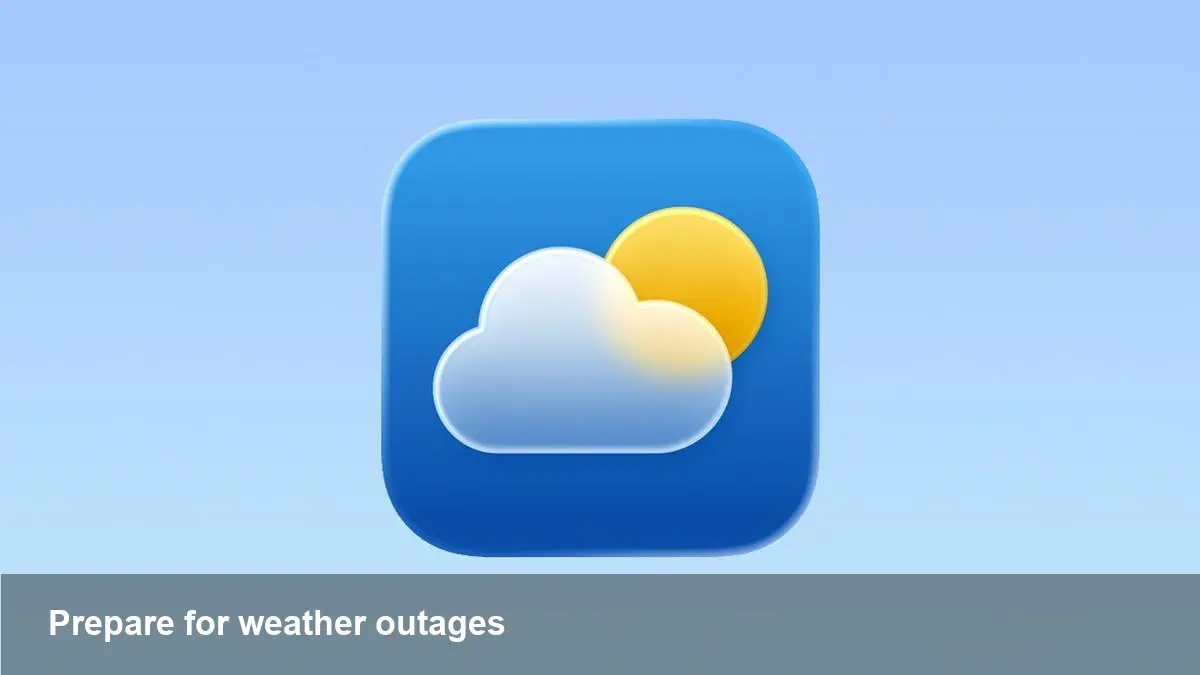
Earlier today Apple’s built-in Weather app experienced a service interruption that began at 11:36 a.m. Eastern Time. Users reported slow loading and missing data across iPhone widgets and the app itself. Apple’s System Status page showed degraded availability for the Weather service, and the company later marked the issue as resolved.
Why this matters beyond a missing forecast
A flaky weather app feels minor until you realize how many features and businesses rely on it. The Weather app and its underlying services are not only the primary source for casual users checking rain predictions — they power widgets, Siri responses, Home automations, and are a convenience layer for countless third-party integrations.
Real-world impact examples
- Commuters using a morning routine that checks rain probability before choosing transit or driving routes could miss timely alerts.
- Smart-home setups that rely on local weather (e.g., retracting outdoor awnings, delaying irrigation, or closing skylights) may fail to trigger or default to fail-safe states.
- Small businesses such as outdoor cafes or event coordinators that push notifications or change staffing based on forecasted conditions can make the wrong operational call.
- Developers and startups that integrated Apple’s weather endpoints, or who rely on widgets and shortcuts for user experiences, may see degraded UX and increased support tickets.
Apple Weather: a quick background
Apple’s Weather app is the OS-native forecasting experience on iPhone and iPad. Over recent years Apple has consolidated its weather stack — incorporating technologies and licensing arrangements (including the acquisition of Dark Sky’s assets) and launching WeatherKit for developers to access Apple’s forecast data programmatically.
WeatherKit provides a modern API surface for apps to retrieve forecasts, alerts, and historical weather. Many developers have adopted WeatherKit because it integrates well with Apple platforms, but that convenience also concentrates risk: when the Apple weather backend has issues, platform-level consumers feel it quickly.
Practical steps for users right now
If you noticed the Weather app failing, try these quick checks:
- Confirm Apple’s System Status page for official updates and the current health of the Weather service.
- Force-quit and reopen the Weather app or the affected widget; sometimes local caching restores functionality.
- Toggle Location Services for the Weather app (Settings > Privacy & Security > Location Services), then reopen the app.
- Restart your device and check network connectivity; intermittent cellular or Wi‑Fi issues can look like a backend outage.
- If you rely on weather for an automation, switch to conservative manual rules until services are confirmed stable.
Developer and product owner checklist (short- to medium-term fixes)
If your product depends on weather data, outages like this should be treated as a reliability design problem. Consider these practices:
- Implement multi-provider fallbacks: query a secondary provider (e.g., OpenWeatherMap, Meteomatics, Visual Crossing) when primary calls fail.
- Use caching and stale-while-revalidate: serve last-known-good forecasts for a short TTL while background refresh attempts continue.
- Apply circuit-breaker patterns and exponential backoff to avoid hammering a flapping endpoint.
- Expose graceful degradation in the UI: show cached data with a timestamp and an offline indicator rather than a blank screen.
- Add automated health checks that exercise your weather-dependent flows and alert engineering teams immediately.
- Monitor third-party SLA coverage and negotiate commercial terms if weather availability is critical to your business.
Concrete scenario Imagine a delivery routing app that adjusts routes for heavy rain. Design your system to use cached precipitation probabilities for the last 15–30 minutes and switch to a cheaper fallback provider for real-time decisions. Log every fallback event so product managers can quantify the business impact and decide if they should pay for higher-tier weather SLAs.
Business implications and operational risk
This outage is an object lesson in systemic vendor risk. Many consumer-facing features are now layered on top of platform services; that reduces development complexity but centralizes failure modes.
For startups and enterprises, that implies:
- Operational readiness: plan for service-level failures in platform dependencies.
- Customer communication: set expectations in product status pages and support channels when third-party outages affect your users.
- Cost vs. risk trade-offs: paying for multiple weather providers or enterprise-grade data feeds increases costs but reduces the probability of a total feature outage.
What Apple could do to reduce friction
Apple’s System Status page is helpful as a first line of communication, but outages that affect many users and dependent apps create pressure for more granular telemetry and faster upstream notifications to developers. Possible improvements include:
- A dedicated WeatherKit status feed separate from the consumer Weather app, so developers get machine-readable outage signals.
- SDK hooks that surface degraded mode flags to apps (allowing apps to automatically switch to fallback providers).
Implications for the future (short list)
- Platform consolidation increases fragility: as OS providers bundle more services, companies must decide whether convenience outweighs single-vendor risk. Expect more products to adopt hybrid strategies.
- Observability and transparency will be differentiators: platforms that expose richer, machine-readable status will be more attractive to businesses that need predictable runtimes.
- Opportunity for weather-data startups: outages in large platform services open market space for specialized providers offering guaranteed SLAs, detailed local models, or multi-source aggregation.
Actionable next moves
- Users: verify service status, use conservative manual rules for critical automations, and re-open the app after a short wait.
- Developers: add a fallback provider, cache aggressively, and implement circuit breakers and health checks.
- Product leaders: map platform dependencies, quantify business impact of weather data unavailability, and evaluate whether a paid weather SLA is justified.
Apple has restored the Weather experience this time, but the interruption is a timely reminder: even ubiquitous platform features can fail, and resiliency requires planning at both the product and engineering level. What’s your fallback plan when a foundational data source goes dark?