Bose's Lifestyle Collection Targets Sonos with Alexa+

Why this launch matters
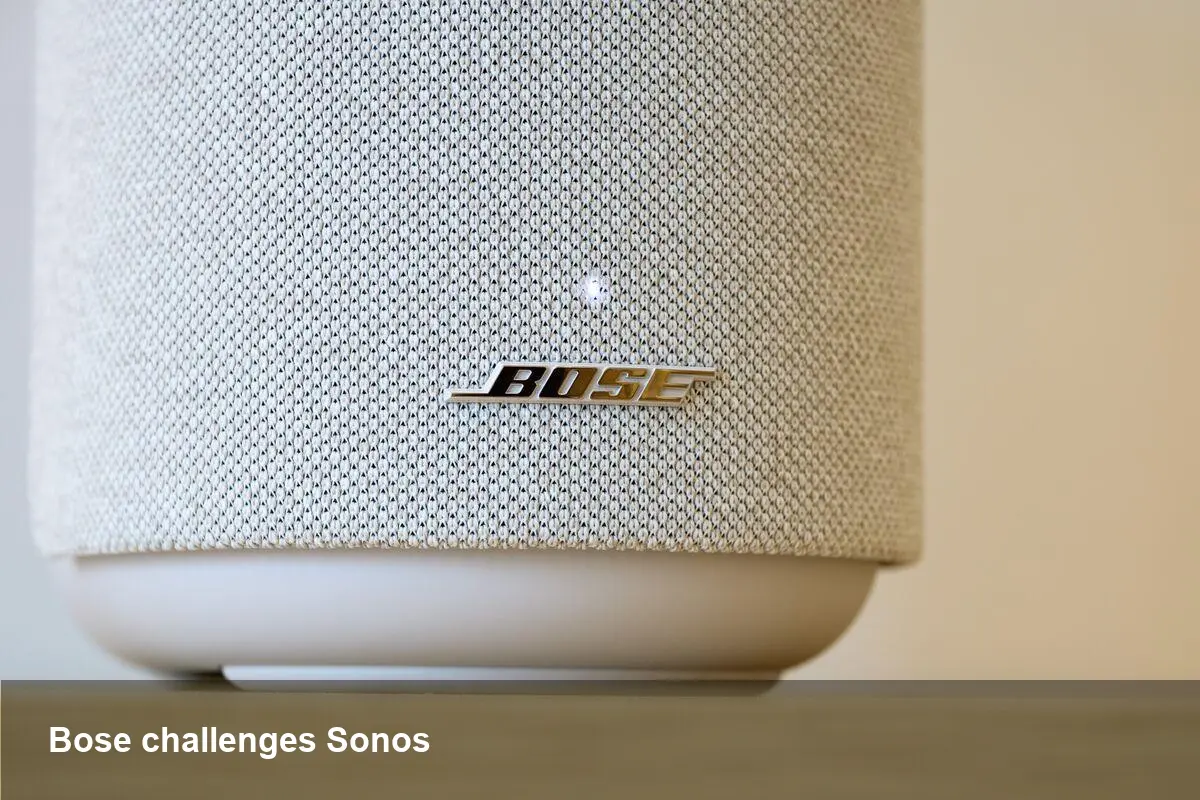
Bose has introduced a new Lifestyle Collection centered on premium, connected audio and built-in voice assistance. The lineup — billed as a trio of products — notably includes a $299 Alexa+ smart speaker and a $1,099 soundbar. The move signals Bose’s intention to compete more directly with Sonos and Apple in the market for multi-room, high-fidelity smart speakers and home-theater audio.
For consumers and small businesses, this isn’t just another product drop. It’s an attempt to combine Bose’s decades-long expertise in acoustic engineering with the convenience and ecosystem lock-in of voice assistants and streaming services.
A quick look at the offering
- The Lifestyle Collection is presented as three complementary devices. Public details highlight a $299 Alexa+ speaker and a $1,099 soundbar as two cornerstones of the line.
- The Alexa+ label implies tight integration with Amazon’s voice assistant, which will matter to buyers already invested in Alexa’s smart-home skills and routines.
Bose is positioning these devices for two overlapping audiences: listeners who want higher-end sound with simple voice control, and living-room buyers who want a premium soundbar to anchor a home-theater experience without adding complexity.
Real-world scenarios where these matter
- Multi-room listening: If you’re building a home audio network across bedrooms, living areas, and a home office, Bose’s new line aims to provide consistent acoustic tuning and simplified control through voice or an app.
- Living-room upgrade: The $1,099 soundbar targets buyers who value cinematic audio but don’t want a full AV receiver and speakers scattered around the room.
- Smart-home simplification: For households already using Alexa to control lights, thermostats, and routines, a speaker labeled Alexa+ promises reduced friction — one device to handle voice queries, music, and home automation.
Example: a small apartment owner who streams music from multiple services and uses Alexa routines could buy the $299 Alexa+ speaker to replace an older Bluetooth speaker and instantly gain better sound, hands-free control, and tighter integration with Alexa-based automations.
What this means for developers and integrators
- Alexa skill opportunities: Any device that highlights Alexa integration opens doors for developers to create tailored skills that take advantage of the speaker’s capabilities. Think personalized home routines, context-aware playback controls, and new smart-home skills designed for richer audio feedback.
- AV and automation integrators can plan for simpler deployments. A premium speaker with voice built in reduces the need for separate voice hubs and can streamline installation in hotels, boutique retail spaces, or upscale co-working lounges.
- Third-party streaming and control integration will matter. Bose’s success will hinge in part on how seamlessly the hardware works with popular streaming services and whether Bose provides APIs or SDKs for richer integrations beyond what Alexa already offers.
Strategic implications for Bose and the market
- Competing on both sound and ecosystem: Sonos built a business around multi-room audio and platform-agnostic playback; Apple focuses tightly on its own ecosystem. Bose’s bet appears to be that superior acoustic tuning plus a voice-first approach (Alexa) can win users who want premium audio without being locked into a single streaming or hardware ecosystem.
- Pricing strategy: A $299 smart speaker sits in the mid-to-premium range — not cheap, but accessible enough to be purchased as an upgrade. The $1,099 soundbar puts Bose in the high-end home-theater segment where Sonos, Sennheiser, and others compete.
Strengths and limitations to consider
Strengths:
- Brand and engineering: Bose’s reputation for sound quality and noise-control tech gives it credibility at higher price points.
- Voice integration: Making Alexa central simplifies day-to-day use for many shoppers.
Limitations:
- Ecosystem friction: Buyers who prefer Google Assistant or Apple’s ecosystem might hesitate if Bose leans heavily into Alexa.
- Platform parity: Sonos’s advantage has been strong multi-streamer support and a well-loved app. Bose will need software parity — smooth multi-room sync, reliable firmware updates, and broad streaming service support — to convert Sonos users.
How businesses might use these devices
- Retail and hospitality: High-end speakers with voice can function as ambient music systems while also providing customer-facing information or concierge-style interactions.
- Offices and hybrid workplaces: A compact Alexa+ speaker can be a meeting-room assistant for scheduling, joining calls, or controlling AV equipment in smaller conference spaces.
For system integrators, the main questions will be whether Bose provides enterprise-level management tools or APIs and how well the devices play with existing control systems.
Three implications for the future
- Voice-first audio will accelerate ecosystem consolidation. If manufacturers favor one voice assistant, consumers could increasingly choose hardware based on assistant preference rather than audio alone.
- Audio manufacturers will have to compete on software as much as on hardware. Ongoing software support, streaming service partnerships, and developer tools will be decisive differentiators.
- The line between home audio and home automation keeps blurring. Expect more speakers and soundbars to serve as centralized smart-home hubs — if manufacturers can solve privacy and interoperability concerns.
Practical advice for buyers
- If you live in an Alexa-centric home and want a step up in sound quality, the $299 Alexa+ speaker is worth demoing.
- Consider whether you need the higher-end soundbar now or if a modular, multi-component approach (separate subwoofer or surrounds) offers better long-term flexibility.
- Ask about software update cadence and streaming-service support before committing — those affect long-term value more than a few extra watts of power.
Bose’s Lifestyle Collection is a clear attempt to move from components to a unified, voice-enabled ecosystem that sits squarely across the living room and smart-home battleground. For buyers and integrators, the promise is cleaner audio plus less friction; for rivals like Sonos and Apple, it’s an invitation to sharpen software and ecosystem playbooks.