How iOS 27 Could Move Siri into the Dynamic Island

A quick primer: why this matters
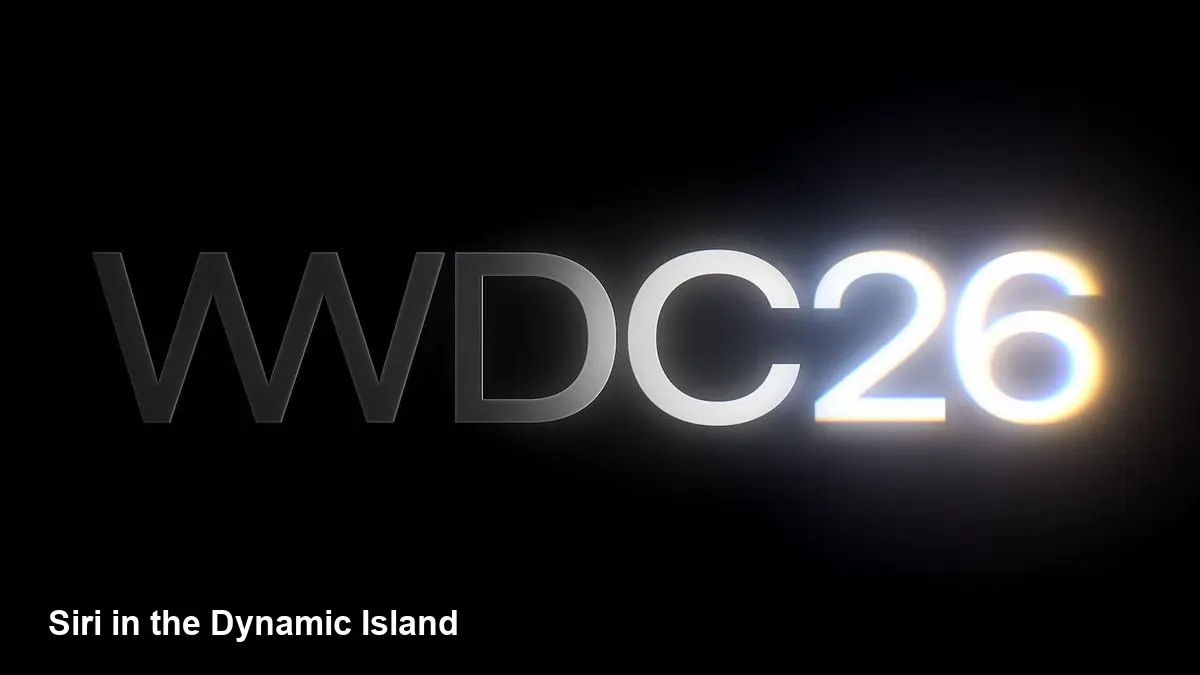
Apple’s WWDC 2026 artwork and reporting from Bloomberg’s Mark Gurman pointed to a notable interface change coming in iOS 27: a redesigned Siri experience that lives inside the Dynamic Island. That’s a compact, contextual area Apple introduced to surface live, glanceable information without full-screen interruptions. Putting Siri there would shift voice interactions from modal interruptions to lightweight, persistent micro-interactions.
For product teams, app developers, and startup founders, that’s not just a cosmetic tweak. A more compact Siri inside the Dynamic Island alters user attention, workflow patterns, and integration opportunities across the iPhone ecosystem.
What the tease suggests (and what Apple could reasonably do)
Apple has historically redesigned Siri around two goals: reduce friction and protect user privacy. Embedding Siri in the Dynamic Island would continue both aims by:
- Offering short, visual confirmations and controls (instead of full-screen takeover) for simple tasks like timers, music controls, and quick searches.
- Keeping context visible on screen, so voice queries can appear alongside the app the user is already using.
- Potentially enabling richer live updates tied to ongoing tasks (ride ETAs, sports scores, delivery tracking) using the Dynamic Island’s live activity model.
It’s realistic to expect Apple to expose new APIs that let apps feed compact state into the Dynamic Island, and to expand App Intents or SiriKit so developers can craft short, voice-driven microflows that display status and actions in that space.
Three concrete scenarios you’ll feel immediately
1) Faster confirmations for quick tasks
- Example: You ask Siri to start a workout. Instead of a full-screen card, a small, tappable element appears in the Dynamic Island showing the workout type, elapsed time, and a single tap to pause or end. That reduces context switches for fitness and other quick interactions.
2) Voice-driven microtransactions without interrupting context
- Example: While reading a message or browsing a product page, you say “Siri, pay for my coffee.” A compact Siri pane shows the charge, card used, and a one‑tap confirm. Users complete small transactions without leaving their current app.
3) App-integrated glanceable updates
- Example: A rideshare app uses an App Intent that surfaces ETA and driver name directly within the Dynamic Island. You can ask follow-up questions or get an option to message the driver — all without opening the full app.
These flows improve perceived speed and reduce the cognitive cost of switching apps or tolerating modal interruptions.
Developer implications and a suggested workflow
If Apple follows past patterns, expect additions across three layers:
- System-level: Enhanced Dynamic Island and Live Activities APIs that support richer text, buttons, and short voice replies.
- Intent layer: Expanded App Intents and shortcuts to declare micro-interactions specifically designed for the Dynamic Island.
- Privacy controls: Granular permission surfaces so users can choose whether an app can show voice-driven microfeedback in the Dynamic Island.
A recommended developer workflow:
- Audit use cases that fit sub-8-second interactions (timers, confirmations, status checks).
- Model those as App Intents that return compact state and optional actions.
- Prototype Dynamic Island views using the updated Live Activities API, focusing on readable text and one-touch fallbacks.
- Add voice-first unit tests and accessibility checks (voiceover, larger text, localization).
Startups should prioritize high-frequency tasks that benefit most from reduced friction — payments, bookings, navigation, and communications.
Business and UX trade-offs
Advantages:
- Higher task completion rates for quick actions, which can increase in-app conversions for commerce and services.
- Reduced time-to-action, improving user satisfaction and retention for frequent interactions.
Trade-offs:
- The Dynamic Island’s limited real estate forces concise design; apps that rely on complex flows won’t fit neatly.
- Overuse could clutter the user’s screen with competing live elements; platform-level throttling and prioritization will matter.
- Discoverability: users might not realize certain voice features exist unless apps guide them through onboarding.
From a monetization perspective, businesses that convert micro-interactions into measurable outcomes (e.g., one-tap checkout, quick reorders) stand to benefit most. But the UI constraints mean product teams must redesign funnels into atomic, voice-friendly steps.
Privacy, performance, and accessibility
Apple’s messaging around Siri increasingly emphasizes on-device processing. Expect Apple to maintain — or strengthen — that stance for Dynamic Island interactions. Implications:
- Short voice queries and intent parsing may run locally for speed and to reduce data exposure.
- Developers should design for intermittent network conditions; fallback UI and cached state will matter.
- Accessibility gains: a small, consistent location for voice confirmations can help users with cognitive or motor impairments avoid full-screen navigation, but accessibility testing is essential.
Limitations and likely constraints
- Visual complexity: Dynamic Island is compact; not all Siri responses can be shoehorned in.
- Third-party access: Apple may limit capabilities initially to first-party apps or a vetted set of intents, expanding gradually.
- Platform consistency: To keep the experience reliable, Apple will need to restrict what apps can show there and how frequently they can update it.
Developers should plan for staged rollouts and design fallback experiences that degrade gracefully to notifications or full-screen views.
Three implications for the near future
1) A shift toward ambient, task-focused interfaces: If Siri becomes less interruptive, product teams will re-evaluate when to surface modal UI versus lightweight micro-interactions. 2) New growth levers for startups: Voice-first, micro-conversion experiences (reorders, quick payments, status checks) will become a practical channel for retention and revenue. 3) Competitive pressure on assistants: Apple’s move would push rivals to make their voice assistants less intrusive and more context-aware on mobile devices.
Whether Apple launches this exact design at WWDC 2026, the broader trend is clear: voice is moving out of isolated modal dialogs and into persistent, glanceable UI. For developers and founders, the practical task is to identify the dozen micro-moments in your product that can be simplified by a single voice command and a one-tap follow-up — then prototype them before the platform locks down its APIs.