Gigs: Turn Tickets into a Personal Concert Archive

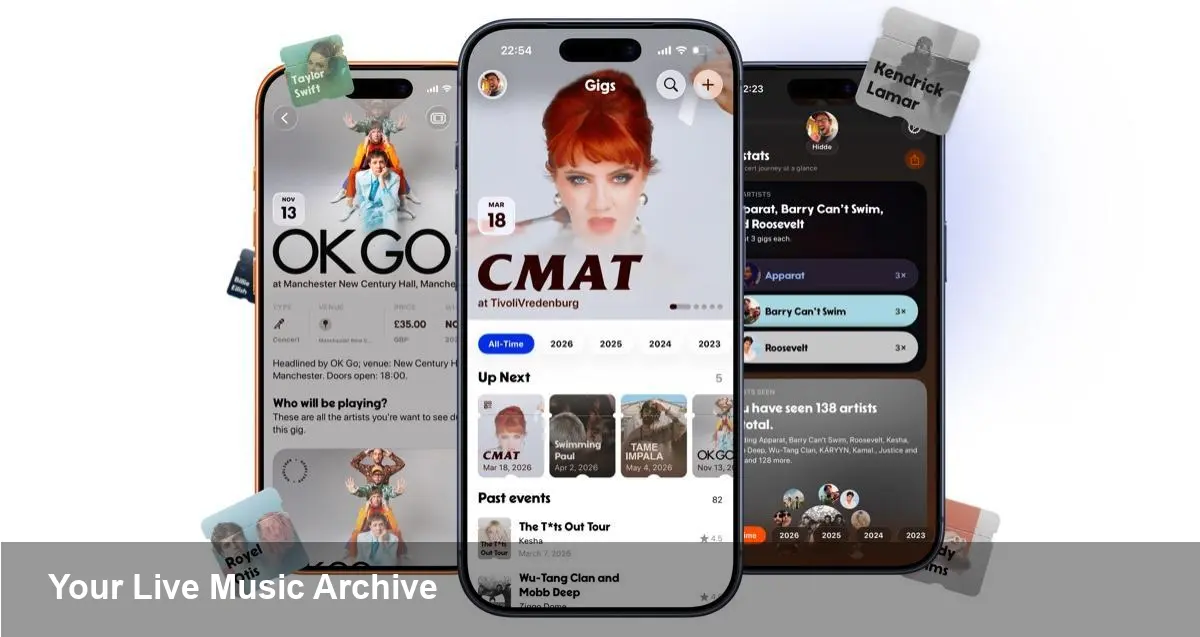
A digital scrapbook for your live music life
If you’ve ever kept piles of paper stubs, dozens of screenshots, or a trail of confirmation emails after a tour run, Gigs is the kind of app that makes that mess useful. The iPhone app uses optical character recognition (OCR) and natural language processing to extract artist names, dates, venues and other metadata from photos, PDFs and messages, then builds a searchable concert archive with stats, maps and memories.
This isn’t just nostalgia — it’s a practical reimagining of how fans track and analyze live music experiences. For anyone who has tried to remember which year they saw a band, which venue had the best sound, or which cities they visit most, a structured concert archive can close that gap.
What Gigs does, in plain terms
- Ingests artifacts: photos of tickets, boarding-pass style mobile tickets, screenshot confirmations and email receipts.
- Extracts details: artist, venue, date and time, seat or general admission info, and sometimes supporting acts.
- Normalizes and deduplicates: it groups multiple artifacts from the same show (photo + email) into a single record.
- Visualizes your history: timelines, most-played acts, city heatmaps and simple stats like “most-attended venue.”
- Adds memory cues: photos, quick notes, or links to playlists associated with a show.
The result is a searchable personal dataset that turns chaotic evidence into a tidy live music timeline.
How the AI ticket scanning actually works
Under the hood, Gigs applies a couple of well-established techniques:
- OCR for images and PDFs: modern OCR engines can cope with different ticket formats, fonts and backgrounds. That’s how the app reads dates, artist names and venue addresses from a photo of a torn ticket or a PDF receipt.
- Entity extraction and fuzzy matching: once raw text is available, NLP models identify entities like performer names and venues, even when formatting is inconsistent (e.g., “Taylor Swift – Eras Tour” vs “TS Eras”).
- Heuristics for deduplication: rules and similarity scores decide whether two items represent the same show.
Because tickets and confirmations come in many shapes — Apple Wallet passes, PDFs from ticketing platforms, screenshots with overlays — the app needs both ML resilience and rule-based fallbacks to extract reliable metadata.
Real-world scenarios where this is useful
- The collector: You’ve saved tickets since high school. Gigs turns decades of stubs and photos into a searchable timeline so you can find the first show you saw a favorite artist play.
- The frequent flyer fan: Touring between cities? A concert archive surfaces which cities you visit most for shows and where you typically see certain artists.
- Writers and podcasters: Researchers who cover artists or scenes can quickly pull set history, dates and venue context without digging through inboxes.
- Social sharers: Create timelines or “top 10 shows” lists to share on social media or export images for a newsletter.
Developer and business implications
For founders and product teams, the core capabilities behind Gigs suggest multiple monetization and extension paths:
- Freemium with premium analytics: Basic import and timeline features can be free; advanced stats, export options and custom visualizations could sit behind a subscription.
- Partnerships with ticketing platforms and venues: Integrations could allow one-click imports or enrichments (official setlists, verified attendance badges) in exchange for revenue or referral fees.
- API for third parties: A developer-facing API would enable music apps, journaling tools, and social platforms to consume structured concert data — think automated playlist creation from attended shows.
- B2B products for promoters: Aggregated (anonymized) data about attendance patterns could help promoters understand fan mobility and repeat-attendance behavior.
Each path has tradeoffs around user trust and data access; building direct integrations with ticket vendors would simplify imports but requires complex agreements.
Privacy, accuracy and limits to watch
A personal concert archive is intimate: it ties you to places, times and social interactions. Users and product teams should think about:
- Local vs cloud processing: Doing OCR and entity extraction on-device reduces privacy concerns, but cloud processing can be more accurate and allow cross-device sync.
- Permissioned imports: Parsing email receipts or calendar events requires explicit user permissions and clear UX describing what will be read.
- Error handling: OCR and NLP aren’t perfect — venue names might be misread, dates can be ambiguous, and some ticket images are unreadable. A good upload workflow lets users correct and confirm extracted fields.
- Ownership and export: Users expect portability. Allowing CSV/JSON export and easy deletion builds trust and meets basic data portability expectations.
How this changes the fan experience
A structured concert archive reframes live music as a dataset you can interrogate. Want to know which band you’ve seen the most, or which cities host your favorite music scenes? Instead of manual recollection, the app surfaces those answers instantly. That’s useful for personal reflection, social storytelling, and even for practical planning — choosing cities to follow a tour or deciding which anniversary shows to attend.
For venues and promoters, fans’ archives can inform loyalty programs: reward repeat attendees or offer personalized offers based on an individual’s concert preferences.
Looking ahead: 3 implications for the music ecosystem
- Data-first fan experiences. As more personal activity becomes structured and portable, music apps can build richer, individualized experiences — automated playlists of artists you first saw live, timeline stories, or ticket recommendations based on attendance history.
- New loyalty and commerce channels. Verified attendance records could unlock exclusive merchandise drops, presale access, or scarcity-driven memorabilia (digital or physical) tied to shows you actually attended.
- Privacy becomes a feature. Apps that treat attendance data as sensitive will earn user trust. On-device processing, clear export controls and transparent policies will be differentiators in this space.
Gigs is a tidy example of taking a narrow slice of human memory — the artifacts we keep from concerts — and converting it into structured, searchable value. For fans it’s a way to relive and organize live music history; for product teams and startups it’s a reminder that many seemingly small personal datasets can be the seed of new services and business models.
If you’ve got decades of ticket stubs languishing in a shoebox, converting them into data might be the fastest route to rediscovering why those shows mattered in the first place.