Axiom Plans 2027 Flight Test for Lunar Spacesuit

What Axiom is building and why it matters
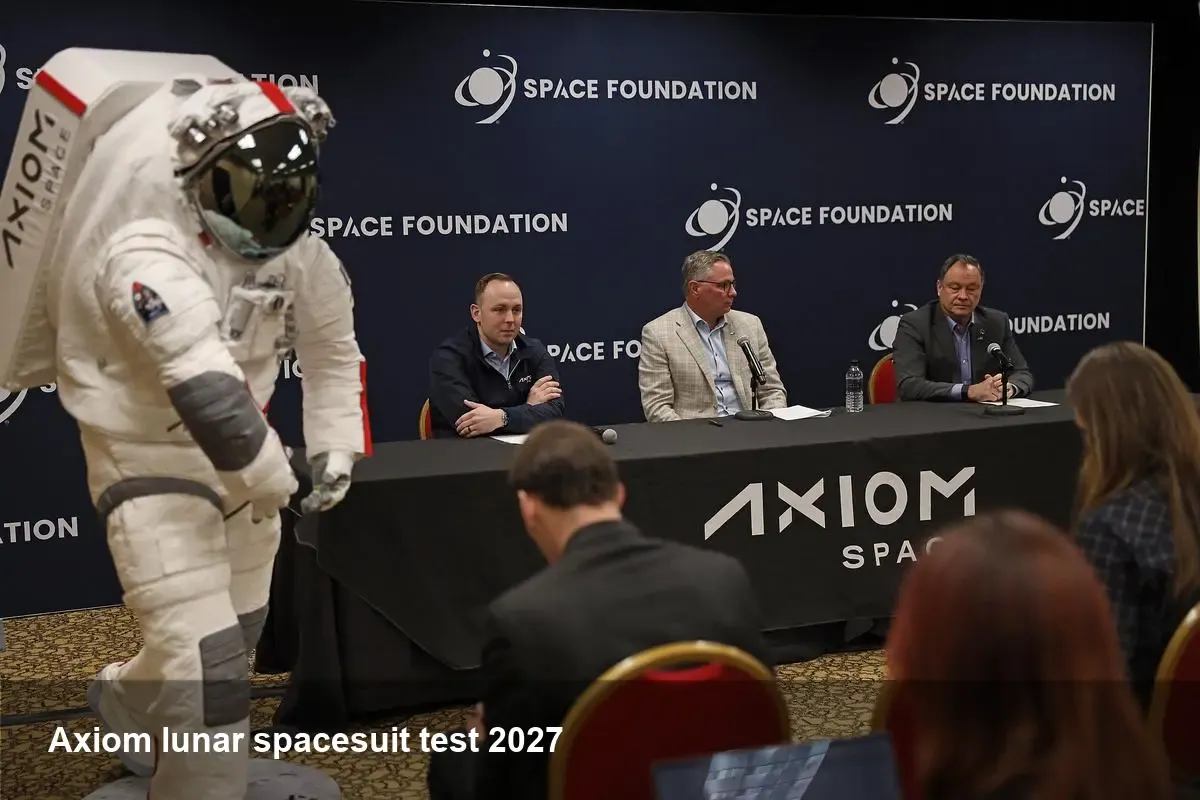
Axiom Space, the Houston-based company known for commercial modules and private astronaut missions, is developing a new spacesuit intended for lunar surface operations. The program has a near-term milestone: a planned flight test in 2027. That trial could take place either aboard the International Space Station (ISS) or as part of an Artemis lunar mission.
This test isn't just a demo. A successful flight evaluation would validate life-support integration, mobility systems and operational procedures in true microgravity or lunar-transit conditions. For NASA and commercial partners, it would reduce risk for future Artemis excursions and prove that a private firm can supply critical crew systems for deep-space missions.
Two test venues, very different outcomes
There are two likely scenarios for a 2027 flight test, each with distinct trade-offs.
- ISS flight test: A test on the space station offers a controlled environment, well-established logistics and a lower-risk platform for repeated evaluations. Engineers can monitor suit performance in microgravity, verify interfaces with existing station systems, and iterate quickly between trials. This path is ideal for validating life-support loops, thermal control, and communication links before committing to a lunar environment.
- Artemis 3 integration: Testing on an Artemis lunar sortie provides the strongest realism—exposure to translunar radiation, deep-space comms and the operational constraints of a lunar sortie. However, this route carries higher programmatic and safety risk. An on-mission test would need to be exceptionally mature in design and verification to be flown, and schedule slips could have broader implications for mission readiness.
Choosing between those options comes down to risk appetite, schedule alignment and the maturity of the suit when certification windows open.
What engineers will be watching during the flight test
Axiom’s development team will use the flight window to gather data across several critical areas:
- Life-support performance: Closed-loop oxygen delivery, CO2 scrubbing, thermal regulation and battery endurance need real-world validation to ensure crew safety on multi-day sorties.
- Mobility and ergonomics: Lunar tasks demand different joint ranges and dexterity than microgravity station tasks. Flight testing reveals how the suit affects climbing, sampling and tool use under actual mission loads.
- Dust and contamination tolerance: Lunar regolith is abrasive and electrostatically clingy. A 2027 test will help assess seals, bearings and materials for dust ingress and long-term wear if run in a lunar-like environment.
- Systems integration: Radios, telemetry, suit-to-vehicle seals and emergency procedures must all work in concert. The test provides an opportunity to verify end-to-end workflows between suit, crew and ground controllers.
Practical implications for mission planners and developers
For program managers, a 2027 flight test shortens the feedback loop between prototype and flight-ready system. It allows:
- Faster certification cycles: Real-flight telemetry accelerates safety reviews and design fixes.
- Operational playbooks: Teams can refine timelines, translation techniques and EVA procedures off the simulator and into the real world.
- Supplier validation: Components such as bearings, bearings lubrication, comms transceivers and life-support subassemblies get a true stress test, helping qualify vendors for production runs.
For developers and startups building complementary tech—mobility aids, lunar tools, or portable habitats—knowing the suit’s interface standards early helps reduce integration friction.
Business value and market dynamics
A private company delivering a flight-tested lunar suit shifts some long-standing dynamics in human spaceflight. A few business implications:
- Commercialization potential: A validated suit can be marketed to national agencies, international partners, and emerging commercial lunar operators.
- Competitive differentiation: Speed to flight test and demonstrated operational data become strong assets when bidding for future human spaceflight contracts.
- New aftermarket: Training, maintenance, spares and upgrades create recurring revenue streams beyond the initial hardware sale.
This development also signals increasing reliance on the private sector for hardware historically designed in-house by government agencies. That changes procurement models and may shorten development timelines for future crew systems.
Limitations and risks to watch
There are several constraints to keep in mind:
- Schedule risk: Spaceflight programs are famously schedule-sensitive. The 2027 plan could slip if testing, certification, or integration stalls.
- Certification burden: Meeting safety standards for crewed flights is resource-intensive. Any unresolved anomalies could delay operational use.
- Operational environment mismatch: An ISS test provides excellent microgravity data but can’t fully replicate dusty, low-gravity lunar surface conditions. Conversely, a lunar test is less forgiving of design immaturity.
- Cost and supply chain pressure: Producing flight-ready suits at scale requires mature supply chains for specialized materials and electronics.
Scenarios that illustrate how the test could be used
- Scenario A — Rapid iteration: Axiom executes an ISS-based test sequence. Short-term data drives firmware and suit-joint improvements and yields a production baseline for NASA and commercial customers within a year.
- Scenario B — End-to-end demonstration: The suit flies to the Moon as part of an Artemis sortie. A mission task demonstrates a surface sampling task, providing unprecedented validation—but it commits the project to high stakes and minimal opportunities to patch issues.
- Scenario C — Hybrid approach: Initial trials on the ISS prove core systems; a follow-on Artemis integration validates lunar-specific capabilities, giving the best of both worlds if schedule and funding allow.
What this means for the next decade of lunar operations
A successful 2027 flight test would boost confidence in commercially supplied crew systems and could accelerate private participation in lunar logistics, tourism and science. It would also likely spur innovation in suit modularity—separating life support, mobility units and surface tools to enable faster upgrades and cross-mission reuse.
Longer term, validated commercial suits lower the entry barrier for smaller nations and companies looking to conduct human-tended activities beyond low Earth orbit. That broadens the ecosystem of suppliers, researchers and operators working in lunar space.
Where to watch next
Keep an eye on program milestones: hardware qualification reviews, integration tests with habitat or vehicle interfaces, and scheduling announcements for ISS cargo and crew missions. Each public milestone will provide clues about whether the 2027 test will be station-based or tied directly to an Artemis flight.
As private firms take on more of the heavy lifting for crewed hardware, these kinds of flight tests become pivotal moments. They turn laboratory designs into operational systems—and they help define who will build the tools humans use to explore the Moon.