Sony InZone M10S II: Why 1440p OLED Matters for Gamers

A new step for Sony's InZone lineup
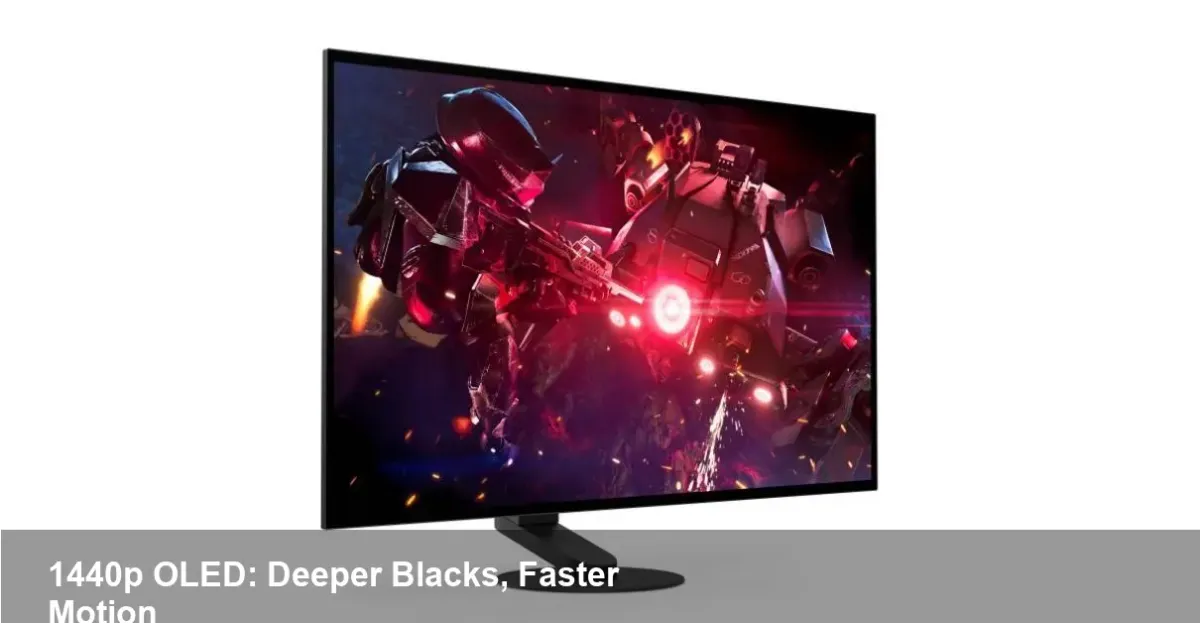
Sony's InZone family has been steadily moving beyond simple accessories and into serious gaming hardware. The latest entrant, the Sony InZone M10S II, is a 27-inch 1440p OLED gaming monitor that highlights two headline features: a fourth-generation Tandem WOLED panel and an integrated black frame insertion mode. Those two items are the product's differentiators — and they change how the display behaves in both competitive and cinematic gaming scenarios.
This article looks at what those technologies mean in practice, who benefits most from the M10S II, and the trade-offs to weigh if you're considering a premium OLED monitor for gaming or creative work.
What's behind the marketing: Tandem WOLED and BFI explained
- Tandem WOLED: In simple terms, a Tandem OLED stacks emission layers. The fourth-generation Tandem WOLED Sony uses is intended to push peak luminance, improve color stability, and extend panel longevity compared with earlier OLED iterations. For users this translates to brighter HDR highlights without the same level of compromise on lifetime that earlier high-brightness OLEDs suffered.
- Black Frame Insertion (BFI): BFI inserts black intervals between frames to reduce perceived motion blur and improve clarity in fast-moving scenes. Competitive players who prioritize visual crispness during rapid panning or twitch aiming will appreciate this. The trade-off is straightforward: BFI reduces the monitor's effective brightness and can change the perceived smoothness of motion at certain frame rates.
Together, these features try to bridge two competing demands: OLED’s unrivaled contrast and response time, and the motion clarity that competitive gamers expect from high-refresh LCDs.
Real-world use cases
- Competitive FPS and esports: If you play fast shooters, the M10S II’s low pixel response time and available BFI can make targets feel more defined during quick turns. BFI helps with perceived motion clarity, which can be an advantage in tracking targets during flick shots.
- Immersive single-player and console gaming: The deep blacks and excellent contrast native to OLED are obvious upgrades for story-driven or atmospheric titles. At 27 inches and 1440p, you get a sweet spot on pixel density for both PC and console play — noticeably sharper than 1080p while less GPU-taxing than 4K.
- Streamers and creators: For content creators who need accurate color and strong contrast when grading or capturing gameplay, the high contrast of OLED will be attractive. Be mindful that OLED panels can require different calibration approaches than IPS LCDs; relying on a hardware colorimeter and careful profiling helps preserve fidelity.
- Game development and QA: Developers testing motion, frame pacing, or HDR can benefit from a panel that exposes microstutter and subtle timing issues. BFI can be useful to validate how effects look when motion clarity modes are enabled on consumer displays.
Practical trade-offs to consider
- Burn-in risk and static content: OLED remains susceptible to image retention with prolonged static elements (UI HUDs, toolbars, window chrome). While Tandem architectures and improved driving algorithms reduce the risk, anyone using the monitor for long static workflows (e.g., trading terminals, multi-hour spreadsheets) should be cautious and use screen savers or pixel-shifting features.
- Brightness vs. motion modes: Activating BFI improves clarity but lowers luminance. If you play in a bright room or rely on HDR highlights, you may need to toggle BFI off for better visual pop. Expect to switch modes depending on content rather than keep one global setting.
- Price and positioning: Sony is targeting enthusiasts and professionals who want OLED quality at a gamer-friendly resolution. The M10S II sits in a premium segment — the hardware and panel tech justify a higher price tag, but it won’t be the default pick for budget-conscious PC builders.
Who should buy (and who should wait)
Buy the M10S II if:
- You prioritize contrast and color for immersive single-player games or media work.
- You compete in fast-paced esports and want a display with options to improve motion clarity.
- You value a 1440p resolution at 27 inches as the best balance between clarity and GPU load.
Wait or look elsewhere if:
- Your workflow uses lots of static on-screen elements for many hours daily and you cannot mitigate burn-in risk.
- You need an ultra-high refresh rate above typical OLED consumer levels (verify exact specs for pro-level refresh targets).
- You want the lowest possible cost; similar-sized LCDs will be cheaper and free of OLED-specific trade-offs.
A few implications for the monitor market
- OLED at 1440p becomes mainstream for high-end PC gaming: Sony’s choice to offer a 1440p OLED at 27 inches reinforces the shift away from 4K-as-default for premium panels. 1440p provides a pragmatic balance of visual fidelity and performance.
- Motion-enhancing features will stay relevant: Expect other manufacturers to pair advanced OLED stacks with BFI or similar techniques to make OLEDs competitive in esports, not just for cinematic play.
- Manufacturing and longevity improvements matter commercially: As Tandem and other stacked OLED designs mature, we should see narrower price gaps and fewer compromises around brightness and lifetime — a trend that will encourage broader adoption across both monitors and laptops.
Practical recommendations before you buy
- Test the monitor in person if possible; BFI and OLED luminance are perceptual and best judged visually.
- Ask about warranty and burn-in policies; manufacturers are evolving their coverage as OLED becomes more mainstream.
- Consider a calibration workflow if you’ll use the monitor for color-critical work.
Sony’s InZone M10S II package signals that OLED is continuing its migration into purpose-built gaming hardware. For users who want the combination of deep blacks and competitive motion clarity, the M10S II is a meaningful step — with the usual OLED caveats intact. If your setup and habits align with those strengths, it’s worth taking a closer look.