When Games Vanish: Why Big Announcements Stall and How to Respond

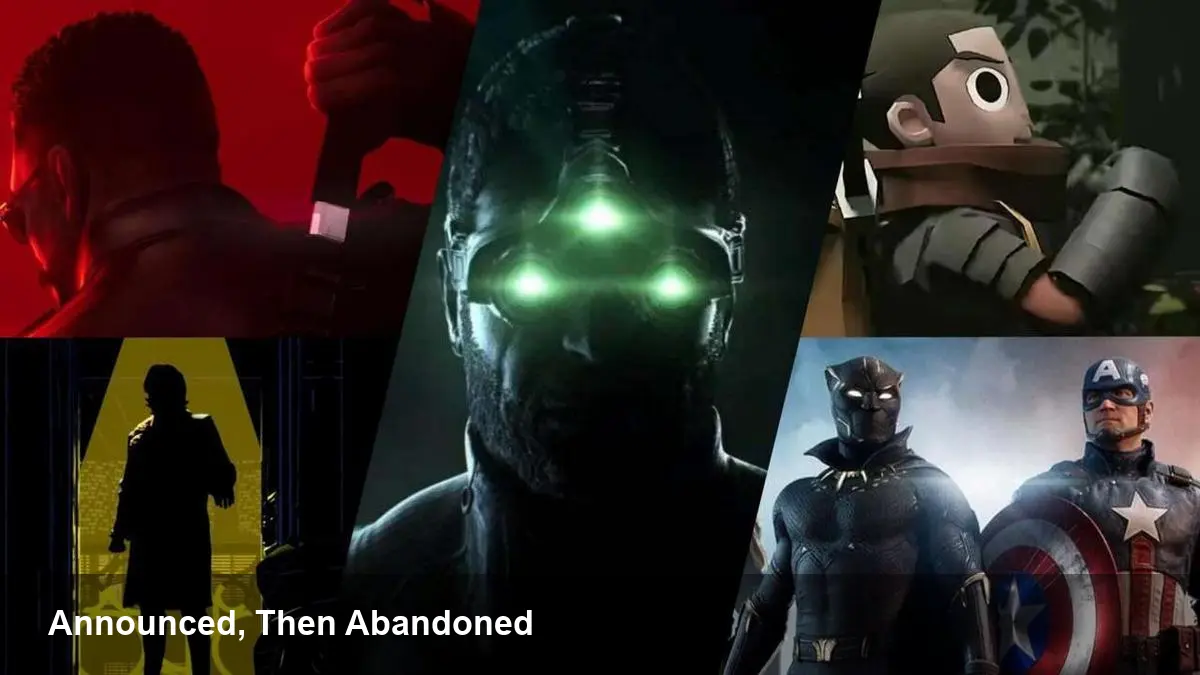
The vanishing act: why some games never arrive
Over the past two decades, the gaming industry has produced some of the most hyped, visually stunning announcements—and an equal number of high-profile no-shows. From cinematic trailers at E3 to cryptic teasers on social media, publishers can spark months of excitement in a single reveal. But when development stalls, leadership changes, or corporate acquisitions happen, those promises can evaporate. This article digs into why major titles get stuck in limbo, looks at a handful of notable examples, and gives practical advice for players, developers, and businesses.
A quick primer on the economics of announced-but-unfinished games
Announcing a game early can be a strategic move: it generates buzz, secures pre-orders, helps justify funding rounds, and can even lock down exclusive platform relationships. But early announcements also shift expectations and introduce new risks—public pressure, shifting tech requirements, and contractual obligations. On the production side, studios juggling engines, staff turnover, and scope creep can quickly exceed budgets. On the corporate side, acquisitions or strategy pivots can kill projects overnight.
Five archetypal cases and what they teach us
Below are short case studies of different ways games can enter limbo. These are emblematic rather than exhaustive.
Beyond Good & Evil 2 — ambition running into reality
Studio/publisher: Ubisoft; first reveal: 2008; major cinematic update: 2017 The sequel to a beloved cult title was teased more than a decade ago and later re-emerged with a high-production cinematic at E3. Ambition and a sprawling vision collided with leadership change (notably the departure of the project’s long-associated creative lead in 2020), technical hurdles, and mixed public reception to early footage. The result: continued uncertainty and long development cycles that stretch community patience.
Lesson: big, open-world ambitions require stable leadership, a clear tech base, and incremental milestones. Without those, optimism can turn into perpetual vaporware.
Star Wars 1313 — canceled by acquisition
Studio/publisher: LucasArts; announced: E3 2012; cancelled after Disney acquisition (late 2012–2013) This one demonstrates how corporate consolidation can cut a promising title short. Despite a strong reveal and evident technical promise, the title was canceled during the reorganizations that followed Disney’s purchase of Lucasfilm and the closure of LucasArts’ internal development.
Lesson: when IP ownership changes hands, product roadmaps are vulnerable. Even high-quality projects can be terminated if they don’t fit the new corporate strategy.
Agent — promised for years, then silence
Studio/publisher: Rockstar North; announced: 2009 Presented as an exclusive, high-concept stealth title, Agent disappeared from public view shortly after its announcement. Rockstar has a history of long development cycles and secrecy; sometimes “silent” projects are eventually reintroduced, but other times they fade entirely.
Lesson: in companies known for secrecy, an announcement might be exploratory. For players, this means treating such reveals as speculative until there’s consistent public progress.
Scalebound — developer-publisher friction
Studio/publisher: PlatinumGames & Microsoft; announced: 2014; canceled: 2017 Scalebound’s cancellation highlighted how technical integration and publisher expectations can collide. When a studio and publisher can’t align on scope, features, or milestones—and when contract terms don’t protect development runway—a project can be terminated even after years of work.
Lesson: contractual clarity and regular alignment are essential. Mismatched expectations are a fast track to cancellation.
Silent Hills / P.T. — demo becomes ghost
Studio/publisher: Konami (with Hideo Kojima & Guillermo del Toro); playable teaser released: 2014; project canceled: 2015 A playable teaser (P.T.) captured public imagination, but creative and corporate disputes led to Kojima’s exit and the project’s cancellation. The demo was later removed from digital stores, which frustrated players who had downloaded it.
Lesson: the interplay of creative talent and corporate governance matters. A single influential creative departure can derail a project, and removal of demos hurts brand trust.
Practical implications for each stakeholder
- Players and consumers: Treat early reveals as signals of intent, not guarantees. Avoid pre-ordering heavily hyped titles based only on cinematic trailers. Follow development updates and look for concrete milestones (development diaries, playable builds, betas).
- Developers and studio leads: Use vertical slices and live prototypes to prove concepts before going public. Communicate realistic timelines and be transparent about risks. Negotiate contracts that preserve runway and protect the team if the publisher changes direction.
- Publishers and investors: Announcements should balance marketing with feasibility. Demand clear milestones, but avoid open-ended scope growth. If acquisition is a possibility, plan transition terms for ongoing projects to prevent value destruction.
Concrete scenarios and recommended tactics
Scenario: an indie studio has a bold concept and wants to attract funding. Tactic: build a playable vertical slice (8–12 hours of work) and use it to show core mechanics, not cinematic polish. This reduces risk and sets reasonable expectations for backers.
Scenario: a mid-sized studio is contracted by a publisher for a single-IP AAA title. Tactic: negotiate explicit milestone payments tied to deliverables, define tech stack commitments (engine versions, middleware), and add mediation clauses for leadership changes.
Scenario: a publisher acquires a studio with multiple live projects. Tactic: perform quick audits, prioritize which projects align with strategy, and communicate decisions transparently to preserve goodwill.
Three forward-looking insights
- Modular development reduces vaporware risk. Building games as composable modules with independent deliverables makes it easier to ship parts of the experience and validate player interest early.
- Early Access and episodic releases are viable alternatives to big-bang launches. They let developers generate revenue and iterate based on real user feedback rather than internal assumptions.
- Reputation management matters. When publishers remove demos or cancel projects with little communication, they damage brand trust. Future strategies must weigh short-term cost-cutting against long-term consumer goodwill.
Announced-but-unfinished games are part creativity, part organizational risk. They remind studios and publishers that hype is a tool—not a substitute for rigorous planning and honest communication. For players, the safe bet is to watch for demonstrable progress rather than promises alone.