What Tomodachi Life Reviews Mean for a Switch Launch

Why reviews matter when a console debuts
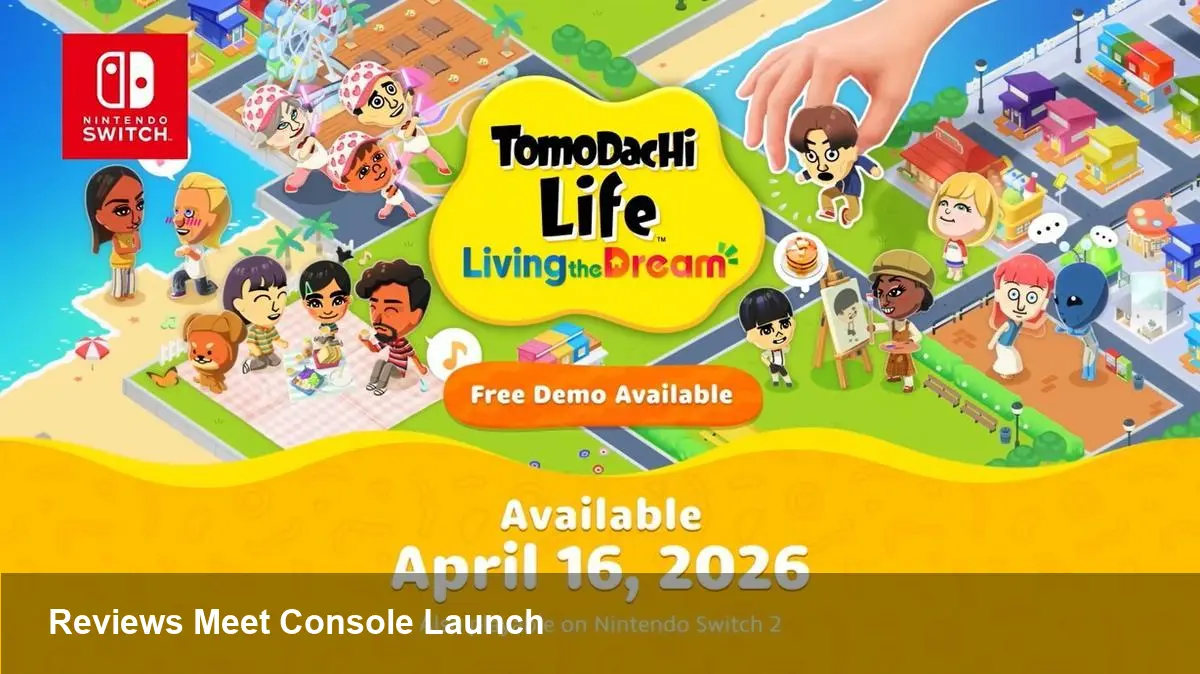
Tomodachi Life: Living the Dream arriving into the conversation just before the Nintendo Switch launch is a useful case study in how review coverage can influence a game's early trajectory. When a new console debuts, attention is concentrated: players, press, and influencers are all scanning for titles that feel like they belong on the platform. Early critical and player sentiment shapes discoverability, retail placement and early sales momentum.
For teams shipping around a platform debut, two signals are most important: the tone of reviews (positive/negative) and the narratives they create. Reviews that highlight unique uses of a platform’s hardware, controller, or social features get amplified; those that brand a title as “out of step” with the new ecosystem can make it harder to break through.
Short background: Tomodachi Life and Nintendo’s approach
Tomodachi Life is a quirky social-simulation series born on Nintendo handhelds. Its design emphasizes user-created characters, emergent interactions, and lighthearted customization rather than tightly scripted progression. Nintendo has traditionally supported first-party and select third-party titles around hardware launches to demonstrate the console’s range: from high-end showcases to crowd-pleasers that show off personality.
That context matters. A title like Tomodachi Life: Living the Dream doesn’t compete on graphics or raw technical ambition — it competes on charm, shareability, and how well it fits into the early ecosystem of the console.
Practical implications for developers and publishers
Here are concrete areas teams should focus on when shipping a title at or around a console launch.
- Timing and PR coordination: Coordinate early review copies and embargoes to ensure coverage lands when potential buyers are researching the console. If your game is intended as a “comfort purchase” for early adopters, you want reviews visible during the critical first weeks.
- Platform fingerprinting: Tailor messaging and features to the new platform. If a title’s unique appeal — social creation, local multiplayer, motion input — maps well to the console, highlight that in press materials and early previews. Reviewers are more likely to reward titles that feel native to the hardware rather than obvious ports.
- Community seeding: For games that thrive on user content, invest in influencer seeding and creator-friendly tools. Early streamers and YouTubers can translate a charming review into shareable moments that amplify discoverability.
- Measurement and iteration: Attach telemetry and a post-launch cadence for patches or event content. Reviews give an initial impression; data shows whether reviewers’ criticisms translate into behavior changes like short play sessions or low retention.
Two scenarios: a studio planning a launch and a publisher evaluating a port
Scenario A — Small studio: A team with a successful handheld niche title is eyeing a spot near a platform launch. They should prioritize quality-of-life fixes and fast, visible features: better save reliability, clearer onboarding, and content that creates “share moments.” These changes won’t overhaul reviews but can shift them from “frustrating” to “cute and addictive.”
Scenario B — Publisher with a port: If a publisher is porting an existing Tomodachi-style game to a new console, they must decide whether to invest in native features or treat it as a straightforward port. Investing in local features (e.g., console social APIs, integrated capture sharing) can make the title feel intentional and improve press narratives; skipping that can relegate the game to a footnote among more polished launch exclusives.
How to read review roundups strategically
A reviews roundup isn’t just a scoreboard. For developers and founders, it’s an early dataset:
- Qualitative themes: Identify the repeated complaints or praise across outlets. Are players praising customization but criticizing depth? Is the UI called out frequently? Those themes map directly to immediate priorities for patches or DLC.
- Sentiment over scores: A 7/10 from a major outlet with enthusiastic quotes can be more valuable than a 9/10 that praises only a small subset of features. Look at what parts of the game reviewers spend time on.
- Influencer vs critic angle: If influencer coverage diverges from critic coverage, prioritize the channel that best matches your audience. For a social-sim like Tomodachi Life, creator-driven virality often outperforms critic accolades in unlocking long tail sales.
Business value and monetization thinking
Games that excel on shareability and repeat engagement—traits of Tomodachi Life—have monetization levers beyond the launch window: cosmetic packs, themed events, and creator tools. However, early reviews influence players’ willingness to spend. If initial impressions emphasize value and content breadth, players are likelier to convert to paid expansions.
A measured approach is key: avoid monetization that undermines the charm reviewers praised. Instead, use early feedback to design monetized content that deepens rather than fragments the experience.
Limitations and risks
Launching near a console debut has upside but also risks. The spotlight is crowded; if a title doesn’t convey a unique reason to buy the game on the new console, it will be drowned out. Reviews that focus on a lack of innovation or technical polish can be amplified simply because there’s more coverage and comparison during a hardware launch.
Also, hardware shortages or supply-chain constraints around a platform debut can limit physical distribution, making digital discoverability and positive digital storefront placement even more important.
Looking ahead: three implications for future launches
- Review timing will increasingly be a strategic lever. Staggered embargoes, influencer-first previews, and early access periods will be used to shape narratives rather than just report them.
- Shareable moments will decide late adopters. As platforms emphasize social hooks and creators, games that enable quick, amusing clips or avatars will win more attention than technically superior but less expressive titles.
- Live operations post-launch will close the loop. Early reviews will drive immediate perception; how a team responds with patches, events, and community engagement will determine the long-term success of launch-window titles.
For teams shipping titles like Tomodachi Life: Living the Dream, the lesson is pragmatic: earn the early press by proving you belong on the platform, then lean on creators and fast iteration to translate reviews into a sustainable audience.