What the Steam Controller Launch Teaches Product Teams

A brief recap and why it matters
When Valve finally moved its Steam Controller from prototype to storefront, the rollout didn’t go according to plan. Many customers encountered payment errors at checkout, while inventory disappeared quickly. The result was a messy customer experience: frustrated buyers, heavy social-media blowback, and a product that looked scarce rather than successful.
This isn’t just a gaming-industry anecdote. Hardware rollouts are high-risk events for any company, and when your purchasing pipeline breaks, every other part of the product launch — PR, fulfillment, community goodwill — takes a hit.
Valve, the Steam Controller, and what the device aimed to solve
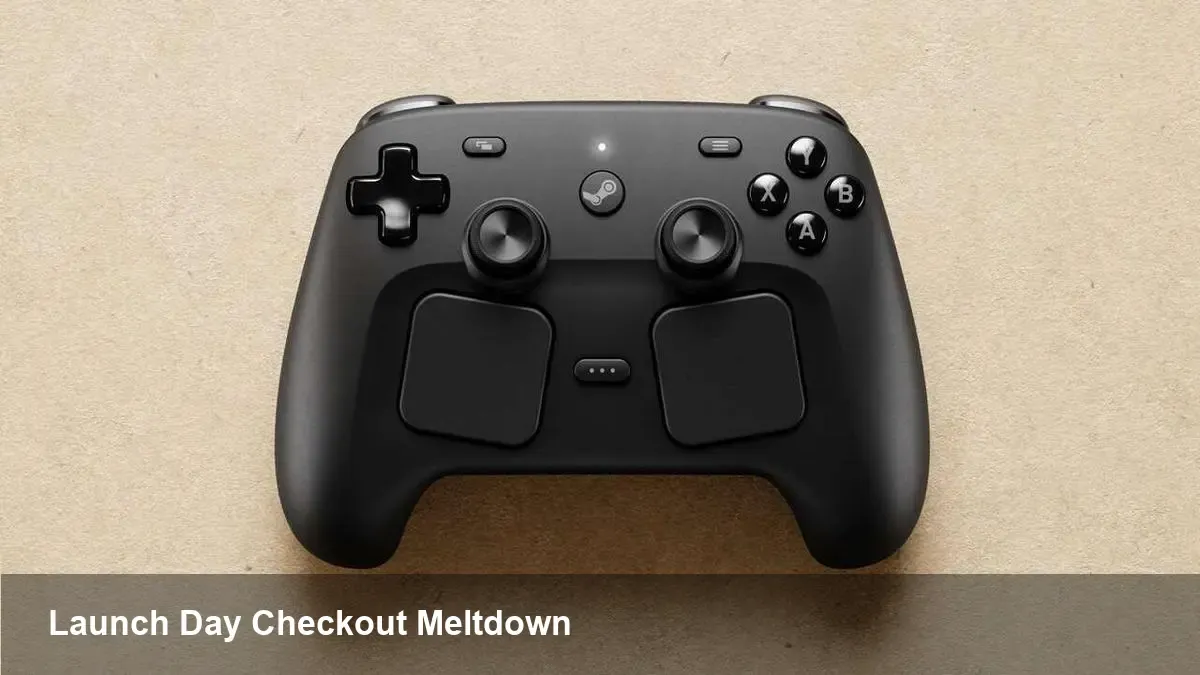
Valve built the Steam Controller to bridge a gap: make the PC feel like a living-room console without losing PC flexibility. It offered a different input model (trackpads, haptics, highly remappable controls) designed to support non-traditional controllers and to extend Steam’s reach into the living-room gaming space.
For Valve, the controller was also strategic: hardware that reinforced the Steam ecosystem and encouraged more time and purchases on the platform. Which makes the rollout friction — especially in purchasing — all the more consequential.
What typically breaks during a high-demand hardware launch
From the outside, “payment errors” is a blunt description. Under the hood, several things tend to fail when traffic spikes:
- Payment gateway throttling: processors limit request rates to fight fraud. A sudden surge can trip those limits and return failures.
- Inventory race conditions: multiple customers try to reserve the same limited SKU at once. Without strict idempotency and reservation tokens, some orders will fail after payment authorization.
- Backend overloads: order-creation services, database writes, or API calls to downstream logistics may time out under concurrent load.
- Inadequate UX for partial failures: the system may authorize a payment but then fail to create an order, or show an “out of stock” message after charging, creating confusion and refund headaches.
If a storefront doesn’t anticipate these, the launch will look like a product failure even if the hardware itself is solid.
Practical scenarios: how customers and teams feel the pain
- A gamer tries to check out two minutes after launch and sees a payment error. They retry multiple times and get charged multiple holds before a final failure and a long refund period.
- A content creator posts a purchase video that shows the product sold out in ten minutes. Fans assume low supply or bot-buyers, and community trust erodes.
- The ops team scrambles to reconcile transactions and manually refund customers, diverting resources from support, logistics, and marketing.
These are avoidable with engineering and product planning informed by real-world load expectations.
Developer and product playbook: avoid becoming a cautionary tale
If you’re building a storefront for hardware, treat the purchase pipeline as a first-class engineering problem.
- Pre-reservation tokens: offer a short reservation period when a user hits “buy.” This separates inventory reservation from payment capture and reduces partial-failure complexity.
- Idempotent order API: ensure retries don’t create duplicate orders or double-charges.
- Progressive rollouts: open sales to small cohorts first (e.g., presale access, regional rollout) to limit initial traffic and surface issues early.
- Payment orchestration and redundancy: use multiple gateways or a payment orchestration layer that can failover gracefully.
- Load-test realistic flows: include third-party gateways, fraud checks, and downstream fulfillment systems in stress tests rather than only load-testing the frontend.
- Transparent customer messaging: when errors occur, show clear guidance about charge holds, refund timing, and waitlist options. Proactive communication reduces churn and angry posts.
Business implications and PR management
A bungled checkout is more than a tech bug — it affects brand equity and revenue. Scarcity created by stockouts can sometimes drive interest, but it’s a risky path: if perceived as poor planning, it becomes a reputational hit rather than hype.
Post-launch, companies need to move quickly: reconcile transactions, communicate with affected customers, and publish a timeline for next availability. If you can convert initial frustration into a clear path to resolution (express shipping for affected customers, exclusive discounts, or early access to future restocks), you salvage much of the goodwill.
Concrete checklist for hardware launches
- Run end-to-end load tests that include payment processors and fraud-check services.
- Implement inventory reservation tokens with a clear TTL and visible cart messaging.
- Make order creation idempotent to avoid duplicate charges.
- Prepare staged rollouts and throttled access pathways (queues, ticketed access, presales).
- Provide a waitlist and communicate ETA for restocks rather than leaving customers guessing.
- Have a customer-support war room and refund automation ready on day one.
Three forward-looking insights
1) Payment orchestration will matter more: as hardware startups scale globally, single-provider payment models become a bottleneck. Orchestrators that route transactions dynamically will reduce single points of failure.
2) UX around failure will be a differentiator: companies that design graceful degradation — e.g., “we’ve reserved your cart, please confirm within X minutes” — will retain customers better than those that leave shoppers in the dark.
3) Hardware launches are becoming services launches: successful launches increasingly rely on cross-functional readiness (engineering, payments, logistics, comms). Treat them like product releases with operational runbooks and KPIs.
If you’re planning a hardware debut — controller, peripheral, or consumer gadget — take the launching-day checkout as seriously as your firmware. The product can be great, but a bad buy experience will overshadow it every time.