What Lord of Hatred Teaches Live-Service Teams

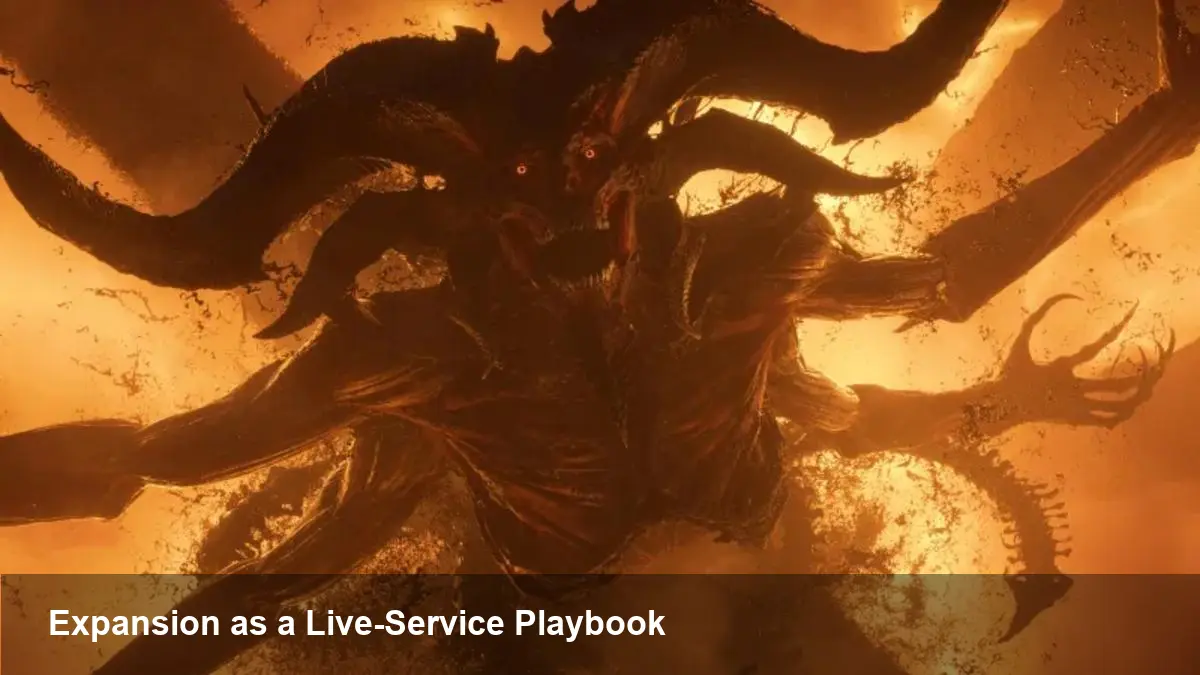
Why a Diablo expansion matters beyond players
Blizzard’s Diablo IV has become as much a platform as a single game — and its expansion, Lord of Hatred, is a useful case study for anyone building recurring-content software. For product leaders, engineers, and indie studios, expansions are not just about new story beats or loot; they’re big experiments in retention, scalability, monetization and community management.
This article looks at the practical lessons behind a modern ARPG expansion and translates them into tactics teams can use when running any live service.
Quick background
Diablo IV launched as a shared-world action RPG and followed a seasonal cadence with live updates, a battle-pass-style progression, and an in-game store. Its expansion, Lord of Hatred, extends the base experience with fresh campaign content and endgame systems designed to pull lapsed players back in and deepen engagement for active players.
Even if you don’t ship triple-A games, the mechanics of designing, deploying, and operating an expansion mirror problems in many SaaS and consumer apps: feature releases, event-driven engagement, capacity planning, and community trust.
Product design: content as a reactivation lever
New story content performs two roles simultaneously: it generates marketing momentum and gives players a reason to return. That dual purpose is a useful template:
- Re-engagement campaigns should pair narrative or feature hooks with short, achievable goals. A new dungeon or challenge that takes players an hour to clear does more to bring people back than a vague marketing email.
- Layer short-form content (limited-time events) on top of long-form expansions. Events are lower-risk ways to test rewards, pacing, and difficulty without changing core systems.
- Use milestone rewards to repair the relationship with lapsed users. Give a taste of the expansion’s rewards so returning players feel progress without undermining long-term progression.
Concrete scenario: instead of dropping a huge expansion behind a hard paywall, let returning players sample the opening chapter plus a time-limited mini-event that can be completed with a week of casual play.
Engineering: safe rollouts and scaling
Expansions often spike traffic, and how your backend handles that spike defines customer experience. Lessons to apply:
- Canary and progressive rollouts: release expansion features to a small percentage of users first and monitor error rates, server load, and retention signals. Use feature flags for rapid rollback.
- Autoscaling with warm pools: instead of spinning up servers on demand, keep a warm pool of instances for commonly hit services (matchmaking, login, world hosting). Warm pools reduce cold-start lag and failed logins during launch rushes.
- Readiness gates: integrate automated smoke tests and synthetic users into CI pipelines that validate critical flows (login, matchmaking, purchases) immediately after deployment.
Example: run a pre-launch stress window with invited players to simulate peak concurrency. Use the telemetry from that window to tune autoscaling and database throughput before the live launch.
Data, metrics and live tuning
Which metrics matter across a major content drop?
- Reactivation rate: percent of returning players who launch the expansion and complete the first milestone.
- Short-term retention (D1–D7) for expansion cohorts: a spike in Day 1 without corresponding Day 7 retention is a red flag.
- Time-to-first-cool-reward: how long does it take new or returning players to receive a meaningful piece of loot or progress? Shorter times can drive early momentum.
- Server error budgets and queue lengths: measure the operational health that impacts user experience directly.
Use these KPIs to run rapid experiments: tweak drop rates, adjust encounter difficulty, or change reward pacing and watch how cohorts diverge. Small iterative changes have outsized impact when rolled out quickly and measured carefully.
Community and trust: communications are a product feature
A lot of expansion success is psychological. Clear, predictable communication about launch windows, maintenance, and rollback policies reduces player frustration. Tactics:
- Announce expected maintenance windows and stick to them. If you need to extend, communicate why and provide progress updates.
- Create a public issues board or status page with current incident data. Transparency reduces rumor cycles and reduces support load.
- Offer goodwill compensation early if players suffer serious downtime — it’s cheaper than the long-term PR and retention costs.
Scenario: a weekend launch suffers matchmaking outages. A timely announcement, transparent ETA, and a small in-game bundle for everyone who logged in during the outage rebuilds trust faster than silence.
Business model trade-offs
Expansions sit at the intersection of boxed content and live monetization. Teams must weigh pricing, accessibility, and long-term ecosystem health:
- Pay-once expansions drive a marketing spike and a clean revenue event. They can be paired with ongoing monetization (cosmetics, battle passes) to sustain revenue between releases.
- Free expansions with paid cosmetics lower friction for reactivation but increase pressure on content velocity to justify ongoing revenue.
A hybrid approach — a paid campaign plus a free event layer — preserves the splash of a marquee release while keeping the barrier to returning minimal.
What this implies for the future
1) Operational engineering becomes a product differentiator. The ability to scale smoothly and roll back without drama will matter as much as content quality.
2) Personalization and AI will change content cadence. Expect more dynamic, player-specific event triggers and procedurally assembled content tailored to player skill and history.
3) Community trust and transparent ops will be a key competitive moat. Players reward studios that treat downtime and balance problems with honesty and quick remediation.
Practical checklist for teams shipping a major live update
- Run a closed stress test with representative concurrency and gameplay loops.
- Instrument milestone funnels and set alert thresholds for D1–D7 retention dips.
- Prepare rollback plans and feature flags for every risky subsystem.
- Publish a clear launch communications plan and a status page.
- Budget for warm capacity and pre-provisioned instances to absorb peak load.
If you’re building a live product — game or app — view your next major release as a combined product, engineering and community exercise. The expansion is the headline; the execution determines whether it becomes a remembered success or a cautionary tale.