Steam Controller Ships May 4 — Steam Machines Delayed

A short background on Valve's hardware push
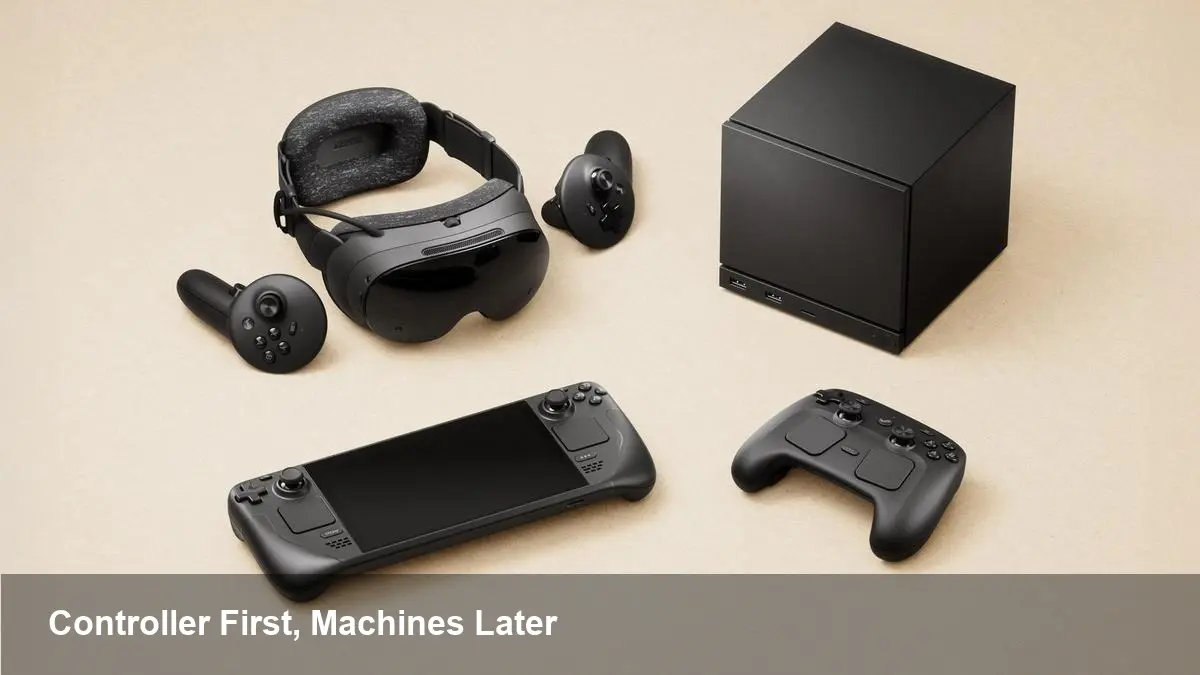
Valve, long known for the Steam storefront and PC gaming platform, has been experimenting with living-room hardware for several years. The company plans to release its Steam Controller on May 4 for $100. That controller is part of a broader initiative — which includes Steam Machines and a prototype device sometimes referred to as the Steam Frame — aimed at blurring the line between console convenience and PC flexibility.
Early adopters should note one practical wrinkle: Valve won't be launching the Steam Machine/Steam Frame alongside the controller on May 4. Production constraints tied to component availability, specifically RAM supplies, have pushed the broader hardware rollout back. The result is a staggered introduction: the controller goes to market first, while the console-like hardware arrives later.
Why launching the controller first matters
Releasing the controller independently is a deliberate, low-risk way for Valve to seed its input paradigm into the market. The controller is the easiest piece of hardware to produce in meaningful numbers without being held up by shortages in bulky components, and it provides immediate user feedback on how developers and players respond to Valve’s input ideas.
For consumers, that means you can buy and use Valve's controller with a PC now, and developers can begin optimizing interfaces and gameplay for a new input model before the living-room hardware ecosystem becomes widely available.
What the controller brings to the table
The Steam Controller differentiates itself from traditional gamepads with features like touch-sensitive panels that can emulate a mouse and highly customizable button mappings. Those capabilities are aimed squarely at better compatibility with PC titles that historically rely on mouse-and-keyboard control schemes.
Concrete uses:
- Playing RTS or MOBA-like titles from a couch without losing precise cursor control.
- Custom input profiles for legacy PC games that lack native gamepad support.
- Creating ergonomically tailored control layouts for local multiplayer sessions.
This is not a simple joypad replacement: it’s an attempt to provide PC-grade versatility in a controller form factor.
For developers: practical implications and early moves
If you’re a game developer or middleware vendor, the immediate launch window presents both an opportunity and a checklist of actions:
- Test input schemes now. With the controller available separately, developers can start validating how their UI and camera systems feel when driven by touchpads rather than a mouse. Small tweaks to cursor acceleration, dead zones, and UI focus logic can drastically improve the out-of-the-box experience.
- Provide control presets. Ship a default profile tailored to the controller and add a simple in-game mapping editor so players can adapt controls for niche use cases. Valve’s hardware encourages user tweaking; make it painless.
- Update menus and prompts. If your game displays keyboard shortcuts or Xbox/PlayStation button prompts exclusively, add Steam Controller-specific hints or generic icons to avoid confusing new users.
- Consider rebind persistence. Players expect custom mappings to carry across sessions and across platforms (desktop to living-room). Cloud-syncing control profiles will reduce friction as the Steam Machine ecosystem expands.
- Instrument telemetry. Track how players use the touch inputs versus sticks to inform future balance patches, UI design, or control presets.
Developers who prepare now will have a usability advantage once Steam Machines arrive and attract living-room-first gamers.
Business and ecosystem implications
A few consequences are worth watching:
- Peripheral competition: At $100, Valve’s controller sits above many mainstream controllers in price. To compete, Valve is banking on unique functionality (mouse emulation and custom mapping) rather than undercutting established players.
- Supply chain exposure: The delayed Steam machines highlight a simple truth for hardware startups — even a single constrained commodity, such as DRAM, can upend coordinated launches. Companies building on commodity parts should bake supply-flexibility into go-to-market plans.
- Platform lock-in vs. openness: By releasing the controller first and shipping it for general PC use, Valve accelerates platform adoption without forcing consumers into SteamOS hardware. That could end up increasing overall engagement with Steam while giving Valve time to refine the Steam Machine hardware.
Limitations and realistic expectations
- Adoption will be gradual. Without a simultaneous console-like ecosystem, some consumers will delay purchase until integrated living-room systems exist.
- Price sensitivity matters. Casual buyers comparing to $50–$60 controllers may balk at a $100 premium unless they see clear, immediate advantages.
- Developer effort is required. For many games, controller-first play won’t be perfect out of the box. Expect a transitional phase where titles progressively add or refine controller support.
Three implications for the next 12–24 months
- Input-first strategy: Valve’s approach may become a template — release the most influence-heavy peripheral early to shape developer and consumer expectations before the full hardware stack ships.
- Modular rollout advantage: Staggered launches let companies gather feedback and iterate on software or firmware while managing component shortages. Competitors may adopt similar phased strategies.
- Opportunity for middleware: Input mapping libraries, cloud-synced profile services, and UI frameworks optimized for touchpad-as-mouse could see renewed interest as developers target this hybrid control model.
Where this leaves players and developers
If you’re a gamer curious about PC-style control from the couch, the Steam Controller’s May 4 release is a clear chance to experiment. If you build games, start validating control schemes now and lean into mapping, UI prompts, and persistence features. The delayed Steam Machine launch is inconvenient but gives both developers and Valve extra time to smooth the user experience before gamers evaluate the full living-room package.
For the industry, the episode is a reminder that hardware rollouts remain as much about supply logistics as they are about product design. The controller’s early release could be the key move that nudges developers and players toward Valve’s broader living-room vision.