Steam Controller Launches Solo: What Gamers and Devs Should Know

A quick primer: Valve, Steam and the hardware bet
Valve is best known for Steam, the dominant PC game storefront and distribution platform. In recent years the company has also experimented with hardware and living-room gaming — most notably the Steam Machine concept: a push to bring PC gaming to the couch with dedicated boxes running SteamOS. Alongside that initiative Valve developed a new gamepad that breaks from traditional gamepad layout and input: the Steam Controller.
Now that controller is arriving on its own schedule. Valve has set a release date of May 4 and a retail price of $99. The device was conceived as a companion to the Steam Machine ecosystem but is being offered independently, which changes how we should think about its use, adoption and impact.
Why the controller matters: a different approach to input
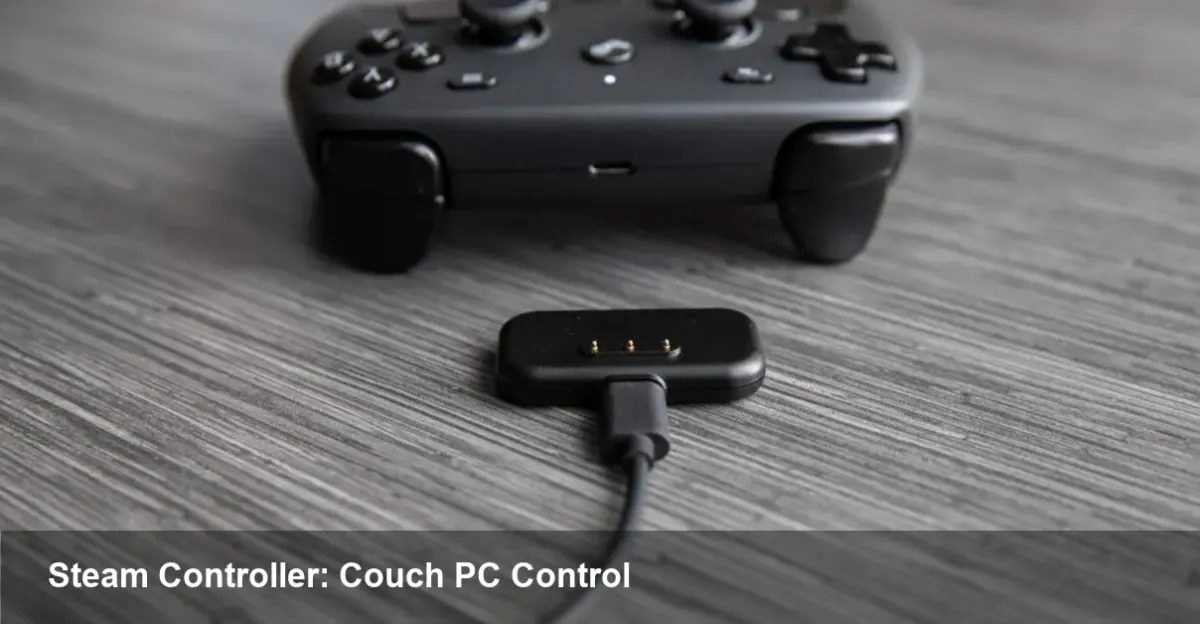
The Steam Controller isn't just another twin-stick pad. Instead of two analog sticks it uses two large capacitive trackpads with haptic feedback, a clickable touch surface, a central touchscreen, and extra shoulder/back buttons. The hardware is designed to bridge the gap between mouse-driven PC titles (strategy, first-person shooters) and couch-style controller play.
Key practical features:
- Trackpads replace analog sticks for precise cursor-like movement.
- Haptic feedback simulates the feel of a mouse or joystick.
- Deep software configurability through Valve’s config tools lets players remap any control, build custom aim-assist curves, and share layouts.
For players who want to run PC games from the living room TV — particularly titles that were designed for mouse and keyboard — the Steam Controller promises a way to play them comfortably from the couch without compromising precision.
Everyday scenarios: how people will actually use it
- Living-room PC ports: Imagine a SteamOS box or HTPC in a media cabinet. You want to play XCOM or Civilization with a controller while on the couch. Community-made configurations can convert complex keyboard shortcuts into controller-friendly actions.
- Indie developers testing alternative controls: A small studio releasing a top-down shooter can offer an official controller profile that maps aiming to the right pad and ability cycling to face buttons; players download the config and the game feels native.
- Accessibility and custom setups: Players with limited mobility who rely on custom mappings can use Valve’s configurator to simplify inputs or combine multiple keyboard keys under single triggers.
For developers: integration and workflow implications
Valve’s software tools are the real differentiator. The Steam Controller is tightly integrated into Steam’s configurator (Steam Input), enabling developers to:
- Ship recommended controller templates with their game that auto-apply when a controller is detected.
- Detect controller features and suggest alternative bindings for mouse-only games.
- Tap into community-shared configs, letting developers lean on users to refine control schemes across genres.
Practical developer workflow:
- Install Steam Input in your development environment and test with the controller's trackpads to design aim mechanics.
- Create and publish a recommended configuration alongside your store page.
- Monitor community configs and iterate — many players will upload tweaks that improve usability for particular play styles.
This lowers the barrier for bringing traditional PC genres into a more console-like living-room experience without building custom controller code for every title.
Business and ecosystem implications
Releasing the Steam Controller separately is a pragmatic bet. Steam Machines — third-party and partner hardware running SteamOS — have struggled to become a unified retail category. By decoupling the controller from the box, Valve widens the potential market: anyone running Steam on a PC, laptop, or SteamOS device is a buyer.
Why that matters for Valve and partners:
- Hardware revenue: A $99 peripheral can be profitable and support Valve’s hardware R&D without relying on Steam Machine adoption.
- Platform stickiness: The more players using Steam Input and custom configs, the stronger Valve’s influence over how PC games are experienced on non-mouse setups.
- Retail visibility: Selling a physical controller in traditional retail channels makes the Steam brand tangible in living-room hardware conversations.
However, this strategy also underlines the uncertainty around SteamOS and the Steam Machine concept: the controller is a flexible input device, but without a unified console to push it, adoption will depend on how compelling the configurability is for mainstream players.
Trade-offs and limitations
No product is perfect. Some important caveats:
- Learning curve: Trackpads and haptic-driven aiming are unfamiliar to many console players. There will be a period where muscle memory and community configs make the difference between a great or poor experience.
- Not a plug-and-play guarantee for every game: Titles built tightly around mouse precision may still feel subpar despite configurable aim smoothing and acceleration.
- Price point: At $99, the controller sits above typical gamepad prices; for many casual gamers, cost will be a barrier unless the unique features are compelling.
Three implications for the future of PC living-room gaming
- Input becomes a platform differentiator: Valve is betting that software-driven input (configurability, community sharing) can be as important as raw hardware specs in moving PC gaming to the living room.
- Community-driven control design will grow: If the Steam community embraces sharing and curating controller configs, discoverability and quality will improve, making nontraditional controllers more viable for mainstream titles.
- Valve’s hardware approach is iterative and modular: Shipping the controller alone suggests Valve will continue to test specific hardware pieces rather than full console bets. Expect more peripherals or modular products targeted at specific use cases rather than a single “Steam console” product.
Who should consider buying one?
- PC gamers who want to play mouse-first games from the couch and are willing to invest time in configurations.
- Indie developers and studios that want an easy path to recommend controller mappings without building custom in-game controller menus.
- Accessibility-focused players who need a highly remappable device to tailor controls.
If you’re a typical console player who prefers out-of-the-box familiarity and low prices, this may not be the best first controller purchase.
The Steam Controller’s standalone launch reframes Valve’s hardware experiment as a tool-setting play: it’s less about forcing a new console, and more about changing how PC games can be controlled. Whether it becomes the standard for living-room PC gaming depends on whether its configurability and community ecosystem can overcome the learning curve and the price tag.