Mouse: P.I. For Hire — When 1990s Shooters Meet 1930s Cartoon Noir

A surprising hybrid: what the game is doing differently
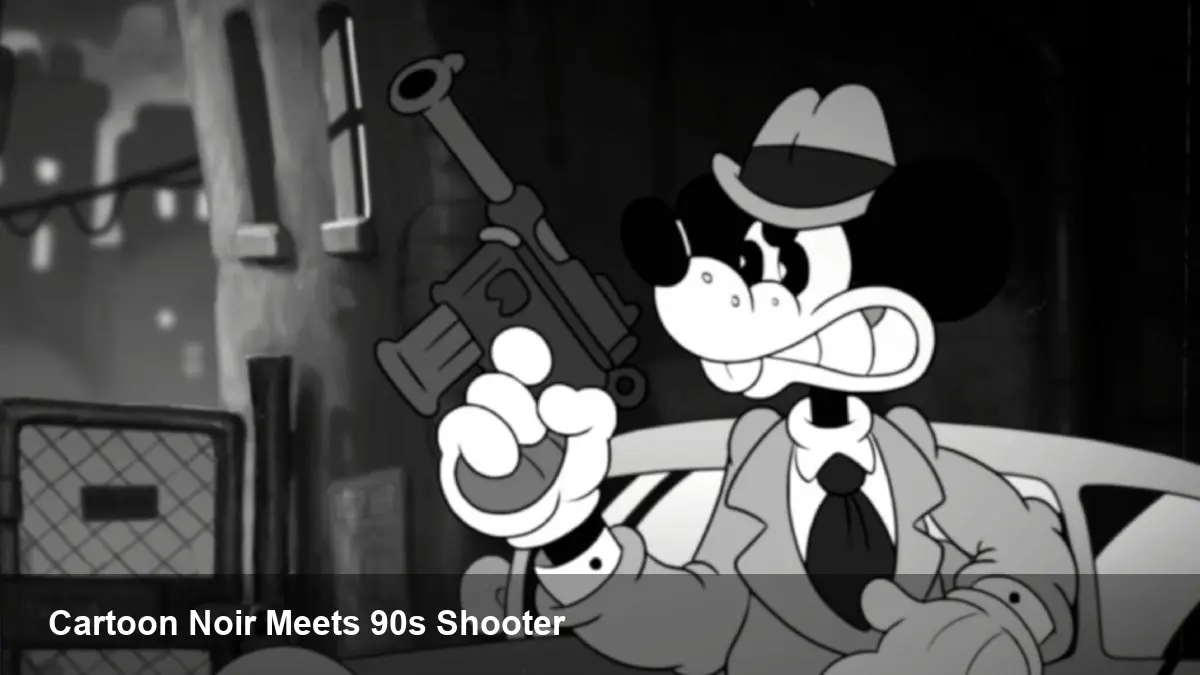
Mouse: P.I. For Hire pairs the speed and immediacy of classic 1990s first-person shooters with a visual and narrative world borrowed from 1930s cartoon aesthetics. That combination feels like an experiment in tone: frantic, arcade-like combat framed by rubber-hose animation, smoky alleyways, and Depression-era social themes.
For players who grew up on sprite-based run-and-gun action, the mechanical vocabulary will be familiar: quick navigation, emphasis on reflexes, straightforward weapon design, and arenas that reward movement and map knowledge. What’s new is how those mechanics interact with an atypical setting for a shooter — one rooted in vernacular animation, period politics, and visual storytelling that leans into caricature.
Why the 1930s cartoon style matters
The 1930s cartoon look isn't nostalgia for nostalgia's sake. It's a deliberate aesthetic choice that shapes player expectations and emotional response. The exaggerated silhouettes, high-contrast shading, and elastic character motion allow designers to depict violence and political commentary through a filter that softens realism while amplifying symbolism.
Practically, this art direction influences technical decisions. Hand-drawn assets or shaders that mimic cel animation change asset pipelines and memory budgets compared with photoreal art. Audio design also shifts: ragtime, early jazz motifs, and era-appropriate sound FX can create cognitive dissonance when paired with guns and frantic combat — a productive tension that invites players to think about context rather than simply shoot.
What veterans of 1990s shooters will notice
Players familiar with 1990s shooters will recognize key design threads:
- Movement and map flow are prioritized over cover-based tactics. Expect strafing, bunny-hopping analogues, and short TTK (time to kill).
- Weapon simplicity: each tool has a clear, approachable role, encouraging experimentation and fast decision-making.
- Level design that rewards memorization and exploration: secrets, choke points, and verticality are uncovered through repeat runs.
Those elements are transported into a setting where enemies are often stylized caricatures and environmental hazards are informed by period technology — think industrial machinery, speakeasy layouts, and period vehicles rather than laser traps or sci-fi barriers.
A sample play scenario
Imagine a mission that begins outside a bustling factory district. The player — a small anthropomorphic detective — has to infiltrate the plant to gather evidence of labor exploitation. The map is compact but layered: a street level for initial firefights, a mezzanine with crates that enable ambushes, and an interior pipework section that forces close-quarters engagements.
Combat alternates between fast firefights in open courtyards and tense, narrow choke points in interior corridors. Between encounters, the game uses animated title cards and interstitial cutscenes styled like newsreels to deliver narrative beats and historical context. These breaks slow the pace long enough to remind players they're operating in a world with social stakes.
What this means for developers and studios
For designers and indie studios, Mouse: P.I. For Hire offers a model for hybridization: take a well-understood mechanical foundation and combine it with an unexpected aesthetic to create novelty without reinventing core systems. Benefits include:
- Lower entry friction for players: familiar controls and mechanics ease onboarding.
- Distinctive marketing: a visually striking hook helps stand out in crowded storefronts.
- Narrative depth potential: historical aesthetics can support layered storytelling without the burden of photoreal historical accuracy.
Technical notes: asset pipelines must support stylized animations and possibly frame-based sprite work or custom shaders to emulate vintage cartoon rendering. Sound design requires period-appropriate music libraries and careful voice direction to match the aesthetic tone.
Business and audience considerations
A project like this targets a cross-section of players: nostalgia-seekers who miss the rhythm of 90s shooters, art-game fans drawn to unique visuals, and players interested in games that tackle social themes. That blend can be a double-edged sword — it widens potential appeal but complicates messaging. Marketing should focus on the dual promise: familiar, kinetic gameplay plus a distinct narrative and visual identity.
From a monetization perspective, an episodic or chapter-based release works well, allowing narrative threads and new gameplay twists to be introduced progressively. Optional cosmetic or music DLC that expands the world’s period vibe is a natural fit, provided it doesn’t fragment the player base or conflict with the game’s commentary.
Risks and ethical considerations
Using caricatured 1930s imagery carries responsibilities. Stylization can depoliticize or trivialize real historical suffering if not handled thoughtfully. Developers should be transparent about intent: is the style a framing device to make commentary accessible, or is it purely aesthetic? Including developer notes, historical context, or optional reading material can help ground the game’s themes.
Accessibility is another practical concern. High-contrast, fast-moving visuals and thin HUDs are hallmarks of retro shooters but can be exclusionary. Implement scalable UI, multiple difficulty levels, aim assist options, and visual clarity settings to keep the experience inclusive.
What this approach signals about the future of genre blending
- Revival through reinterpretation: Bringing 1990s shooter mechanics into new visual contexts demonstrates that classic gameplay can be revitalized by unexpected art directions.
- Narrative framing matters: Styling a violent game with period animation allows creators to explore political themes without leaning on realism, opening paths for critical engagement.
- Tools will follow demand: as hybrid aesthetics gain traction, middleware and engines will provide more out-of-the-box support for toon shading, frame-based animation, and composer-friendly audio workflows.
Who should play and why
If you enjoy fast-paced shooters and are curious about games that use style to change tone, this title is worth a look. Players seeking tight mechanical systems plus a strong visual identity — and a story that nods toward historical realities — will find the combination refreshing.
Mouse: P.I. For Hire doesn’t simply graft old gameplay onto a new coat of paint; it shows how deliberate visual choices can reframe mechanics and invite different kinds of player reflection. For developers, it’s a reminder that creative risk in aesthetic direction is one of the clearest ways to make familiar systems feel new again.