
How Riven Tides (Patch 1.26.0) Resets ARC Raiders’ Extraction Meta

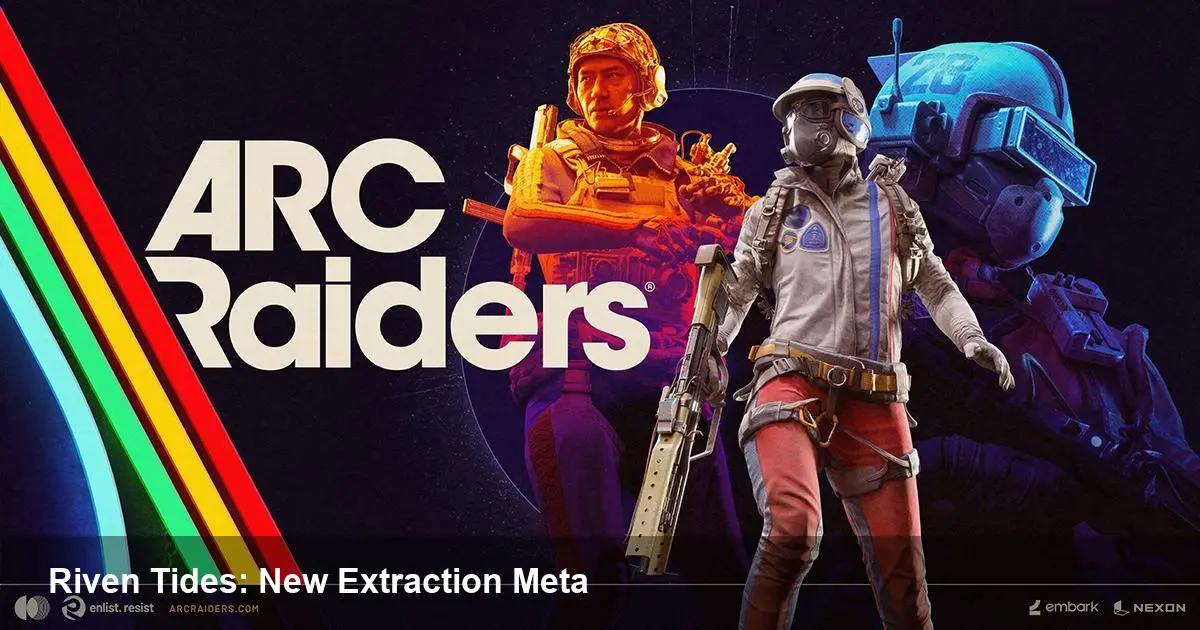
Why Riven Tides matters
Embark Studios’ ARC Raiders is positioned as a multiplayer extraction title where small squads push into hazardous zones, loot high-value targets, then race out before everything goes sideways. Patch 1.26.0 — branded Riven Tides — is the kind of mid-life update that can shift how teams play, how developers run live ops, and how a studio demonstrates responsiveness to its community.
This article looks past the line-by-line patch notes and examines what Riven Tides means for players, designers, and founders thinking about running a live-service multiplayer title.
Quick background: ARC Raiders and live-service pressure
ARC Raiders launched with a promise of fast-paced, cooperative extraction gameplay and a mechanized antagonist. For Embark Studios, sustaining player engagement depends on a steady cadence of meaningful content and balance passes. Riven Tides (1.26.0) is another installment in that cadence — not just a bug-squash release but an update that introduces new terrain, pushes balance changes, and adds quality-of-life improvements that change play patterns.
What players will notice first
- New playable zone and environmental mechanics: Riven Tides introduces a coastal/riverfront map motif with dynamic water flow and tide phases that influence traversal and enemy spawn funnels. That environmental variability forces teams to adapt route planning mid-mission.
- Enemy and encounter updates: Several ARC variants received behavioral tweaks — some become more aggressive near shorelines while others now use the tide to perform scripted flank attempts. These changes increase the need for map awareness.
- Weapon and ability balance: Expect weapon time-to-kill (TTK) adjustments and cooldown retunes that nudge the roster toward more diverse team compositions. DPS-heavy builds still have power, but support and crowd-control utilities got buffed in certain contexts.
- QoL and UI refinements: Matchmaking tweaks, clearer extraction indicators, and an improved ping system reduce friction for mixed-skill squads.
All of those moves change the calculus for how you load out characters and coordinate on extraction routes.
Tactical examples: how strategies shift
- Tide-aware routes: On Riven Tides, teams that scout the shoreline at the start of a run can predict high-traffic spawn corridors during the mid-phase. A typical tactic is to establish a choke at a narrow causeway and rotate when the tide reverses.
- Anchor-and-Run vs. Hit-and-Fade: The update favors hybrid strategies. If your squad includes a support that can place area-denial utilities, you can hold a loot site longer to rifle through rarer drops. Conversely, squads built for burst damage should exploit the shorter travel windows created by tide cycles.
- Role relevance: Crowd-control units (stuns, slows) and mobile flankers gain value because enemy AI uses terrain to force frictions. The patch’s balance changes make these roles more consistently useful across different loadouts.
These are practical examples you can test in your next few runs — they aren’t theoretical: dynamic maps plus tuned encounters reward adaptive play.
Developer perspective: what Riven Tides shows about successful updates
- Make environmental changes meaningful: Introducing a map mechanic (tide phases) is a high-leverage change. It alters moment-to-moment decisions without needing dozens of new assets.
- Balance as a lever for meta diversity: Rather than a single massive weapon nerf, the patch applies measured shifts to several items and abilities. That nudges players to experiment rather than pushing everyone into one “best” build.
- Prioritize communication and telemetry: A solid patch notes post that explains why changes were made — and makes it easy for players to provide feedback — shortens the feedback loop. Behind the scenes, telemetry should track new map usage, route heatmaps, and role pick rates to validate design intent.
For teams running live service games, Riven Tides is a reminder: you get more player engagement per designer-hour when you combine a fresh rule (tides) with a handful of balance and QoL changes.
Business and community implications
- Retention bump potential: New maps and shifting metas are proven retention drivers. Players return to test new strategies and earn limited-time rewards tied to the update.
- Content cadence matters for monetization: If a studio spaces these meaningful updates alongside cosmetics or a battle-pass cycle, the perceived value of paid items increases — players want to look and feel different as the meta evolves.
- Community-driven growth: Clear patch notes and visible response to player-reported issues deepens trust. Communities that feel heard are likelier to create guides, stream runs, and evangelize new mechanics.
That said, updates also risk alienating players if tuning feels heavy-handed or if new mechanics consistently favor one playstyle. Continuous measurement and small, iterative adjustments reduce that risk.
Limitations and potential pitfalls
- Learning curve: Introducing environmental mechanics like tides raises the entry cost for new players. Designers need onboarding flows (tutorials, limited-time novice modes) to prevent churn.
- Balance whiplash: Frequent, large tuning swings can fragment the player base and erode confidence in the studio’s design clarity. Staggered, transparent tweaks work better.
- Technical debt risk: Larger live updates can surface performance and stability issues on consoles or lower-spec PCs. A strong QA pipeline and staged rollouts (hotfixes) are crucial.
What this signals about the future of ARC Raiders
- Live rules matter more than raw content depth. Small systemic changes (like tides) have outsized effects on how players engage with the game.
- Cross-discipline telemetry will be a competitive advantage. Teams that tie heatmaps, drop rates, and social signals together can iterate quickly and keep the meta fresh.
- Cosmetic and progression systems should be timed to the content cycle. Players want to showcase novel strategies and will pay for unique cosmetics when the meta shifts.
How to approach the update as a player
- Try multiple loadouts in the first 24–48 hours. The highest-performing builds in the old meta might not translate.
- Play at least one full extraction as a scout and one as an anchor. Observing how enemy paths change with the tide gives practical insights.
- Join the official forums and Discord to flag bugs and share route discoveries. Your early feedback is valuable for subsequent hotfixes.
Riven Tides (patch 1.26.0) is more than just new scenery. It’s an example of how a mid-weight update can refresh an extraction game’s core loop, encourage new playstyles, and give developers actionable telemetry to guide future releases. Whether you’re a squad leader optimizing routes or a studio founder planning your next live-op, those are lessons worth noting.