First Yoshi Gameplay Arrives on Nintendo Switch 2

Why this footage matters
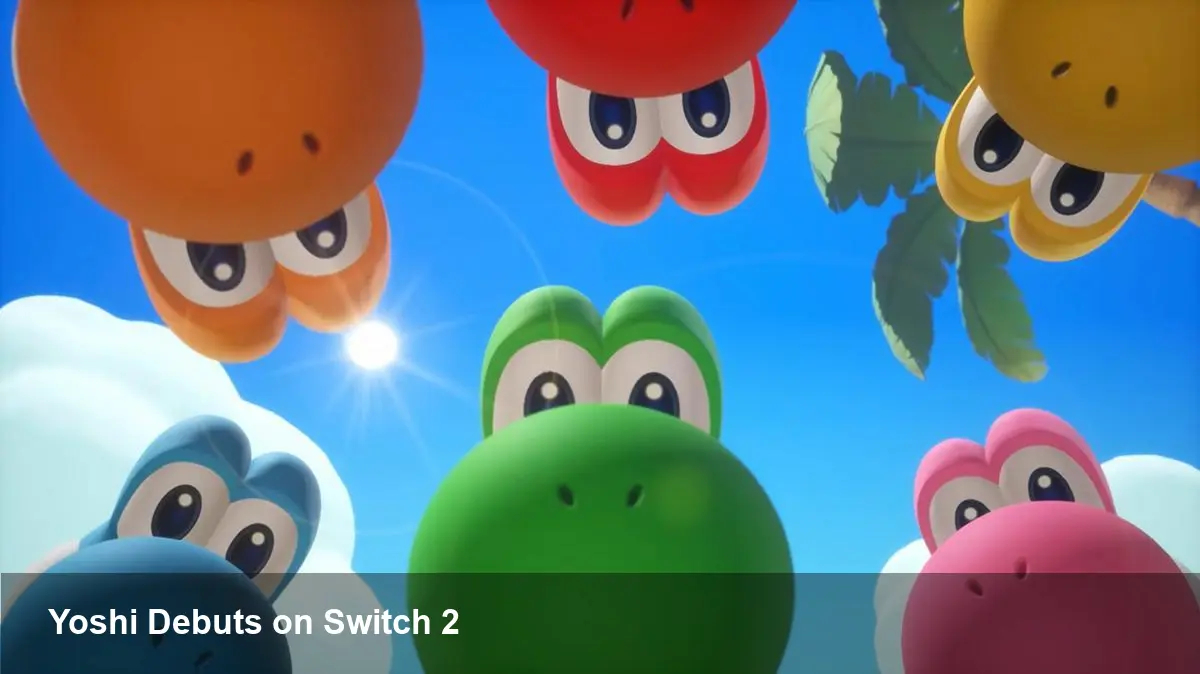
Nintendo's long-running mascot series has always doubled as a tech showcase: each new Yoshi title highlights a fresh art direction and accessible platforming design. The first gameplay footage of "Yoshi and the Mysterious Book" running on Nintendo Switch 2 gives us a concrete look at how Nintendo plans to balance familiar Yoshi charm with the increased horsepower of its next-gen handheld/console hybrid.
This isn't just a trailer — it's the first extended in-engine play session that reveals frame rate, level scope, mechanical changes and how the game might make early adopters of the Switch 2 feel about their purchase.
What the gameplay reveals (high level)
- Visual and performance improvements: The demo shows noticeably sharper textures, more detailed environments and smoother animations than recent Switch-era Yoshi games. Lighting and particle effects are more complex, and the game appears to sustain higher framerates with fewer frame drops compared with its predecessors.
- Level design and scale: Levels look physically larger, with multiple plane shifts and denser background activity. That suggests the team is taking advantage of more memory and GPU headroom to populate worlds without the streaming compromises you often see on older hardware.
- Mechanic tied to the premise: The "Mysterious Book" concept is present as an in-game device that alters level geometry and enemy behavior — a simple example is toggling between different illustrated stage variants, which changes platform positions and reveals hidden paths. That book-as-mechanic keeps gameplay grounded in classic Yoshi puzzle-platforming while introducing state-based puzzles.
- Accessibility and co-op hints: The footage shows an assistive hover and forgiving checkpoints, and there's an obvious design focus on cooperative or shared-screen play, which continues Nintendo’s tradition of making platformers approachable for younger players and families.
What this means for players
- Better visuals without losing charm: Longtime fans worried a higher-fidelity Yoshi might abandon its hand-crafted aesthetic can relax. The demo keeps a playful art style while leveraging improved rendering to make materials and animation feel more alive.
- Broader audience appeal: The addition of dynamic world changes via the in-game book creates new puzzle hooks that can engage non-platformer players and streamers looking for shareable moments.
- Early adopter incentive: If the Switch 2 launches with titles that visibly improve core experiences — crisp visuals, near-instant load times and broader stage scope — buyers will have tangible reasons to upgrade beyond hardware curiosity.
Practical implications for developers and studios
- Asset and pipeline changes: Higher fidelity means teams will need larger texture budgets and more sophisticated LOD (level-of-detail) systems. External teams (including external art houses or outsourcing partners) will have to align to new compression and streaming constraints specific to Switch 2.
- Performance balancing: Even though the footage shows improvements, developers must optimize for thermal limits and battery life on a hybrid device. Expect more emphasis on CPU/GPU profiling, shader optimization and runtime scalability options in engine builds.
- Tools and middleware: The footage suggests richer particle and lighting systems; studios may adopt or extend middleware solutions for memory streaming, physics and animation blending to maintain frame stability across modes (handheld vs docked).
- Porting considerations: For teams planning to bring existing Switch titles to Switch 2, the demo is both encouraging and cautionary. The hardware can lift visual fidelity and level complexity, but naive upscaling without reworking asset pipelines or QA for new performance constraints could introduce bugs or poor battery performance.
Business and strategic angles
- Showcase title for hardware: Nintendo has a history of using beloved IP to demonstrate new hardware capabilities. A Yoshi game that feels clearly upgraded helps position Switch 2 as a meaningful generational step for family-friendly gaming.
- Launch window positioning: If "Yoshi and the Mysterious Book" arrives close to console launch, it can become a system-seller for households that value first-party charm. That’s especially powerful when paired with demos or bundled offers.
- Merchandising and cross-media opportunities: The Mysterious Book premise is ripe for collectibles — hardcover art books, plushies with book accessories, or even a companion app that lets players catalog discovered pages and secrets.
Scenarios — how different users will experience it
- The casual family: Prefers cooperative sessions, low difficulty spikes and bright, readable visuals. The demo’s forgiving checkpoints and clear visual language make it ideal for parents playing with kids.
- The platformer enthusiast: Will scrutinize frame pacing and precise controls. The footage hints at responsive movement and new puzzle mechanics, but enthusiasts will want confirmation about tightness of inputs and endgame depth.
- The content creator: Looks for memorable mechanics and visual moments. The book-based transformations are the sort of mechanic that yields surprising run routes and highlight clips.
Three strategic implications for the next few years
- First-party IP as hardware demos will continue: Nintendo will likely keep using recognizable franchises to show off Switch 2 capabilities, making studio planning and roadmap alignment critical for first-party teams.
- Greater middleware and tooling investment across partners: As visual ambitions increase, third-party studios and smaller partners will demand more robust SDK features, profiling tools and best-practice guides from Nintendo.
- New business models around discoverability: Games with clear, social-friendly mechanics (like state-changing books) perform well on streaming and short-form video platforms, influencing how Nintendo and partners think about marketing and live-service elements.
What remains to be seen
The demo is promising, but several questions are still open: exact release timing, how the game balances handheld thermals with graphical fidelity, the full scope of co-op features and whether the Mysterious Book mechanic remains novel throughout a full campaign.
If Nintendo keeps polishing this blend of charm and technical polish, "Yoshi and the Mysterious Book" could become a textbook example of how to evolve a family franchise for a new hardware generation — delivering visible upgrades without losing the series’ identity.
For players and developers watching the Switch 2 rollout, this gameplay is a useful data point: the next-gen Nintendo can scale up presentation while keeping the approachable design that made the Switch era so successful.