Assassin’s Creed: Black Flag Resynced — What to Expect

Why a "Resynced" Black Flag matters
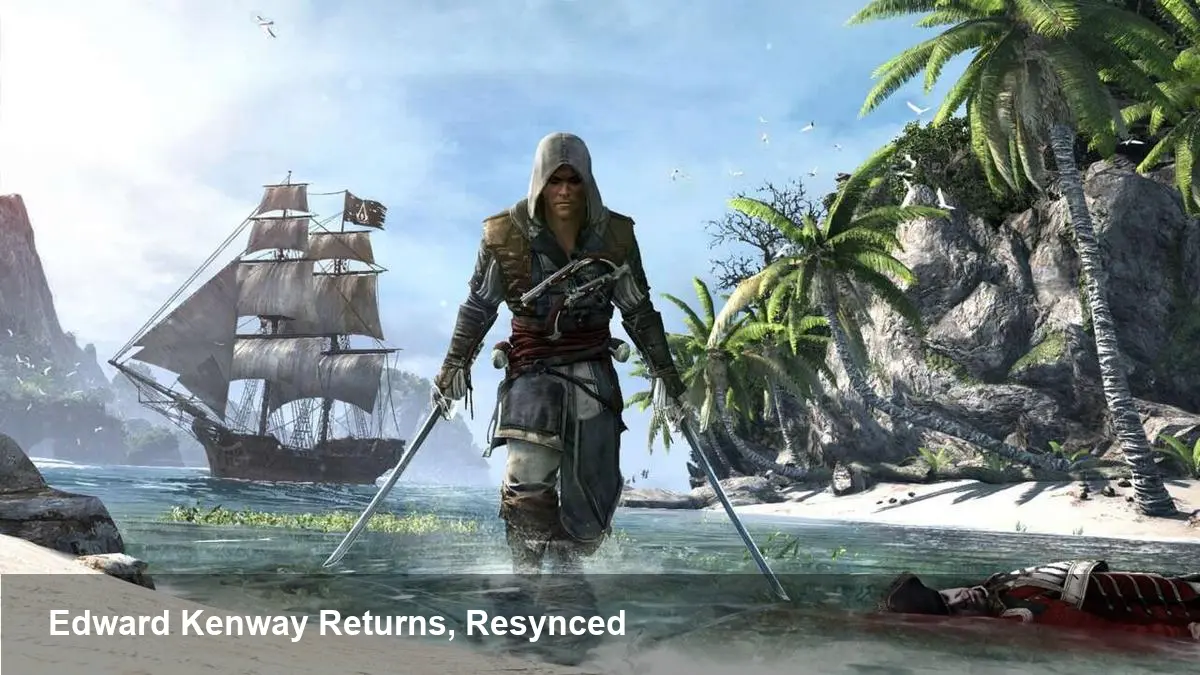
Rumors are circulating that Assassin’s Creed: Black Flag Resynced will arrive on July 9, bringing Edward Kenway back into the spotlight. If true, this isn’t just another rerelease; the “Resynced” label suggests a targeted modernization focused on audio-visual cohesion — lip sync, facial animation, and possibly reworked cinematics — rather than a full gameplay overhaul.
Black Flag originally launched in 2013 from Ubisoft Montreal and remains one of the series’ most beloved entries for its open-world naval gameplay, Caribbean setting, and charismatic protagonist. A resync-focused update would let players revisit that world with presentation that meets modern standards, without necessarily changing core mechanics that fans still enjoy.
What “Resynced” likely changes (and what it won’t)
- Lip-sync and facial animation: Expect updated mouth movement, eye tracking and facial topology that match dialogue delivery. Studios now use a mix of manual animation fixes, mocap cleanup, and AI-driven lip-sync tools to bring older assets up to par.
- Re-tuned cinematics: Cutscenes could get re-rendered lighting, higher-resolution textures, and better camera framing so performances feel less dated.
- Audio polish: Remastering the voice tracks and ambient audio to modern bitrates and spatial mixes is common in these updates.
- Quality-of-life UI tweaks: Minor HUD and menu polish to align with modern UI standards is possible, but core gameplay — ship combat, boarding, open-world exploration — is unlikely to be rebuilt from the ground up.
What to expect less of: a complete engine overhaul, major mechanical redesigns, or entirely re-recorded voice performances for all characters. Those are larger investments that typically accompany fully remastered editions.
How players will experience the update: three concrete scenarios
- The returning fan: If you replay Black Flag on a current-gen console or PC, the biggest change will be character expressions and cutscene polish. Moments that once felt a little off because mouths and lines were out of sync will feel more natural, improving narrative immersion.
- The first-timer: New players discovering Black Flag for the first time will get an experience closer to how cinematic games look and sound today — which could increase the title’s appeal beyond nostalgia-driven sales.
- The preservationist and modder: Fans interested in preservation will be watching how the update handles original assets. Modders may gain higher-resolution models and audio to build on, or they might have to reverse-engineer new data formats — both are common outcomes when older games are modernized.
Why studios invest in resyncing old titles
There are three pragmatic reasons publishers pursue updates like this:
- Catalog value: Upgrading a popular older title extends its commercial life with relatively modest development cost compared with building a new game.
- Brand stewardship: Keeping flagship entries looking and sounding credible on modern platforms preserves the franchise’s reputation and eases new player onboarding.
- Technical experimentation: Resync projects let teams develop efficient pipelines for animation cleanup and voice alignment — workflows that can be reused across other remasters or live-service updates.
Developer workflow: practical techniques behind the polish
Modernization teams typically combine manual and automated approaches:
- Automated lip-sync: AI-driven tools analyze original audio tracks and generate facial animation curves that match phonemes. These tools speed up work but require artistic oversight to fix edge cases.
- Blendshape retargeting: Existing facial rigs are adapted to higher-resolution face meshes so new animations behave correctly without building rigs from scratch.
- Selective re-recording: For critical lines or awkward performances, studios might bring back voice actors to re-record short segments, then blend them into the updated mix.
- Lighting and texture upscaling: Using physically based rendering tweaks and texture upscalers, teams can make in-game assets pop on HDR displays.
Business and community implications
For Ubisoft and similar publishers, a successful Resynced release is low-risk, high-reward. It monetizes back catalog, improves brand perception, and keeps franchises visible between big releases. For the community, it can re-energize multiplayer scenes, inspire speedrunning marathons, and renew interest in fan content like machinima and roleplay.
But there are risks: purists might object to changes that alter the original feel, and there are legal/ethical questions if voice cloning or heavy synthetic augmentation is used without clear consent from original actors.
Three strategic insights about the future of game modernization
- Resyncing will become a distinct service line: Expect studios to treat audio-visual modernization as a repeatable, modular offering — an internal pipeline that can be applied across legacy titles with predictable cost and time.
- AI tools will accelerate but not replace art direction: Automated lip-sync and upscaling will cut grunt work, but experienced animators and directors will remain essential for quality control and to preserve performance nuance.
- Rights and restoration debates will grow louder: As voice cloning and deepfake tools become more practical, publishers will need clear policies and actor agreements that cover future uses of performances in remasters.
Practical recommendation for players and small studios
- Players: If you want the most authentic experience, try to play both versions (if the original remains accessible). Enjoy the modern polish but be mindful of altered pacing in updated cinematics.
- Indie studios and preservationists: Build small, repeatable pipelines for animation cleanup now — the demand for polished retro updates is only going to increase, and early investments pay off when opportunities to work on legacy titles appear.
If Assassin’s Creed: Black Flag Resynced does arrive on July 9, it will be more than a nostalgia play. It will be a signpost showing how publishers can preserve beloved games while raising presentation standards. For anyone who loved sailing the Caribbean in Edward Kenway’s day, cleaner visuals and natural performances could make the voyage feel brand new.