Xteink X3: A Pocket E‑Ink Screen That Clings to Your Phone

A tiny gadget with a big idea
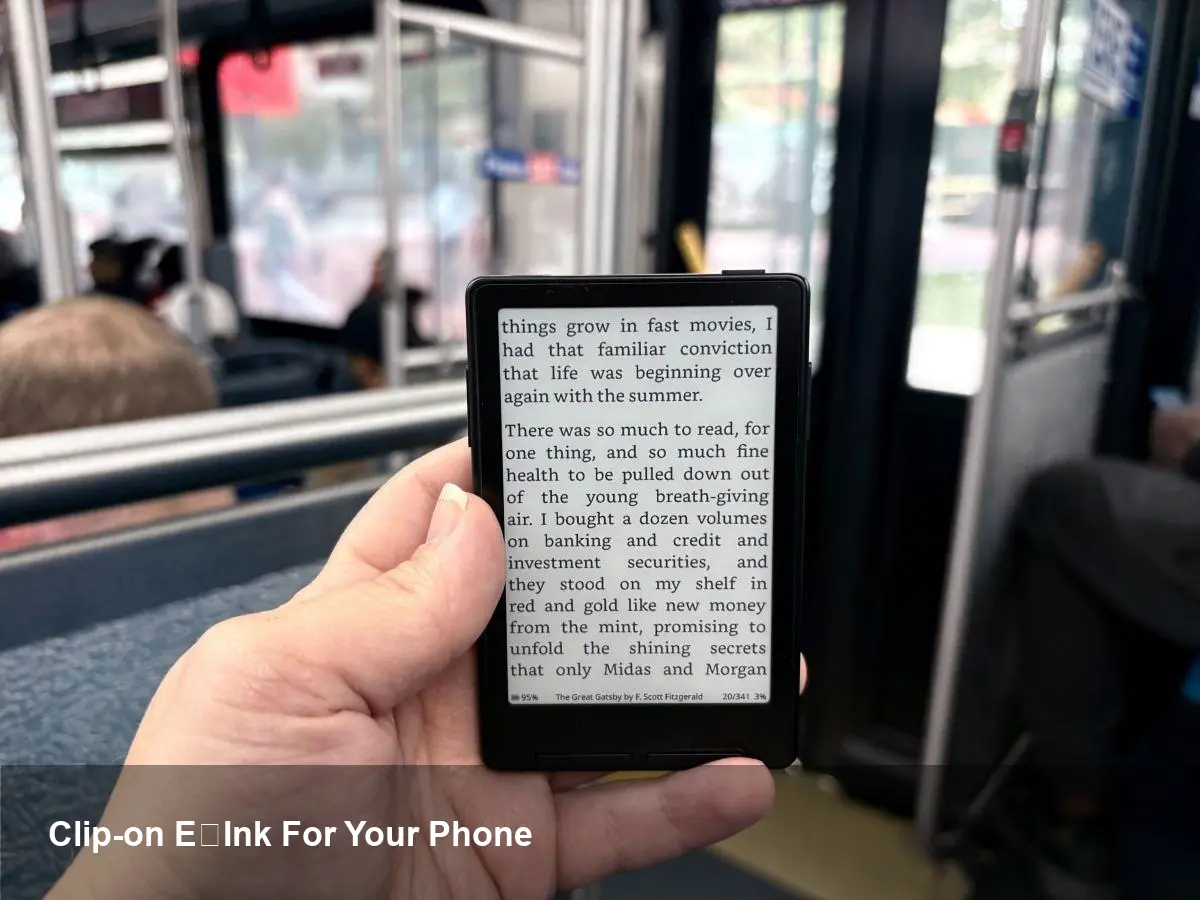
Smartphones are engineered to keep you looking at them. The Xteink X3 aims to do the opposite: a compact, magnetic e-ink reader that attaches to the back of your phone like a PopSocket. It uses low-power e-ink to present focused content—notifications, short articles, lists—without the visual pull of a bright OLED or LCD.
Why an attachable e-ink surface matters now
E-ink isn’t new, but making it small, magnetic, and phone-friendly changes the interaction model. Unlike a full tablet, the Xteink X3 is designed to be an auxiliary surface: glanceable, low-energy, and less seductive than your phone’s main screen. For people trying to cut down on doomscrolling or reintroduce deliberate pauses into their digital life, that’s a useful tool.
What to expect from the Xteink X3
- Magnetic mounting: The device is MagSafe-compatible and snaps to the back of MagSafe-enabled phones; it also behaves like a PopSocket-style accessory, making it easy to carry and position.
- E-ink display: Expect high contrast in daylight, very low power draw, and an always-on feel without the battery drain of your phone’s display.
- Minimal interaction: The device is optimized for brief, static content rather than video or fluid animations. It’s great for reading single articles, lists, or notifications at a glance.
The product is aimed at people who want the convenience of quick reads and reminders without the endless incentives built into app feeds.
Real-world scenarios: how you’d actually use one
- Morning briefing: Replace the news app’s autoplay with a short, curated headline list on the X3. You can scan key headlines with none of the autoplay hooks that lead to long reading sessions.
- Commuting with limits: On a crowded commute you might use the X3 for e-books or saved articles in short bursts without triggering video or algorithmic recommendations.
- Quick reference: Keep boarding passes, grocery lists, or transit schedules on the accessory for fast access without unlocking and navigating apps.
- Single-purpose reminders: Turn the device into a visual to-do token (e.g., grocery list or a countdown) that sits on your phone and reduces the urge to open an app.
Pros and trade-offs
Pros:
- Dramatically lower power consumption compared with a phone screen; useful for always-on snippets.
- Readability in bright light—no glare problems you get with glossy displays.
- Physical, tactile presence reduces the friction of pulling out your phone for minor tasks.
Trade-offs:
- Slow refresh and monochrome display mean it’s not suited for video, complex web pages, or rich graphics.
- Small surface area limits usage to short-form content and glanceable widgets.
- Compatibility depends on magnetic mounting—non-MagSafe phones may need adapters.
For developers and makers: fresh UX opportunities
An attachable e-ink surface opens new interaction patterns that aren’t a good fit for traditional smartphone UI. Developers and hardware hackers should consider:
- Companion apps that push curated snippets or summaries rather than full articles.
- Minimal-state interfaces: single-action interactions (acknowledge, next item, dismiss) rather than deep navigation.
- Integration with automation platforms (Shortcuts, IFTTT) for context-aware content—e.g., show calendar agenda in the morning or shopping list when near a grocery store.
Because the device favors static content, think in terms of single-purpose micro-apps: a ticket viewer, a micro-news digest, a habit tracker, or an emergency info card.
Business value and product fit
For startups building digital-wellness tools, a hardware accessory like the Xteink X3 can be a differentiator. It reframes notifications as useful, constrained information instead of continuous engagement opportunities. Retailers, travel apps, and productivity companies might bundle such an accessory as a premium add-on to reduce churn from users seeking to escape screen time.
However, the market is niche: this appeals to users who are intentional about reducing screen addiction and who accept the limitations of e-ink. Volume sales won’t match mainstream phone accessories unless the category broadens into multi-purpose modular add-ons.
Limitations to watch for
- Ecosystem lock-in: Without widespread developer support or a standard API, the device risks becoming a closed accessory with limited use cases.
- Durability and ergonomics: Attaching hardware to a phone changes weight balance and pocketability; a good design will minimize bulk while keeping reliable magnetic hold.
- Privacy and security: If the device mirrors notifications, developers need to think about what information is appropriate to push to a device that may be visible in public.
Insights for the near future
- Modular phone accessories are getting smarter: Expect a small ecosystem of attachable devices that fill niche roles—payment tokens, biometric sensors, or low-power displays.
- E-ink as a second-screen standard: Low-power, glanceable surfaces could become a recognized design pattern—especially for wellness-focused apps.
- New business models: Subscription services that provide curated, distraction-free content for tiny screens could emerge, pairing software and hardware.
Who should try the Xteink X3
If you regularly find yourself unlocking your phone for short tasks and then getting pulled into long sessions, this accessory could be a practical experiment. It’s particularly attractive for commuters, minimalists, and anyone designing workflows around focused reading or reminders. If you’re a developer or product manager, treat one as a prototype platform to rethink notifications and micro-interactions.
Small, magnetic e-ink add-ons won’t replace phones or tablets, but they can reshape a few everyday habits. For those trying to limit doomscrolling without going fully analog, a pocket e-ink screen that clings to your phone is a neat, pragmatic compromise.