Why the Motorola Razr Fold's Price Changes the Foldable Market

A new chapter for a familiar name
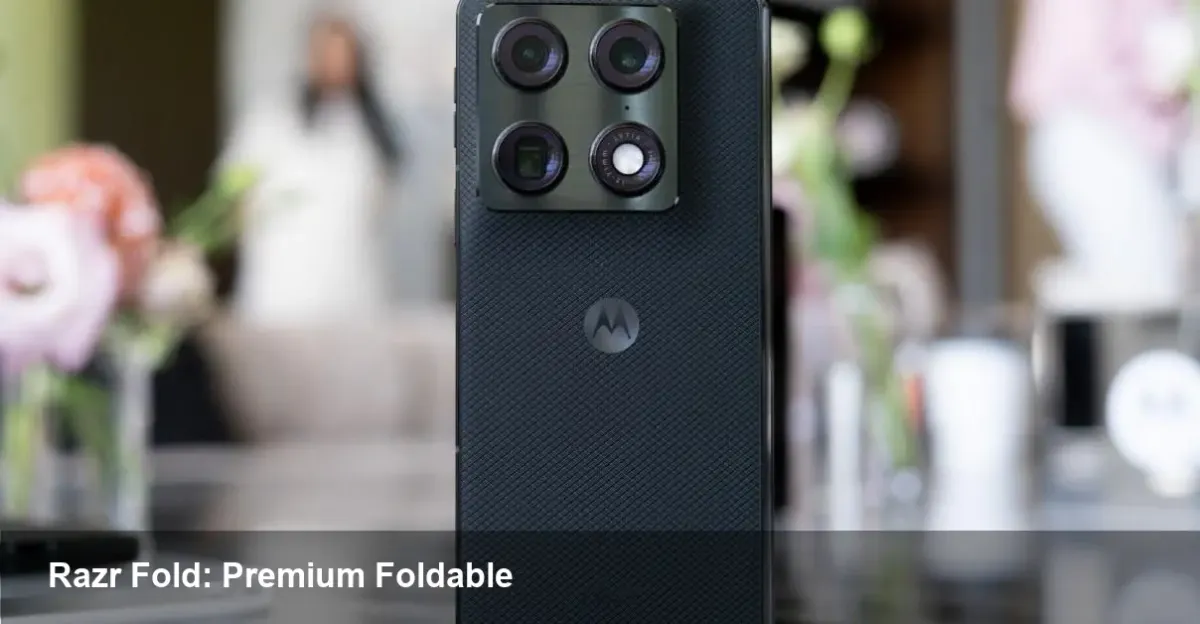
Motorola vaulted to smartphone fame with the Razr flip nearly two decades ago. The Razr Fold brings that brand recognition into the premium foldable arena, and — crucially — it arrives with a price tag that puts it squarely alongside the Samsung Galaxy Z Fold and Google Pixel Fold. That parity matters: it signals Motorola believes its engineering and software differentiate enough to win buyers who are already choosing between established book-style foldables.
This article looks beyond the headline price. We’ll examine what the Razr Fold offers in real-world scenarios, what it means for developers and businesses, and how this move reshapes the competitive landscape.
Who this product is for — and who should wait
The Razr Fold targets buyers who want a full-sized tablet experience in a pocketable phone, but don’t want to pay a significant premium over the market leaders. Practical user profiles include:
- Mobile multitaskers: professionals who need email, document editing, video calls and a browser open at once benefit from a tall foldable display that splits cleanly into multiple app windows.
- Content creators and reviewers: a larger inner display helps with photo editing, reviewing timelines, or previewing content without carrying a separate tablet.
- Power users who value one-device convenience: those who prefer a single device for media consumption and productivity rather than a phone + tablet combo.
If you prioritize durability above all — or need the cheapest device — this generation of premium foldables may still feel risky or expensive. Buyers should weigh repairability, hinge longevity, and OS update promises as much as raw specs.
What the price parity implies for buyers and competitors
Motorola pricing the Razr Fold near the Fold and Z Fold lines does three things:
- Signals confidence in hardware and software parity with established players.
- Forces buyers to choose on factors other than price: software polish, camera quality, battery life, and brand trust.
- Applies pressure back on Samsung and Google to continue meaningful differentiation — whether via exclusive features, ecosystem integrations, or finance/upgrade programs.
For consumers, the upshot is choice. For the market, price convergence means competition will increasingly be decided by experience rather than cost alone.
Real-world scenarios — how a Razr Fold might change daily workflows
- Split-screen email + document editing: A manager can keep Slack on one side, a draft on the other, and drag text between apps. Foldable-optimized apps make this seamless.
- Presentations on the go: Use the internal display for speaker notes while projecting from the cover screen or using a connected display.
- Commuter media consumption: A folded device slips into pockets more easily than a tablet but opens to the same immersive video area.
These are not futuristic use-cases; they are immediate productivity and lifestyle wins when apps properly support large and multi-window layouts.
What developers need to do differently
If you build Android apps and want good behavior on foldables like the Razr Fold, there are concrete steps that pay off:
- Embrace responsive layouts: prioritize flexible UIs that rearrange content rather than scale it. The difference between a scaled-up phone UI and a reflowed tablet layout is palpable.
- Support multi-window and multi-instance: your app should handle simultaneous instances and state restoration as users snap two apps side-by-side.
- Test hinge and posture states: the device may be partially folded or used in a tent mode — adapt the UI and input targets accordingly.
- Use fold-aware APIs: Android provides window management and lifecycle hooks to detect folds, display features, and safe areas. Integrate them early in design sprints.
- Prioritize performance: larger canvases and multi-window contexts increase memory and CPU demands; profile for these scenarios.
Testing strategy: emulate foldables in emulators, but always validate on real hardware because hinge behavior and touch edge cases are hard to reproduce perfectly in software.
Enterprise and business considerations
The Razr Fold being priced like its competitors makes it a candidate for enterprise procurement when the business case calls for mobile-first workflows. Things to evaluate:
- OS update guarantees and security patches — critical for corporate fleets.
- Mobile device management (MDM) support and compatibility with the company’s BYOD or COPE policies.
- Repair and spare-part ecosystem — can IT teams quickly service a damaged device?
- Training and app modernization budgets — to ensure internal apps take full advantage of the larger canvas.
Organizations that can standardize on foldable-aware workflows might gain productivity gains for field teams, sales reps, and mobile-first creators.
Trade-offs and practical limitations
Even as the Razr Fold competes on price, buyers should acknowledge trade-offs common to premium foldables:
- Weight and thickness: folded devices are denser, and daily pocket comfort varies between users.
- Battery life: powering a larger internal display plus a cover screen can be taxing, especially under heavy multi-window use.
- Longevity concerns: hinges, crease visibility, and display durability remain valid considerations despite engineering improvements.
Read warranty fine print and check repair networks before committing, especially if you plan to use the phone in demanding environments.
What this means for the foldable category going forward
Three likely implications:
- Faster mainstreaming: price parity with market leaders accelerates buyer confidence; more users will consider foldables as their next primary device.
- Software becomes the battleground: hardware differences will narrow, pushing OEMs to innovate in OS features, app partnerships, and fold-specific UX.
- Enterprise adoption grows slowly but steadily: as vendors promise longer update windows and better MDM capabilities, CIOs will pilot foldables in targeted roles.
The Razr Fold's entry at a competitive price nudges the industry toward maturity. That’s good for consumers and developers, as the incentives shift toward better software and longer-term support rather than incremental hardware showmanship.
If you’re deciding whether to buy or optimize for the Razr Fold, start by listing the workflows it would replace and then test those workflows on real foldable hardware. For developers, prioritize responsive design and multi-window testing now — the market is moving from niche to mainstream, and the next big differentiation will live primarily in software.