Why Purse Cyberdecks Are the New Anti‑AI Accessory

A viral accessory with roots in DIY computing
TikTok videos of handmade computers tucked into handbags have turned a niche maker hobby into a pop-culture moment. Builders—many of them young women blending craft, fashion and electronics—are creating compact systems that feel like a counterpoint to cloud‑first AI services. The result is a cyberdeck-as-accessory trend that raises practical questions about privacy, portability and the joy of tangible computing.
What is a cyberdeck (and why a purse?)
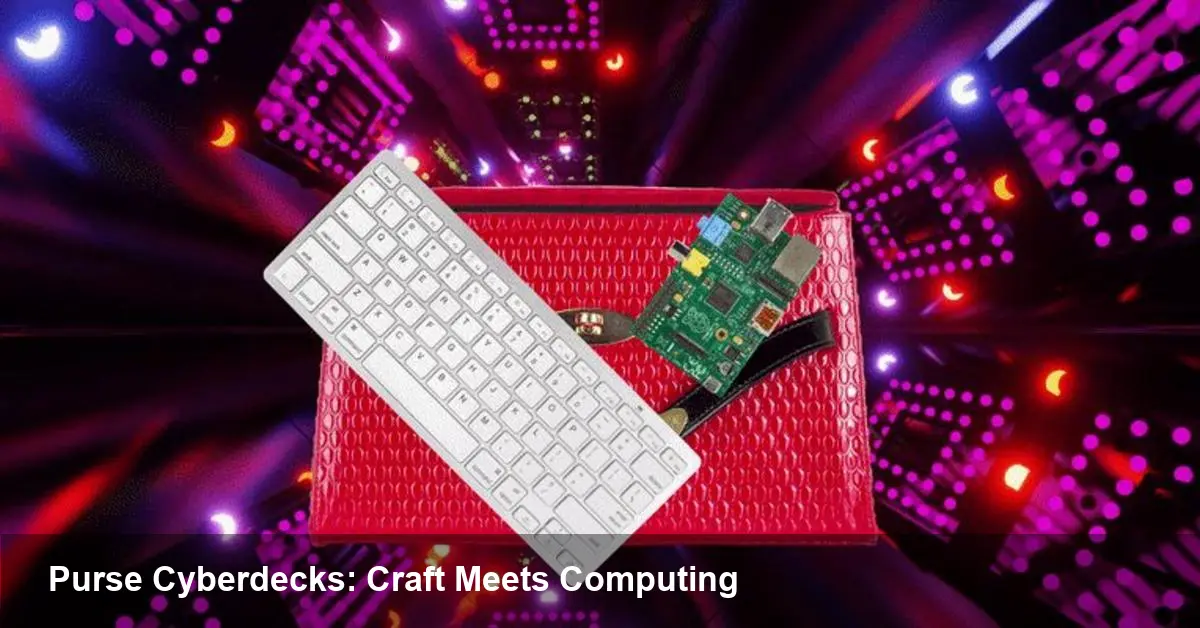
A cyberdeck is essentially a small, self-contained computer built from single-board computers (SBCs), microcontrollers and off‑the‑shelf peripherals, often styled with a cyberpunk aesthetic. Purse cyberdecks marry that ethos with everyday fashion: the electronics live inside a handbag, clutch or crossbody, making the computing experience both wearable and discreet.
For many builders the motive is less about aesthetics and more about reclaiming agency over where and how computing happens. Instead of relying on cloud services and always‑on AI, these devices favor local control, offline workflows, and handcrafted charm—hence the label “anti‑AI gadget” in social media conversations.
Typical components and how they’re used
A practical purse cyberdeck combines a few predictable parts:
- Single-board computer: Raspberry Pi Zero 2 W or Raspberry Pi 4 are popular because they’re inexpensive and well‑supported. Alternatives include Pine64 boards and Odroid models.
- Display: small HDMI or SPI displays (3.5" to 7") or low‑power OLED panels for status readouts.
- Input: tiny mechanical keyboards, 40% keyboard modules, or custom key matrices running QMK firmware.
- Power: USB power banks (10,000–20,000 mAh) or Li-ion battery packs with DC‑DC regulation and USB‑C PD for longer runtime.
- Storage: microSD cards or an NVMe SSD in a USB adapter for speed and resilience.
- Connectivity: Wi‑Fi and Bluetooth built-in, sometimes a USB cellular modem for mobile networking.
- Extras: cameras, microphone arrays, small speakers, and sensors (GPS, accelerometer) for creative projects.
Builders route power and data through small USB hubs, custom PCBs or perfboards. Heat can be a constraint—compact cases and ventilation help keep SBCs stable under sustained load.
A short build scenario: a privacy-first purse computer
Imagine a four-step project you can finish in a weekend:
- Plan the layout: pick a roomy clutch, sketch where the display, keyboard and power bank will sit. Make cutouts for ports.
- Assemble electronics: flash Raspberry Pi OS or a lightweight image (DietPi) onto an SD card. Hook the Pi to a small SPI display and a 40% mechanical keyboard running QMK.
- Power and protect: wire a 10,000 mAh battery pack to a USB‑C PD splitter and secure components with standoffs and foam. Add a small fan if you expect bursts of CPU usage.
- Software and workflow: install privacy tools—an offline note app, encrypted local storage, a self‑hosted Git for code and a simple containerized service for any heavier workloads.
This device is ideal for journaling, offline research, editing, secure communications via local PGP workflows, or as a mobile terminal for SSH to remote servers. It’s not a substitute for heavy AI model inference, but it gives you a tactile computing environment free from cloud telemetry.
For developers: workflow tips and tooling
- Prototype on a breadboard before fixing components in place. It’s cheaper and less frustrating.
- Use QMK for custom keyboard matrices—it's robust and lets you implement layers and combos for compact layouts.
- Containerize any service you’ll run on the device (Docker or Podman) to make software reproducible and easy to backup.
- If you need persistent storage, use an SSD via USB 3.0 for speed. Keep regular image backups of the SD card/drive.
- Build a small maintenance script for updates and diagnostics (disk health, battery voltage, temperature) and expose them via a minimal web UI.
Practical use cases and the “anti‑AI” angle
- Privacy-first computing: local note-taking, encrypted journals, and offline password managers keep sensitive data off third‑party clouds.
- Maker demos and workshops: portable demos at meetups, classrooms, or maker fairs where tethering to a laptop would be inconvenient.
- Creative tools: live visuals, small synths, or interactive fashion pieces that respond to movement or environment sensors.
- Portable development: lightweight coding, terminal access, and debugging tools when you don’t want to carry a laptop.
The “anti‑AI gadget” framing is cultural more than technical: these devices aren’t powerful enough to run large language models locally, but they symbolically reject the black‑box convenience of cloud AI in favor of visible, inspectable computation.
Business and market implications
This movement matters because it reveals a market appetite for physical, privacy-centric tech that also intersects with fashion. Independent hardware designers and small-run manufacturers can capitalize on this by offering modular kits, stylish enclosures, and companion apps. Major manufacturers might respond by producing more modular, repairable devices or partnering with designers to create desirable form factors.
However, supply chain constraints, component shortages and regulatory hurdles (battery safety, FCC certification for cellular modules) are real barriers to turning a viral trend into a mainstream product.
Three future-facing observations
- Hybrid hardware could scale: as SBCs get more efficient and small accelerators become affordable, we’ll see more capable local compute in wearable form factors.
- Privacy-first UX will grow: software that defaults to local data storage with opt‑in cloud features could find a wider audience beyond hobbyists.
- Design matters: the makers merging fashion and engineering are showing tech companies that aesthetics and identity can drive adoption as much as specs.
Whether you want a one-off craft project or are watching for the next niche hardware market, purse cyberdecks are a reminder that computing is still a medium people can shape with their hands. If you build one, think through power safety, ventilation and software backups—then enjoy the oddly satisfying freedom of a computer that fits inside your bag.