Why Hisense's UR9 Price Move Matters

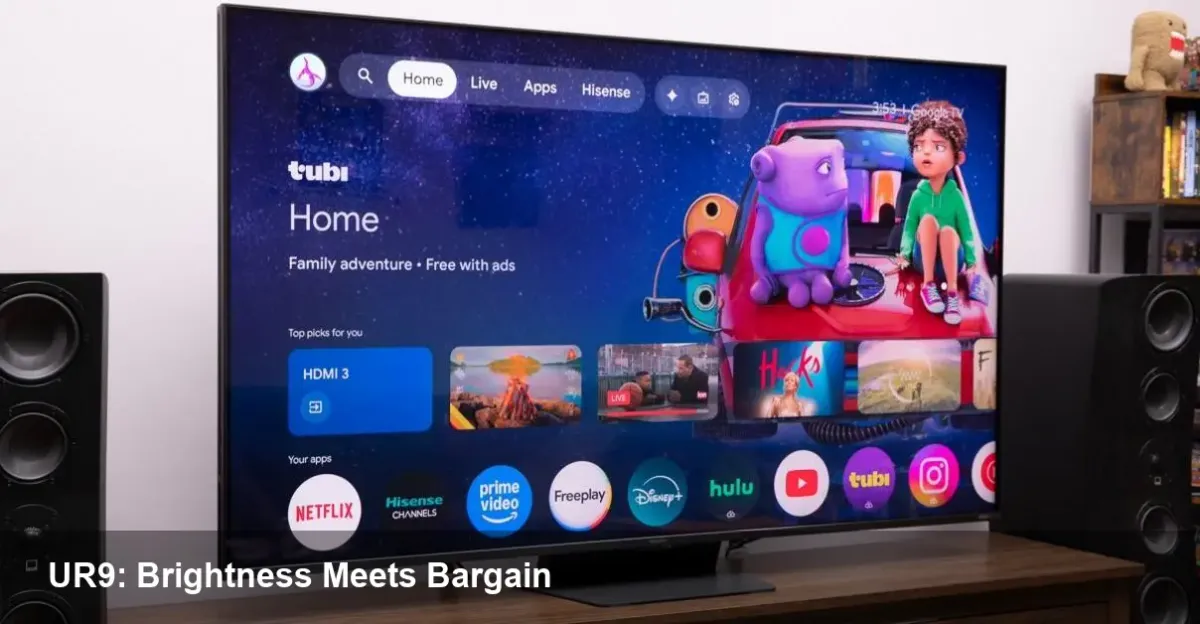
A quick primer on Hisense and the UR9
Hisense has been one of the most aggressive challengers in the TV market over the last decade, pushing experimental panel tech and feature-packed sets at lower price points than the incumbents. The UR9 — positioned as a premium LED TV with an RGB LED backlight — arrived with ambitions to match or outshine some OLED flagships on color volume and peak brightness. The surprising part: the maker applied a steep price cut on launch day, shifting the conversation from tech specs to market strategy.
What makes an RGB LED backlight different?
Most LCD/LED TVs use white LEDs with color filters or quantum dots to generate color. An RGB LED backlight uses separate red, green and blue LEDs behind the panel, which can improve gamut and peak luminance when implemented well. That matters for HDR highlights, color accuracy at high brightness, and reducing the need for aggressive tone mapping that can flatten highlights.
For buyers this translates into practical gains in bright-room viewing and HDR scenes with intense highlights — think sunlit reflections in movies or bright stadium lights during live sports. It’s not a magical replacement for OLED’s perfect blacks, but it narrows the perceptual gap in everyday viewing conditions.
How the launch-day price cut shifts buying decisions
The initial positioning of the UR9 put it near flagship OLED price territory, which raised eyebrows because OLED remains the reference for blacks and contrast. Dropping the price right at launch does several things:
- Converts undecided buyers who were weighing OLED versus a high-brightness LED alternative.
- Signals that Hisense is prioritizing share and volume over short-term margin on that model.
- Forces retailers and competing brands to react quickly on promotions and bundles.
For consumers, the change turns a speculative buy into a clear value play: you can get extremely high HDR brightness, excellent color volume, and the practical advantages of an LED (no burn-in, typically higher sustained brightness) at a price that was originally meant to buy top-tier OLEDs.
Real-world purchase scenarios
- Living room in a sunlit apartment: The UR9’s high peak brightness and RGB backlight preserve highlight detail where OLED can look dimmer. Pay attention to anti-reflective coatings and viewing angle, but the UR9 is compelling for bright spaces.
- Sports and gaming: The combination of punchy highlights and likely low input lag makes the UR9 attractive for gamers and viewers of live sports. If you prioritize motion handling and vivid, high-luminance highlights, RGB LED is a useful tradeoff.
- Dark-room cinema: If you’re chasing absolute black levels and reference-grade contrast for movie nights, OLED may still be preferable. The UR9 narrows the gap but doesn’t erase OLED’s advantage in pixel-level black.
Trade-offs and what to check before buying
No TV is perfect. With the UR9 and similar high-brightness LED sets, watch for:
- Local dimming implementation: Quality and zone count determine black level and haloing around bright objects.
- Calibration and color accuracy out of the box: RGB backlights can produce fantastic color but often need fine-tuning for accurate grading if you’re a creator or serious cinephile.
- Firmware and smart TV platform: Hisense uses its own smart platforms and third-party integrations, so check app availability and update cadence.
- Warranty and post-sale support: An aggressive launch price can be paired with tight margins; confirm return and service policies in your region.
Business strategy: why Hisense might have slashed the price
A launch-day price reduction isn’t purely altruistic. It’s a calculated move with several plausible motivations:
- Speed-to-share: Undercutting premium competitors quickly captures mindshare and early sales, which can create stocking pressure for rivals.
- Inventory and channel incentives: Bundles, promotional discounts, and retailer margins are levers. A lower MSRP can make it easier for retailers to advertise headline deals while protecting their margins with bundled accessories or warranties.
- Platform leverage: Selling more sets fast helps a TV vendor grow users on its smart platform, increasing ad-revenue and subscription partnerships over time.
For startups and product managers in consumer electronics, this is a reminder: pricing is a product decision. Margins can be traded for growth, and launch pricing affects distribution, perception, and long-term platform economics.
What this means for content creators and developers
Higher-volume adoption of bright, wide-gamut screens nudges content workflows. HDR masters and streaming apps must account for displays that can reproduce intense highlights and broader color spaces without clamping. For developers of calibration tools, test suites and streaming encoders, an influx of RGB LED sets is an opportunity to optimize tone mapping and dynamic metadata handling for devices that behave differently than both white-LED LCDs and OLEDs.
Three implications for the next 12–24 months
- OLED price pressure: Expect continued downward pressure on OLED prices. LED vendors pushing premium brightness at lower prices will compress margins for OLED makers and could accelerate promotional cycles.
- Hybrid innovation: More experimentation with backlight designs and local dimming will follow. The market may see more mid-tier models that use partial RGB zones or expanded quantum dot stacks to hit a price/brightness sweet spot.
- Smart TV ecosystems matter more: Manufacturers that log more active devices can monetize streaming partnerships and ads. Aggressive pricing is a customer-acquisition tactic that pays off on platform revenue later.
Should you buy one now?
If you value brightness, no-burn-in reliability, and ultimate HDR pop in a well-lit room, the UR9 at its reduced launch price is worth a serious look. If your evenings are spent in a dark home cinema and you demand perfect pixel-level blacks, OLED still holds the edge. Check for a thorough review of local dimming behavior and calibration performance before pulling the trigger.
Hisense’s move is a reminder that display innovation isn't only about new pixels; it's also about who wins the price war and how that shapes what people watch and how content gets made. Watch the market for the next three quarters — this kind of aggressive pricing can change the competitive map quickly.