What Samsung’s Next Unpacked Event Could Change

Samsung’s summer stage is more than a product launch
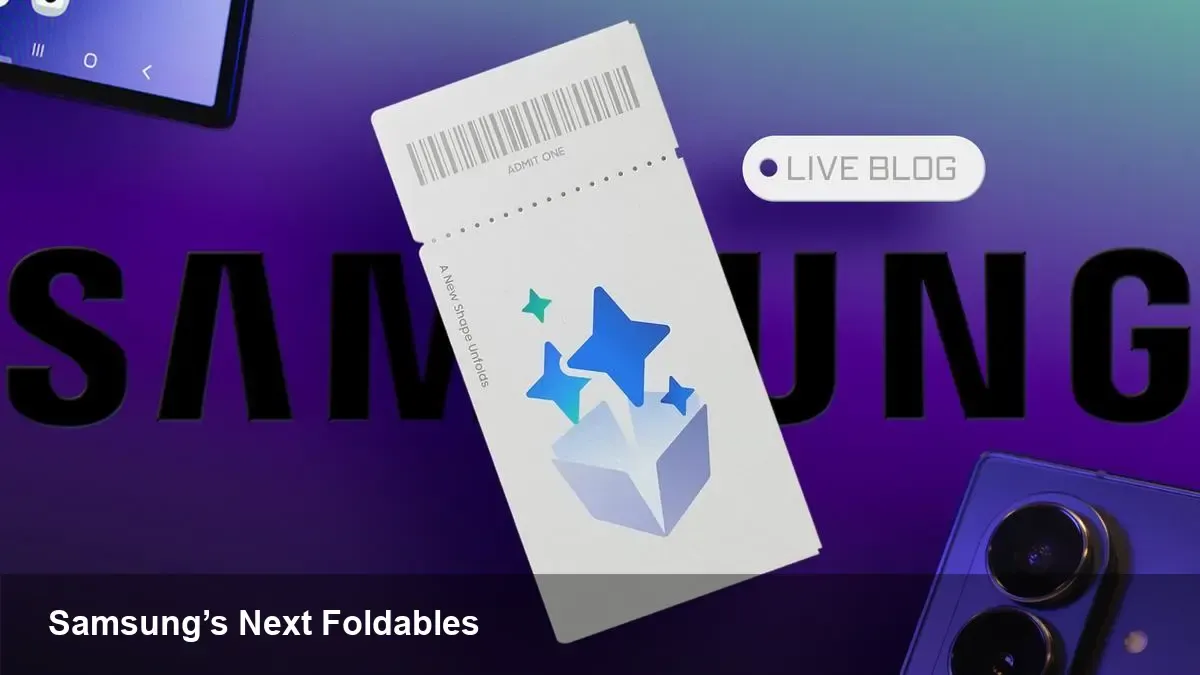
Samsung’s Galaxy Unpacked events have become one of the clearest signals in the consumer tech calendar. They are where the company tries to reset expectations for mobile devices, show off where its hardware strategy is headed, and convince buyers that foldables are no longer niche experiments. This year’s summer event, scheduled for Wednesday at 9 a.m. ET, 6 a.m. PT, and 2 p.m. BST, is expected to center on the Galaxy Z Fold 8 and Galaxy Z Flip 8, alongside new Galaxy watches.
That matters because Samsung is not just refreshing a phone lineup. It is trying to keep the foldable category relevant in a market that has become harder to excite with incremental upgrades. For consumers, developers, and businesses, the real question is not simply what the devices look like, but what Samsung is optimizing for: durability, software experience, multitasking, and ecosystem stickiness.
Why the Fold and Flip still matter
Samsung helped turn foldables from a curiosity into an actual product segment. The Galaxy Z Fold line targets users who want a pocketable device that behaves like a small tablet when unfolded. The Galaxy Z Flip, by contrast, leans into compact design and style while still offering flagship-level features. Together, they cover two different motivations: productivity on the Fold side and portability on the Flip side.
That dual strategy gives Samsung a rare advantage. It can learn from both high-end power users and mainstream consumers who care about size, aesthetics, and social-first use cases. In practice, that means one person may buy the Fold 8 to manage email, documents, and split-screen workflows, while another may choose the Flip 8 for convenience, camera use, and a smaller form factor that fits into a lighter everyday carry.
The software experience may matter more than the hinge
With foldables, hardware gets the headlines, but software determines whether the device feels useful or awkward. A foldable screen can only be compelling if apps adapt cleanly, multitasking feels natural, and transitions between folded and unfolded states are smooth. That is where Samsung has spent years refining its One UI layer and working more closely with app developers.
For developers, this category creates specific design challenges:
- Interfaces need to respond gracefully to changing screen sizes and aspect ratios.
- Navigation must remain intuitive when apps shift from phone mode to tablet-like mode.
- Camera, video, and note-taking apps need to make use of the extra screen real estate without overwhelming the user.
For business users, those same capabilities can be genuinely practical. A sales rep can review a CRM dashboard while taking notes in another window. A manager can hop between a presentation and messaging without constantly switching apps. A consultant traveling with a foldable device may find it easier to work from one screen instead of carrying both a phone and a tablet.
Watch upgrades are part of Samsung’s bigger ecosystem play
New Galaxy watches are also expected at Unpacked, and they are not just accessories. Wearables have become a key part of Samsung’s strategy to keep users inside its ecosystem. A watch that pairs tightly with a foldable phone can handle notifications, fitness tracking, quick replies, and health data in ways that make the whole package more valuable than either device alone.
That ecosystem value is important for both consumer retention and product differentiation. If a user already owns a Galaxy phone, a new watch can reduce friction in switching brands. For Samsung, the watch is also a bridge into health, wellness, and subscription-friendly services that rely on continuous engagement rather than one-time purchases.
In a broader sense, Samsung is building a connected experience where the phone is not the center of everything anymore. The watch, earbuds, and phone each play a role, and the goal is to make the combination feel seamless enough that users stop thinking about the individual devices.
What buyers are likely watching for
The biggest expectations around the Galaxy Z Fold 8 and Z Flip 8 are familiar but important. Buyers will want to know whether Samsung has improved battery life, reduced weight, strengthened the hinge, minimized display creasing, and maintained top-tier cameras. Those may sound like small refinements, but they are exactly the issues that shape whether foldables become everyday devices rather than premium novelties.
There is also the price question. Foldables remain expensive, which limits their reach. Even if Samsung delivers meaningful improvements, adoption still depends on whether the value proposition is clear enough for buyers who can get strong flagship phones at lower prices. The Fold line especially has to justify its premium through real productivity gains, not just the appeal of having the newest hardware.
Business opportunities around the launch
Whenever Samsung launches a new foldable generation, the ripple effects extend beyond retail sales. App developers often use the moment to revisit foldable optimization, especially for productivity tools, photo editors, streaming services, and communication apps. Accessories makers respond with cases, stands, chargers, and stylus-compatible gear. Carrier partners use the launch to promote trade-in deals and financing plans.
For startups, this is also a signal about where mobile computing might be heading. A device that can function as both a phone and a compact workspace invites new product ideas: task managers with dual-pane layouts, AI note assistants designed for larger inner displays, and collaboration tools that take advantage of more flexible screen states.
There is a strong business case for watching these launches closely, even if you are not planning to buy one. Samsung often sets the direction for Android hardware design, and its decisions influence how partners, app makers, and competitors adapt.
The broader trend: foldables are moving from novelty to utility
The most interesting shift is not whether Samsung can produce another eye-catching device. It is whether foldables can finally cross the line into dependable everyday tools. That transition depends on less glamorous things: software stability, repairability, battery consistency, and price normalization.
If Samsung delivers a more refined Fold 8 and Flip 8, the company can strengthen the case that foldables are becoming a mature product category. If the updates are too modest, the devices may still appeal primarily to enthusiasts and early adopters. Either way, the event will reveal how Samsung thinks about the next phase of mobile hardware.
For users, the practical takeaway is simple: the best foldable is no longer just the one with the most futuristic design. It is the one that fits a real daily routine. And that is why this Unpacked event matters beyond the usual launch-day spectacle.