TCL’s new RGB-Mini LED and SQD-Mini LED TVs: who should care?

Why this matters
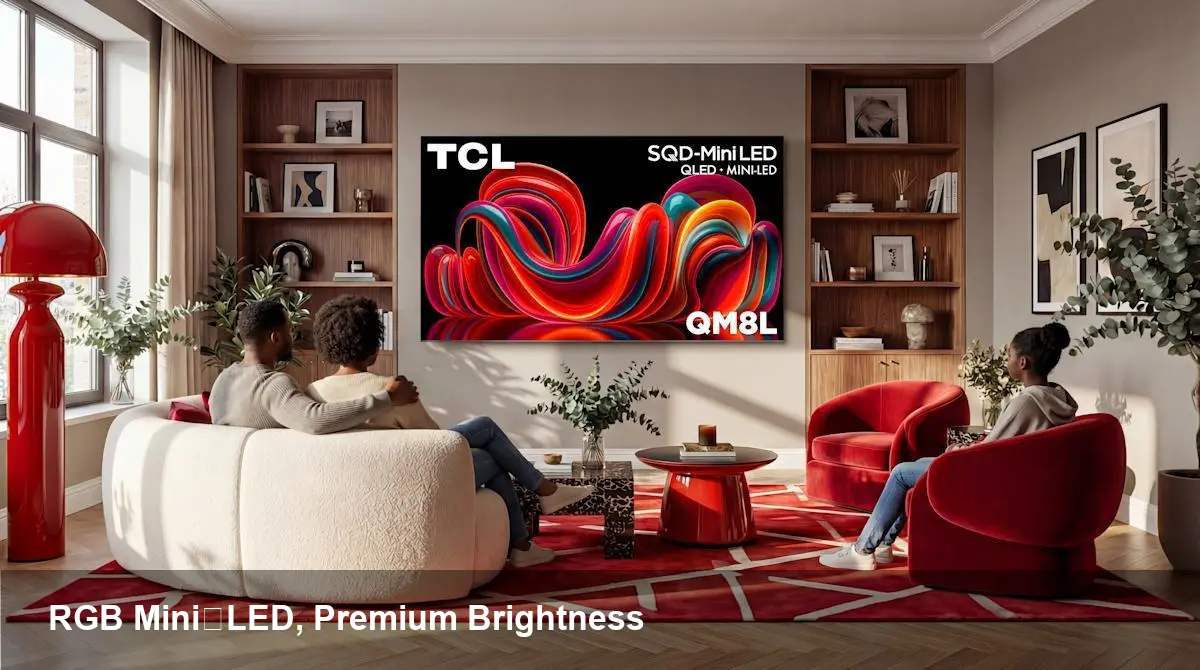
TCL has expanded its premium TV lineup with two new families: SQD-Mini LED models available to order now, and RGB-Mini LED models open for pre-order, with the RGB versions starting at $8,000. For buyers, integrators, and creators, this is a sign that mini-LED technology is moving further upmarket — and that display makers are experimenting with different backlight architectures to chase higher brightness, wider color, and improved local dimming.
Below I break down what these lines mean in plain language, practical scenarios where they make a difference, and the business and creative implications.
A quick primer: mini-LED, SQD-Mini LED and RGB-Mini LED
Mini-LED is a backlighting approach that uses thousands of tiny LEDs behind an LCD panel to achieve finer local dimming zones and higher peak brightness than traditional LED LCDs. That’s why many modern high-end LCDs use mini-LED to improve HDR performance.
- SQD-Mini LED: TCL’s SQD line continues the approach of using dense mini-LED backlights often paired with quantum-dot color enhancement. The “SQD” name refers to that product family rather than a fundamentally new display physics; think of it as the company’s advanced mini-LED offering with tuned color and brightness.
- RGB-Mini LED: This is the more interesting step. RGB-Mini LED backlights use red, green and blue emission from the backlight itself (rather than a white backlight plus a color conversion layer). That lets the display hit wider native color gamuts and can reduce some of the color filtering losses that happen in conventional mini-LED+quantum-dot stacks. The trade-off so far is cost and complexity, which is why RGB-Mini LED models are positioned at the top end of the market.
Note: TCL has made both lines available in different ways — the SQD-Mini LED models are available to order, while the RGB-Mini LED line is currently offered for pre-order, with pricing beginning at $8,000 for those high-end RGB models.
Real-world scenarios where RGB-Mini LED matters
- Home cinema for enthusiasts: If you’ve built a dedicated dark-room theater and want soaring HDR highlights (for example, explosive highlights in tabletop HDR scenes) and richer saturated colors without switching to OLED, RGB-Mini LED can deliver a very punchy, room-filling image.
- Pro or prosumer video work: Smaller studios and colorists who can’t yet justify a reference monitor costing many tens of thousands of dollars may find value in a high-end RGB-Mini LED display for client review or offline grading where high brightness and gamut coverage matter.
- High-end retail and showrooms: Retailers and brand showrooms benefit from displays that present product color more accurately and with eye-catching brightness under ambient lighting.
- Broadcast and streaming studios: Environments that need long-life displays with consistently high brightness will prefer mini-LED variants to OLED when burn-in risk or sustained brightness is a concern.
How this affects buyers and system integrators
- Price-to-performance calculus: With RGB-Mini LED starting at $8,000, buyers need to be deliberate. If your viewing environment is a bright living room or a mixed-use space, the jump in brightness and color may be worth the premium; for purely dark-room viewing, OLED still has advantages in per-pixel contrast.
- Calibration and workflow: For color-critical tasks, expect to budget for professional calibration. RGB-derived native gamuts can be wide, but accurate delivery requires good calibration tools and workflows. Installers should also account for firmware updates and possibly additional factory tuning from TCL or calibrated LUTs.
- AV integration: Higher-brightness displays often need careful handling of mounting, ventilation, and power. Integrators should confirm power draw and cooling requirements with TCL reps and plan for the physical footprint and weight of premium panels.
Limitations and practical trade-offs
- Cost: The headline $8,000 starting point signals that RGB-Mini LED is currently a premium niche. Expect larger sizes and fully loaded models to climb significantly higher.
- Availability: SQD-Mini LED being order-ready and RGB-Mini LED on pre-order implies staged availability. Early adopters may face longer lead times for accessories, calibration services, or timely firmware updates.
- Complexity: RGB backlights are more complex to manufacture and tune. That can lead to variability between units and a steeper initial calibration requirement.
- Competition with OLED: OLED remains competitive for deep blacks and infinite contrast. For viewers prioritizing absolute shadow detail and contrast in dark rooms, OLED or hybrid approaches may still be preferable.
Three practical recommendations if you’re considering one
- Know your room and content mix. If you watch daytime sports, movies in a bright room, or HDR-heavy content, RGB-Mini LED’s brightness and gamut can be a big win. For late-night movie viewing in a dark theater, compare against best-in-class OLEDs.
- Factor servicing and calibration into the purchase cost. High-end HDR displays benefit from professional setup. Ask TCL or your dealer about calibration packages and warranty coverage for these premium lines.
- Plan for future-proofing. Check HDR format support and connectivity (HDMI versions, eARC, etc.) to make sure the display will serve modern consoles, streaming boxes, and pro gear.
What this means for the market
TCL putting RGB-Mini LED into a consumer product signals two things: first, mini-LED innovation is still accelerating, and second, manufacturers are willing to test price elasticity for cutting-edge backlight tech. If RGB backlighting proves reliable at scale, we could see this approach filter into professional monitors and high-end gaming displays, pushing the competition to refine their own mini-LED and OLED offerings.
Longer term, expect incremental price declines and broader model availability as manufacturing yields improve. For content creators and integrators, that translates into more affordable high-brightness, wide-gamut options outside the traditional broadcast monitor market.
If you’re in the market for a showpiece TV or a high-brightness reference display, TCL’s new SQD-Mini LED and RGB-Mini LED families are worth evaluating — just be prepared to pay for the privilege and to invest in calibration and integration to get the best results.