Sony Xperia 1 VIII: Leak Signals Design Continuity

What's new in the leak — and why it matters
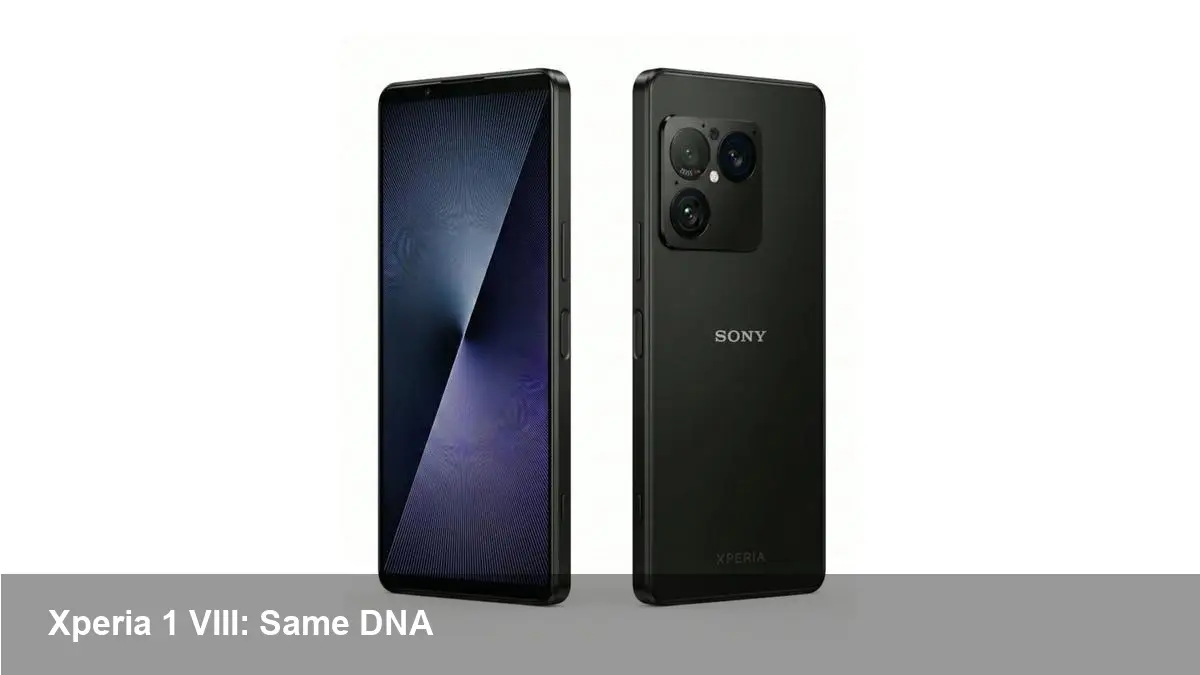
A new, official-looking image of the Xperia 1 VIII has circulated, and the headline is not a radical redesign but persistence: Sony appears to be sticking with the visual and functional language that has defined the Xperia 1 line. For anyone who follows phones aimed at creators—cinephiles, mobile photographers, and power users—this is a reminder that Sony still prioritizes a specific vision over chasing every mainstream trend.
The leak doesn't promise revolution. Instead it confirms continuity: a tall, cinema-oriented display, restrained bezel treatment, and a camera-oriented rear layout. For buyers and partners, that continuity is meaningful because it signals Sony is still targeting a narrow, professional-minded audience rather than the broad mainstream.
Sony’s positioning: niche premium with a pro tilt
Sony’s mobile strategy in recent years has leaned into strengths inherited from its camera and entertainment businesses: color science, manual imaging controls, and tools geared toward creators. The Xperia 1 VIII leak reinforces that positioning. Rather than adopting flashy design gimmicks or following every foldable and glass-curved trend, Sony appears to double down on a predictable, purposeful formula:
- A long, cinematic display aspect ratio optimized for content editing and media consumption.
- Physical controls and ergonomics that favor photography and video capture workflows.
- A conservative but functional camera module that suggests continued emphasis on image quality and professional features.
That approach makes Sony attractive to users who value predictability and capability over novelty: videographers who edit on-device, photographers who want dedicated exposure controls, and developers building apps for wide-aspect content.
Real-world use cases: who benefits and how
Here are concrete scenarios where Sony’s continued design choices are an advantage.
- Mobile filmmakers: The tall display and Sony’s movie-minded tuning make framing, reviewing, and even basic editing on the device more practical. A 21:9-like aspect ratio lets editors preview footage in the same proportions they expect for theatrical and streaming content.
- On-the-go photographers: A phone that keeps a physical shutter-style button and a camera-first layout helps users capture steady shots quickly without diving into menus. The leak hints that Sony preserves that photographic ergonomics.
- Productivity and split-screen workflows: Taller displays make vertical multitasking and split-screen apps more usable. Designers and developers can keep longer lists, code, or timelines visible while working.
- Accessory and pro-gear ecosystems: Gimbal makers, case designers, and portable monitor vendors gain predictability. When a manufacturer keeps the same dimensions and camera placement, accessory compatibility and development are simpler and less risky.
Developer and UX implications
If the leak proves accurate, app makers should take Sony’s consistency as both an opportunity and a prompt to optimize:
- Test for tall aspect ratios: Ensure UIs scale elegantly on long displays. That means rethinking modal heights, keyboard handling, and gesture areas so nothing important gets obscured.
- Consider tailored features: Camera and video apps can add dedicated layouts for Xperia users—manual exposure widgets, external monitor outputs, or one-touch aspect-ratio presets for 21:9 capture.
- Embrace split-screen and multi-window: Design workflows that leverage more vertical space, such as dual-pane editors (timeline + preview) or persistent tool palettes.
From a QA perspective, testing on real hardware is valuable. Emulators can simulate resolution but not tactile ergonomics—a physical shutter button or side-mounted controls change how users interact during capture.
Business implications: partners and product teams
Continuity in design simplifies the route to market for accessory vendors and carrier partners. A consistent chassis and button layout reduces SKUs and the engineering time required to support new models. For software vendors, a predictable hardware feature set means they can confidently build Xperia-specific experiences without the fear of being undercut by a radically different next-generation device.
However, the tradeoff is volume. By catering to a narrower market segment, Sony may sacrifice broader mainstream appeal—making distribution partnerships and carrier promotions more focused and niche.
Risks and limitations
- Perception of stagnation: Repeating the same design risks making the product feel dated to new buyers who expect annual visual upgrades.
- Missed mainstream trends: By not chasing foldables, punch-holes, or extreme camera island experiments, Sony might miss buyers drawn to the latest buzzworthy features.
- Hardware constraints: Maintaining a particular form factor can limit the ability to dramatically improve battery size, thermal solutions, or sensor arrays without a larger redesign.
What to watch next
From here, the most useful signals will come in three categories:
- Software reveals: If Sony pairs the hardware continuity with new camera apps, codecs, or editing workflows, that shows meaningful iteration under the hood.
- Official specs: Sensor choices, optical modules, and processor details will determine whether imaging and performance have stepped forward.
- Pricing and distribution: Sony’s sales approach—whether it stays premium-priced and boutique or broadens distribution—will indicate how aggressively it wants to grow the Xperia user base.
Two strategic takeaways for the future
- Specialization can be sustainable: By focusing on creators rather than chasing every mainstream trend, Sony can cultivate loyalty among professionals who prioritize features over novelty.
- Software will be the differentiator: Hardware continuity reduces surprise, so expect Sony to push its software—camera tuning, color profiles, and creator tools—to deliver headline improvements.
If you build apps, accessories, or content workflows, the Xperia 1 VIII’s leak is a useful nudge: design for tall screens, test capture ergonomics, and think about feature sets that serve creators first. Official announcements will fill in the technical details, but the strategic message is already clear—the Xperia 1 line remains committed to a specialist audience rather than the broadest possible one.