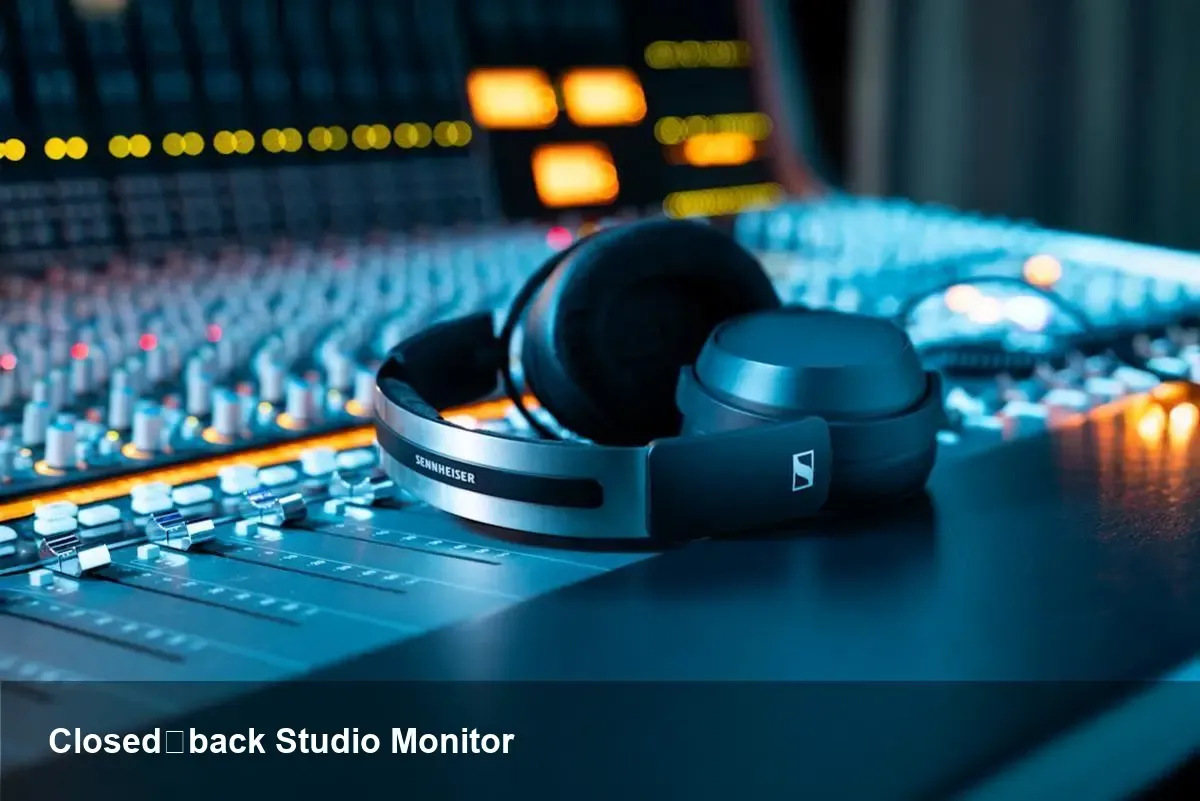
Sennheiser HD 480 Pro: Closed-Back Studio Monitor

Why Sennheiser's new closed-back option matters
Sennheiser has expanded its pro monitoring lineup with the HD 480 Pro — a closed-back reinterpretation of the company’s existing HD 490 Pro. For engineers, podcasters, streamers and content teams who need accurate sound while minimizing room leakage, the HD 480 Pro addresses a common trade-off: how to preserve tuning and clarity from an open-back reference while adding the isolation required for tracking and near-field work.
Founded in Germany after World War II, Sennheiser has been a consistent name in microphones, headphones and professional audio. The HD 480 Pro continues that tradition by borrowing the sonic philosophy of the HD 490 Pro (neutral tuning, hi-res clarity) and wrapping it in a design that reduces sound bleed and improves isolation.
Design and user experience: what to expect
The point of a closed-back monitor isn’t to reinvent listening — it’s to control the environment. With the HD 480 Pro, Sennheiser preserves many of the feel and fit cues professionals expect: relatively neutral frequency balance, comfortable clamping for long sessions, and a pragmatic build geared toward studio and on-stage use. Where it departs is in the sealed ear-cups and internal acoustic dampening that reduce external noise and prevent headphone output from leaking into microphones.
Practical details to keep in mind:
- Isolation makes the HD 480 Pro better for vocal takes, podcasting, and live-streaming where a condenser mic sits nearby.
- Closed back headphones tend to emphasize the lower mid-bass perception because sound reflects back toward the ear — that can be useful in modern productions but requires awareness when mixing for open environments.
- Build and comfort remain central for multihour sessions; Sennheiser tends to favor replaceable parts (cables, pads), which helps studios manage lifecycle costs.
Real-world scenarios where the HD 480 Pro shines
- Home and project studios: If you record vocals or acoustic instruments in the same room as your mic, closed-back monitors like the HD 480 Pro reduce bleed. That means tighter takes, cleaner comping, and fewer re-takes to avoid mic contamination.
- Live streaming and podcasting: Streamers juggling a boom mic and dynamic or condenser mics benefit from isolation. The HD 480 Pro will let you monitor at moderate levels without the audience hearing headphone bleed on-stream.
- Onstage monitoring and mobile sessions: For musicians doing quick tracking in tight venues or mobile rigs, closed-back cans reduce stage noise and help preserve monitor mixes.
- Remote collaboration: When sharing stems or reference tracks with collaborators who will use a mix in a non-treated environment, you can mix with better confidence that headphone leakage won’t be part of the recording.
Developer, studio and business implications
For startups and audio software engineers building tools for creators, the HD 480 Pro demonstrates an ongoing market preference: hardware that fits real hybrid workflows (recording + content distribution). A few implications:
- Plugin and app developers should include headphone compensation and virtual room simulations that anticipate both open-back and closed-back monitors. Users will expect a consistent translation between their mixing environment and end listeners’ devices.
- Teams that manage shared studio assets (voiceover houses, podcast networks) can reduce quality variability by standardizing on closed-backed monitoring for capture sessions, improving post-production efficiency.
- For hardware startups, modularity and serviceability remain selling points. Sennheiser’s approach—pro-grade parts and replaceable pads/cables—lowers total cost of ownership for commercial studios.
Pros, caveats and trade-offs
Pros:
- Strong isolation for recording and noisy environments.
- Familiar professional tuning adapted from the HD 490 Pro lineage.
- Likely durable, serviceable design aimed at studio use.
Caveats:
- Closed-back monitors can mask how a mix translates to open speakers; engineers should reference mixes on multiple playback systems.
- Perceived bass can be different from open-back models; you may need calibration or a reference track when switching headphone types.
- If your primary need is critical listening in a quiet, treated room, open-back models still provide the most natural spatial cues.
Practical setup tips for getting the best from closed-back monitors
- Use short reference checks on speakers: After mixing on the HD 480 Pro, listen to the mix on a neutral pair of speakers or open-back headphones to confirm imaging and reverb tails.
- Keep a reference track library: Maintain a folder of well-known commercial tracks across genres so you can quickly judge tonal balance when switching between closed and open systems.
- Use room and headphone correction tools: Software EQ or calibration curves help flatten the idiosyncrasies that any closed-back headphone introduces.
What this launch signals about pro audio trends
1) Hybrid workflows are mainstream: Professionals want gear that works equally well for capture, editing and distribution. Closed-back monitors tailored from a successful open model show manufacturers listening to creator needs. 2) Practical serviceability matters: As studios look to extend equipment lifetimes, modular parts and replaceability are valuable differentiators. 3) Software and hardware convergence will deepen: Expect headphone-specific companion apps or EQ profiles that make switching between monitoring types smoother for both hobbyists and pros.
If you’re running a small studio, producing podcasts at home, or streaming with a condenser mic close to your face, a closed-back option like the HD 480 Pro is worth evaluating. It won’t replace open-back references for some mastering tasks, but it removes a lot of friction from the capture process — fewer retakes, cleaner tracks, and more confidence when sending stems out to collaborators.
Whether you’re standardizing gear for a studio, choosing a first pro pair, or building an audio product that needs to work across many listening environments, the HD 480 Pro reinforces a practical truth: the right tool depends on the job. Consider the HD 480 Pro where isolation and reliable monitoring are part of the workflow, and keep a quick speaker or open-back check in your process for final mix decisions.