Motorola Razr 2026 leak: everything the retailer listing revealed

A giant retailer leak and why you should care
A major online retailer accidentally published a near-complete listing for the Motorola Razr 2026, laying out the phone’s design, hardware highlights, and marketing images before Motorola had a chance to control the narrative. For anyone tracking foldables, the leak matters because it both confirms where Motorola is focusing its engineering efforts this cycle and exposes the likely user experience months ahead of any official announcement.
Motorola and the Razr lineage — quick refresher
Motorola revived the Razr name as a modern clamshell foldable to compete in the compact foldable space pioneered by Samsung and copied by others. The Razr line has been positioned around pocketability, nostalgia-inspired styling, and a tall external display that turns the lid into a tiny companion screen. Over successive generations Motorola has pushed thinner folds, improved hinge reliability, and emphasized the external display as a usable surface rather than a mere notification strip.
What the leaked listing reportedly shows
Because the retailer listing leaked product images, spec rows, and marketing copy, we now have a relatively clear picture of Motorola’s direction for the 2026 model year. The important takeaways from the leak are:
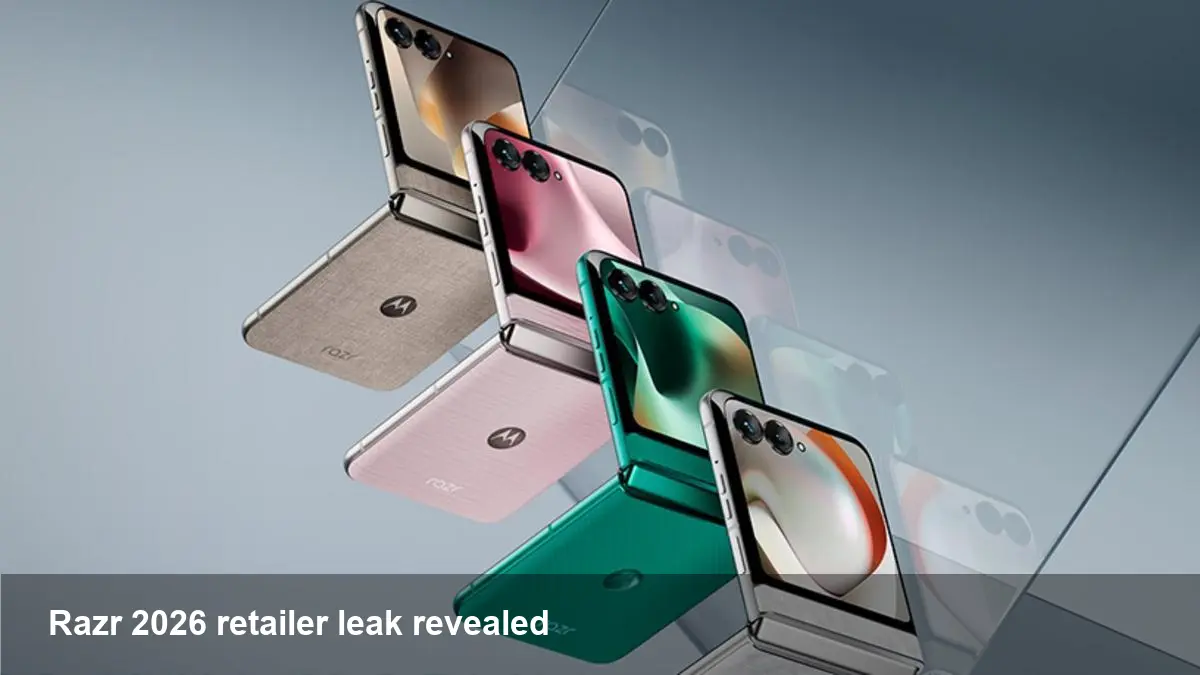
- Design: The phone appears to retain the slim clamshell profile but with a larger external display that spans more of the lid, suggesting Motorola wants the cover screen to handle deeper tasks like messaging, media controls, and quick app interactions.
- Cameras: The listing shows upgraded camera modules and sample photos in different lighting — an indicator Motorola is continuing to invest in imaging despite the Razr’s compact form factor.
- Performance: The spec sheet in the listing claims a contemporary chipset and slightly higher RAM and storage tiers than the previous generation, signaling an effort to close the performance gap with rivals.
- Software features: Marketing screenshots emphasize multitasking workflows and a more capable external UI, hinting at enhancements to how apps adapt to the fold and to the cover screen’s surface.
Because the listing included high-res renders, we can also infer color choices and finish options — useful for buyers who make decisions based on aesthetics as much as features.
Real-world scenarios: how the Razr 2026 could change usage
- On-the-go journalism: A reporter can pull out a compact clamshell, see an incoming briefing on the external display, and start capturing video without unfolding the phone. If the external screen can host camera controls and quick composition tools, it reduces friction for spontaneous coverage.
- Commuter productivity: With a larger cover display able to show widgets, notifications, and simple app flows, commuters can triage messages and manage calendar events while keeping the device folded and pocket-friendly.
- App demos and sales calls: For field sales teams who demo apps, a Razr that transforms mid-presentation — from a closed glanceable device to a full unfolded workspace — can make live demos feel more polished and surprising.
What this means for developers
Foldables are not just new hardware; they demand different thinking from app teams:
- Prioritize continuity: Developers should ensure state continuity between the external and internal displays. Users will expect an uninterrupted experience when flipping the device open, especially in camera, navigation, and messaging apps.
- Optimize UI for glanceability: The leak points to a deeper external-screen experience. That means designers should think in micro-interactions: actionable notifications, mini-widgets, and truncated but useful content previews.
- Test on actual hardware early: Emulators can simulate fold states, but nothing beats real-world testing on a device with the exact cover display size and aspect ratio revealed by the leak. Early compatibility work avoids last-minute surprises at launch.
Business and supply-chain effects of a retailer leak
Leaking full product listings before an official launch has several practical consequences:
- Marketing control is lost: Motorola’s coordinated reveal is disrupted, which can blunt the impact of launch events and planned messaging.
- Pricing and inventory chatter: Retail listings often expose SKU configurations and price ranges, prompting early competitor and consumer reactions that can affect pre-order strategy.
- Channel trust issues: Retailers that publish premature listings risk straining relationships with manufacturers, which may tighten listing rules or change how early inventory data is shared.
From Motorola’s perspective, the leak forces a reactive posture: adjust PR timelines, manage social channels, and possibly accelerate or delay other announcements linked to the Razr rollout.
Competitive context
Samsung remains the market leader for foldables, but the Razr series targets a different emotional and ergonomic niche: nostalgia fused with modern pocketability. If the Razr 2026’s larger external screen and camera upgrades are real, Motorola is aiming for day-to-day usefulness rather than pure spec battles. That could appeal to buyers who value real-world convenience over having the absolute top-tier chipset.
Three implications for the future
- Foldables will keep iterating on the external display as a primary interaction surface. The next fight in foldables will be about how useful the closed-phone experience is, not just the unfolded canvas.
- Software will dictate perceived value. Hardware alone won’t win customers; apps and system-level features that make both folded and unfolded modes productive will matter more.
- Leaks will shape launch strategies. Brands will either tighten control of retailer channels or embrace early leaks, using them to crowdsource feedback and refine messaging before official announcements.
What to watch next
Look for Motorola’s official confirmation of specs, pricing, and launch timing. If the company follows its prior cadence, a formal announcement or teaser will arrive a few weeks after the leak — with final details including regional SKUs and software feature rollouts.
If you build apps for Android, start thinking about how your UI behaves on a taller closed display and whether your app can offer glanceable, actionable content for a cover screen. If you’re a buyer, decide whether you want the novelty of a larger external display or prefer a sturdier hinge and longer software support.
Whether this leak ruins Motorola’s moment or accelerates interest in foldables, it’s clear one thing: manufacturers are treating the closed, pocketable experience as seriously as the unfolded one. Expect more foldable innovation focused on everyday convenience rather than just flexible hardware.