Mac mini shortfall: strategies for developers and teams

Why Mac mini availability is tight right now
Apple’s compact desktop has suddenly become a hot commodity. Demand for Mac mini units—especially the M2 and M2 Pro configurations—has spiked as teams look for affordable Apple silicon workstations to run development tools, local model inference, and compact servers. Apple’s leadership has acknowledged that AI adoption accelerated faster than anticipated, and the company says limited Mac mini stock may last for several months.
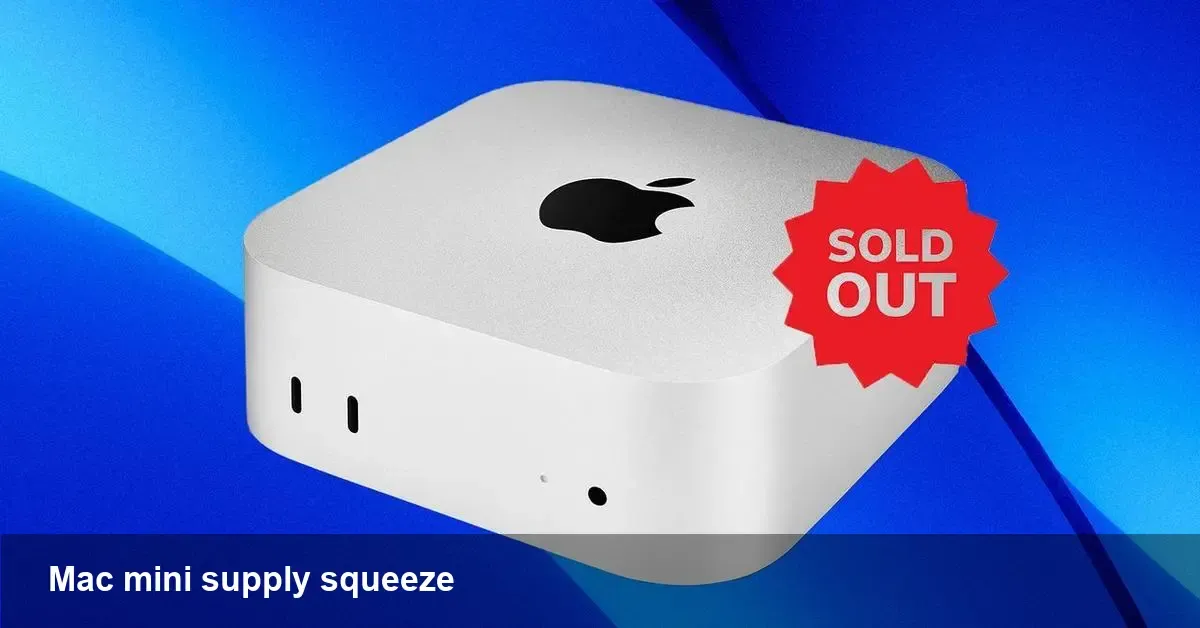
Two forces are converging: a jump in AI-driven workflows that prefer Apple silicon for developer desktops and edge inferencing, plus normal supply-chain tilt toward higher-margin products. The result is shoppers seeing multi-week lead times or “sold out” notices at resellers.
A quick background: where the Mac mini sits in Apple’s lineup
The Mac mini is Apple’s entry-level desktop: a small, power-efficient chassis that packs M-series chips with the same architecture used across Mac laptops and desktops. Apple refreshed the line with M2 and M2 Pro chips, giving buyers a range of performance and price points (the base M2 model being the most budget-friendly option for developers and small infra teams).
That value proposition—strong CPU/GPU performance, low power, and lower cost—makes the mini an attractive pick for home labs, build servers, and compact AI inference nodes. When demand rises quickly for such use cases, the model is one of the first to feel the pinch.
Who feels the pain (and why it matters)
- Independent developers and freelancers who want an Apple-based local dev environment for iOS/macOS builds.
- Small startups that use Mac minis as CI runners, device farms, or compact on-prem inference boxes.
- Creative teams (video, audio, 3D) who need affordable desktop muscle.
- IT procurement teams planning refresh cycles—project timelines and pilot programs can stall if hardware is delayed.
Beyond convenience, shortages have real costs: delayed app releases, longer CI queues, increased cloud spending when teams switch to remote build farms, and friction onboarding new hires.
Immediate options: buy, wait, or pivot
If you need Mac minis now, here are pragmatic choices ranked by immediacy and cost.
1) Buy what you can find (and plan warranty): scour Apple’s official refurbished store, authorized resellers, and Apple Business/School channels. Refurbished units often ship faster and include a warranty.
2) Choose a higher-tier Apple product: if a Mac mini isn’t available, MacBook Pro or Mac Studio stock might be steadier. They’re pricier, but for teams needing immediate capacity, the total cost of delayed releases can justify the premium.
3) Cloud-based macOS providers: services like MacStadium (or similar) let you rent cloud Mac hardware for CI, testing, and remote development. This approach scales with short lead time but adds recurring costs and network latency.
4) Remote developer workstations: use M1/M2 MacBooks already in the org as shared build hosts using SSH or remote desktop tools, or set up a centralized remote-access machine to reduce the need for multiple new devices.
5) Re-evaluate necessity: some workflows can move temporarily to Linux/Windows build agents or GPU cloud instances until Apple hardware becomes available.
Practical workarounds for developers and startups
- Containerize builds and CI pipelines so they can run on non-mac hardware where possible. For iOS/macOS artifact signing or test runs you still need macOS, but much of the build orchestration can be decoupled.
- Prioritize device allocation: create a booking system for limited Mac minis to ensure critical tasks (release builds, on-device tests) get precedence.
- Invest in remote test infrastructure: a small fleet of shared Mac minis or MacBooks accessed over the network often yields better utilization than dispersing many underused devices.
- Use virtualization and caching: speed up builds by caching dependencies, using distributed caches (sccache, bazel remote caches) and virtualization to reduce per-build time.
Concrete scenario: a three-person mobile team needs two new machines. Instead of waiting months for new minis, they buy one refurbished Mini, subscribe to a cloud Mac provider for CI bursts, and repurpose an M1 MacBook as a shared remote build host. Result: releases stay on schedule and capital outlay stays moderate.
How this affects buying and product strategy
Apple may be prioritizing production for Macs with higher margins or addressing demand patterns—so shortages aren’t random; they reflect product mix decisions and component allocation from suppliers. For organizations, that means procurement needs to be more proactive:
- Order earlier than usual and maintain a rolling replacement schedule.
- Use Apple Business Manager or enterprise reseller agreements to get priority allocation.
- Budget flexibility for short-term cloud spend or higher-priced alternatives.
For startups, flexibility in infrastructure (hybrid cloud + on-prem) is now strategic rather than optional.
Two-to-three implications for the near future
1) Greater appetite for Mac-as-a-service: Persistent hardware bottlenecks will accelerate the adoption of managed macOS infrastructure. Expect growth in providers offering dedicated, on-demand Mac instances optimized for CI and testing.
2) Rethink on-device AI: As AI workflows grow, some teams will favor cloud GPU instances for training while keeping inference and development on efficient edge devices. Apple’s unified silicon helps inference at low power, but hardware scarcity will push more organizations to hybrid models.
3) Procurement moves upstream: Teams will make procurement a strategic part of product planning—hardware lead times will influence release schedules, hiring, and budgeting decisions more than before.
What to watch next
- Inventory updates from Apple and authorized resellers: they’ll be the first signal of easing supply.
- Price and availability of alternatives: if Mac Studio and MacBook Pro stay available, organizations may choose to permanently shift some roles away from the mini.
- New product announcements: Apple tends to shift focus around product cycles—watch for events or refreshes that could rebalance inventory.
If you’re facing delays, start with an inventory of immediate needs, prioritize use cases, and mix short-term cloud options with selective purchases. That hybrid approach keeps development velocity high without waiting months for a particular chassis to restock.