Inside Apple’s Move Toward High‑Resolution iPhone Cameras

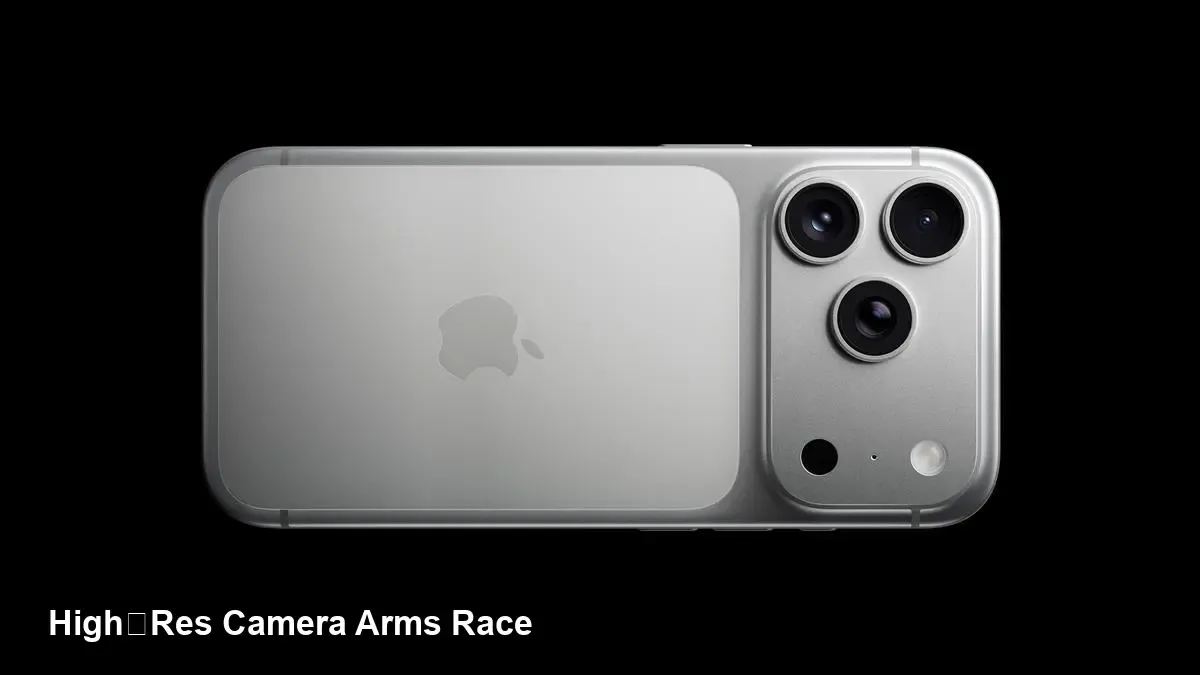
Why a high-resolution camera matters now
Smartphone photography has stopped being just about megapixel counts; it’s become a combination of sensor hardware, optics, and increasingly sophisticated computational photography. Still, increasing native sensor resolution unlocks tangible benefits: better detail for cropping, improved digital zoom, and finer-grained inputs for machine vision models. If Apple is indeed working on a noticeably higher-resolution camera for the iPhone, the move is less about a marketing number and more about expanding creative and technical capability.
What Apple could be doing (hardware + software)
A jump to a higher-resolution sensor typically involves several changes:
- Larger sensor area or denser pixel grid to capture more information per frame.
- New lens elements to resolve that detail without introducing artifacts.
- Upgrades to the image signal processor (ISP) and neural engines to handle heavier data throughput and advanced denoising.
Apple’s strength has been pairing hardware revisions with computational tricks—merging exposures, using per-pixel machine learning denoising, and extracting depth and texture from multi-frame stacks. A higher-res sensor gives those algorithms better granularity to work with: machine learning models can see more edges, better distinguish textures from noise, and produce cleaner crops and zooms.
Why Chinese manufacturers are spending big
Chinese smartphone companies and component suppliers have aggressively invested in next-generation sensors, optical modules, and machine-vision pipelines. There are a few commercial reasons for that:
- Competitive differentiation. High-resolution cameras are a headline feature that can be marketed globally.
- Component supply security. Investing in sensors and optics helps reduce dependency on external suppliers and speeds up time-to-market.
- Software advantage. More pixels create opportunities for on-device AI features—improved night modes, super-resolution zoom, and advanced scene understanding.
For component makers, the gamble is that the market will favor devices that blend raw sensor capability with compelling software experiences. That’s why you see money poured into R&D, sensor fabs, and lens factories.
Three concrete user scenarios that change with higher resolution
- Pro-style editing on a phone: A higher-res capture lets photographers crop or reframe shots without losing detail. For journalists and content creators who don’t want to haul a mirrorless camera, this reduces friction.
- Better digital zoom: Optical zoom is limited by hardware; computational zoom relies on sensor detail. More pixels mean cleaner digital zoom without resorting to heavy sharpening that introduces halos.
- Improved AR and scene understanding: Machine vision models used in AR and object detection benefit from higher-resolution inputs — better localization, more accurate occlusion, and finer surface details for AR anchoring.
What developers and startups should consider
- Mobile vision models: Expect model retraining to take advantage of higher-resolution captures. Higher input resolution can improve accuracy but also increases latency and compute cost. Consider hybrid architectures (mobile + cloud) or progressive inference (coarse detection at low res, refine at high res).
- Storage and bandwidth: Higher-res images and bursts increase storage use and network cost if uploading to servers. Apps that sync or back up photos should rethink compression strategies and implement adaptive upload based on connection type.
- UX for editing apps: Provide smart defaults—automatic downscaling for quick viewing and non-destructive access to full-res mats for export. Let users choose when they want full-resolution processing to avoid CPU/battery penalties.
- Video and streaming: If video pipelines take advantage of higher sensor input (e.g., 8K or high-res downsampled 4K), developers need to manage encoding performance and heat management on devices.
Business implications for Apple and rivals
For Apple: integrating a higher-res sensor offers another lever to justify premium pricing and to keep the iPhone competitive against Android flagships that increasingly tout camera specs. It also tightens Apple’s ecosystem: better base imaging enables services—photo editing, Memories, object recognition—that add long-term stickiness.
For Chinese OEMs: the investment is strategic. If they can match or exceed Apple on imaging while offering aggressive pricing, they can erode market share in price-sensitive regions and differentiate in flagship segments. For component suppliers, winning these contracts means long-term revenue but also higher capital expenditures.
Trade-offs and limitations
Higher resolution is not automatically better. Downsides to consider:
- Noise: More pixels packed into the same sensor area can raise per-pixel noise unless the sensor or optics compensate.
- Power and heat: Processing larger raw files requires more ISP and neural engine cycles — this impacts battery life and thermals.
- Cost: Better sensors and lenses raise BOM (bill of materials), which may push retail prices up or compress margins.
- Diminishing returns: At a certain point, user-perceived improvements become marginal for casual shooters.
Designers and engineers need to balance pixel count with sensor size, lens quality, and software optimization.
Three implications for the next 2–3 years
- Faster on-device AI innovation: Richer sensor data accelerates development of new on-device features—live semantic segmentation, fine-grained depth mapping, and improved noise models.
- Supply-chain reshuffling: Manufacturers that invested early in sensors and optics may gain leverage. Expect partnerships, acquisitions, and capacity expansion among Chinese suppliers to continue.
- New app opportunities: Higher-res cameras create niches—mobile RAW editing apps, AI-powered restoration, advanced AR experiences, and professional mobile workflows become more viable.
Practical recommendation for product teams
If you build mobile apps that rely on imaging, start preparing now: audit how you handle image inputs, test with higher-resolution assets, and profile CPU/GPU/Neural Engine costs for any heavy processing. For startups looking to enter the imaging space, focus on software layers that extract meaningful value from extra pixels—smart compression, perceptual editing, or ML models that genuinely benefit from higher spatial detail.
Apple’s rumored move up the resolution ladder won’t be purely a hardware milestone; it will change what’s possible on-device. That’s a win for users who want better photos and for developers who can leverage richer visual data—so long as the ecosystem adjusts to the added compute, storage, and thermal realities.