Huawei Pura X Max: Why the wider foldable matters

A different direction for foldables
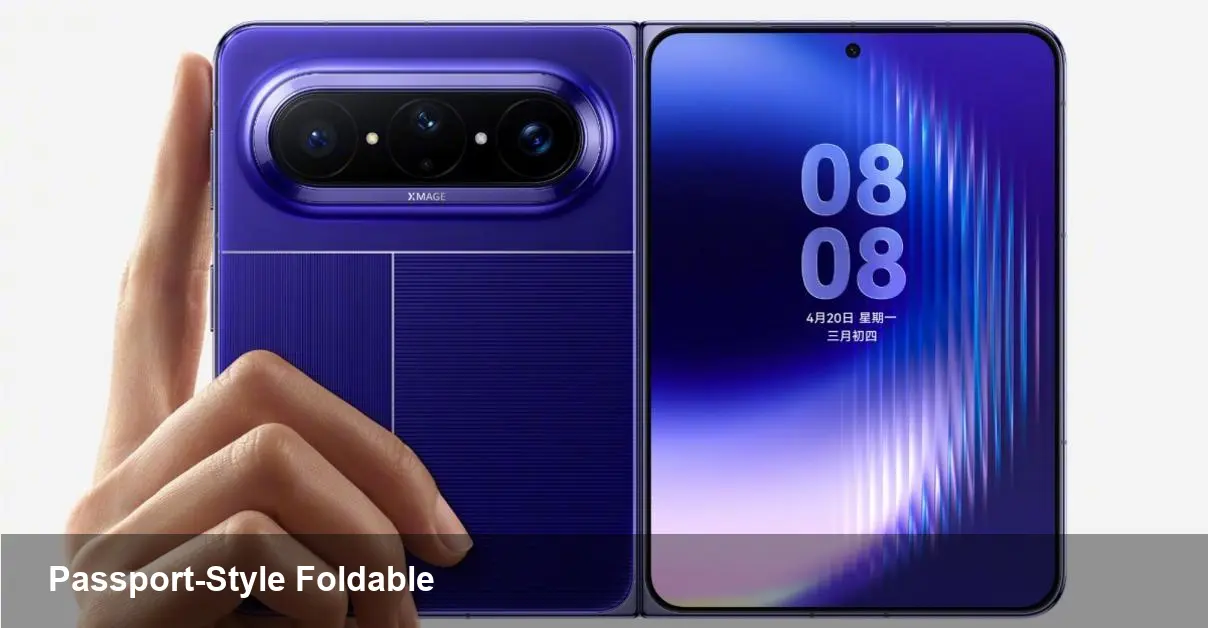
Huawei is launching the Pura X Max in China on April 20 — and the standout detail isn’t just that it folds, it’s how wide the internal display is. The device adopts a 'passport' or near-square inner aspect that brings a different set of trade-offs compared with the long, narrow screens most rival foldables use. Huawei’s move puts a new form factor into circulation just as rumors swirl about an Apple foldable and Samsung continues to iterate on its Z Fold line.
The Pura X Max runs HarmonyOS in China and represents Huawei’s ongoing push to differentiate on hardware design rather than competing head‑to‑head on Google services or global availability. For people who think of foldables as merely a phone that turns into a tablet, a wider inner panel changes the conversation — it’s less about stretching phone UI and more about rethinking apps, workflows, and ergonomics.
Everyday use cases where width matters
Think of a passport-style foldable as more of a compact tablet than an elongated book. That unlocks practical scenarios:
- Document editing and two-column layouts: The wider canvas fits desktop-style layouts better, so word processors, email clients, and spreadsheets feel less cramped than on a narrow inner display.
- Split-screen multitasking with parity: Rather than stacking two narrow app panes, each app can occupy a more usable proportion of the screen, making side‑by‑side editing or reference work genuinely practical.
- Media and creative apps: Photo-editing and design tools benefit from extra horizontal real estate, where tool palettes and canvases can coexist more sensibly.
- Presentations and on-the-go demos: A passport aspect ratio offers a comfortable way to show slides or diagrams to a small group without the awkward tall aspect of many foldables.
If you frequently switch between phone and tablet mindsets — taking notes, editing documents, or managing communications — the Pura X Max’s wider panel will feel like a deliberate productivity device, not a novelty.
What developers need to do differently
A new hardware profile means work for app makers, but the challenges are solvable and present an opportunity to stand out:
- Design for variable aspect ratios: Use responsive layouts and fluid grids. Rely on Android’s WindowManager or platform tools (and check Huawei-specific guidance for HarmonyOS) to detect fold state, hinge area, and window size.
- Avoid fixed assumptions: Many apps assume elongated phone screens. Test with square-ish inner displays and provide alternate layouts or adaptive breakpoints to avoid cramped interfaces.
- Multi-window UX: Build meaningful side-by-side experiences. Apps that can operate independently in split mode (e.g., document editor + file browser) will provide better continuity.
- Continuity and state restoration: Ensure that workflow persists across folding/unfolding events. Save in-progress edits and keep transient UI elements stable when the form factor changes.
For developers, this is both a compatibility task and a chance to create tailored features for productivity-minded users.
Business and market implications
Huawei shipping a wide foldable has ripple effects beyond device specs:
- Differentiation in a crowded market: Samsung’s foldables lean toward a tall, pocketable canvas. Huawei’s wider approach signals that manufacturers are still experimenting with the optimal foldable template.
- Enterprise appeal: Companies that deploy mobile devices to knowledge workers may prefer a form factor that reduces context switching between phone and laptop. Wider foldables can serve as a single-device solution for specific workflows.
- Ecosystem play: Success depends on app readiness. Huawei will need to persuade developers and enterprise software vendors to test and optimize for the Pura X Max to capture real productivity gains.
However, Huawei’s focus on China and use of HarmonyOS means some global app gaps and service differences will remain important considerations for international buyers and businesses.
Pros and the caveats
Advantages:
- More usable inner display for productivity and multitasking.
- Better canvas for media, creative, and presentation use cases.
- An alternative to narrow foldables that may suit heavy users.
Drawbacks and limitations:
- App compatibility: Not every app will take advantage of the wider area out of the box. Users may see stretched or poorly arranged UIs until apps are optimized.
- Ecosystem constraints: Outside China, Huawei devices still face limitations in terms of Google services and some third‑party app availability.
- Weight and ergonomics: Wider panels can increase device bulk or change handling; the ideal in-hand balance differs from long foldables.
Where this pushes the industry next
Three implications worth watching:
1) Form-factor diversity will accelerate. As manufacturers experiment, we’ll see more than one dominant foldable shape — some optimized for productivity (wider), others for media or pocketability (taller). Device makers that target specific user segments may win niche loyalty.
2) App design will become a competitive axis. Mobile apps that adapt fluidly to varying inner displays and offer true multi-window experiences will be perceived as higher quality on foldables. Expect platform tooling, libraries, and design systems to evolve quickly.
3) Enterprise adoption could blossom for the right use cases. Sales teams, field engineers, and creators who need a compact but capable device may prefer a passport-style foldable over carrying a laptop.
Should you care now?
If you’re a buyer focused on productivity and often work with documents or split-screen workflows, the Pura X Max should be on your shortlist — especially if you’re in China where it launches on April 20. Developers should prioritize testing responsive layouts on passport-style canvases and consider optimizations that exploit a wider inner display.
For the wider market, Huawei’s bet is a reminder that foldable hardware is still in an exploratory phase. Expect more shape experiments and a clearer winner only once app ecosystems and long-term ergonomics are settled. In the meantime, the Pura X Max gives users and developers a new canvas to rethink mobile productivity.