How Prego’s Dinner Recorder Turns Family Talk into Archives

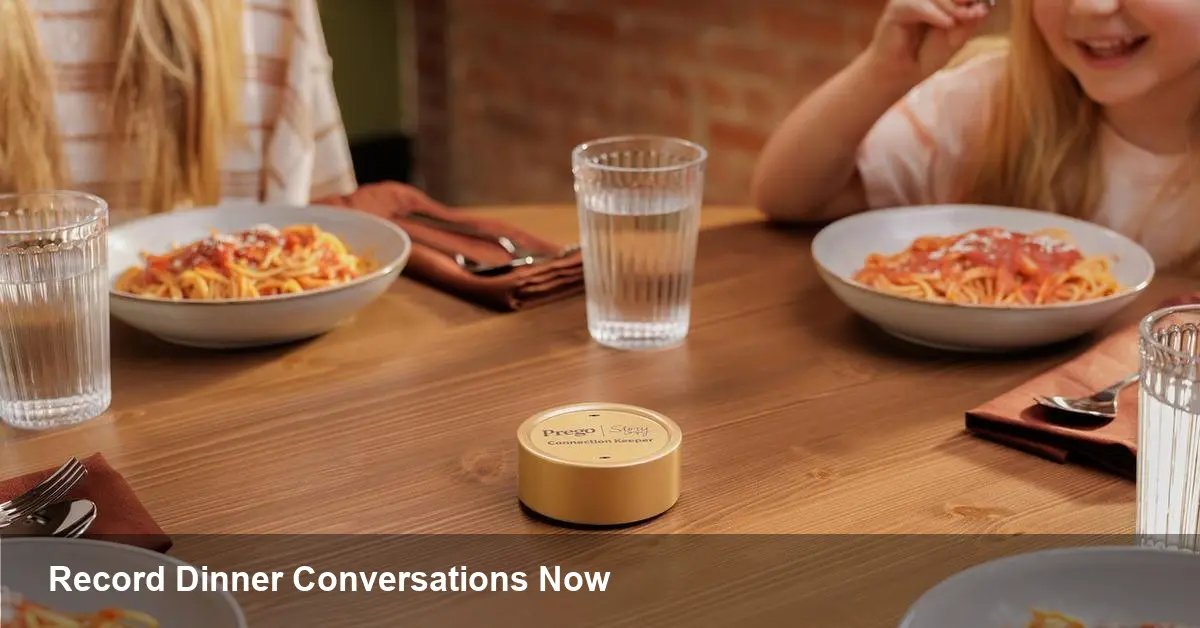
Why a pasta brand built a conversation recorder
It sounds unlikely: a jarred-sauce brand teaming with an oral-history nonprofit to produce a device that records family conversations at the dinner table. But that pairing—between Prego and StoryCorps—makes sense when you see it as brand-driven experience design meeting civic preservation. Prego’s product isn’t about selling sauce per se; it’s an experiential tool that nudges families to slow down, talk, and create a persistent family archive.
StoryCorps, the nonprofit founded to record, preserve and share people’s stories, has spent years refining interview prompts, recording workflows, and archival standards. Pairing that expertise with a consumer brand gives StoryCorps a route to reach kitchens and living rooms where oral histories actually happen.
What the device does (and what to expect)
At its core the gadget is simple: an easy-to-use, table-friendly recorder intended to catch dinner conversations and convert them into archival audio. It lowers the technical friction that stops people from preserving stories—no complex setup, no professional equipment, and no intimidating studio. Typical features you can expect from this kind of device:
- One-touch or clearly labeled controls for recording and stopping
- Built-in microphone optimized for group pickup at short range
- Local storage with a simple transfer method to cloud or archive
- Clear consent prompts and suggested conversation starters (StoryCorps-style)
The important distinction is intent: the device is configured for oral history quality—clean audio, simple metadata capture (who’s speaking, date, topic), and an easy path to archive or share the file with StoryCorps or other family repositories.
Real-world scenarios where this actually matters
- Preserving immigrant narratives: Families with first- or second-generation members can document migration experiences, language shifts, recipes and cultural memory that are often lost between generations.
- Elder-care and memory work: Caregivers and relatives can structure gentle interviews with older family members to capture life histories before they fade. The device can help elicit stories by offering prompts.
- Everyday rituals as archives: Regular dinner-table recording turns casual family talk—about school, work, and small wins—into a longitudinal record of a family’s social life.
These scenarios make the value concrete: it’s not about a one-time novelty; it’s about turning a recurring habit into a living archive.
How developers and product teams should read this
There are practical product and developer lessons in a branded hardware + nonprofit collaboration:
- Lower friction UX wins adoption. The critical engineering work is in removing setup steps (pairing, networking, permissions) so that a non-technical person can start a recording mid-meal.
- Metadata matters. Attach simple, searchable metadata—names, relationship, date, and topic—to make recordings useful later. Developers can provide mobile or web apps to add tags or transcriptions post-recording.
- Interoperability and export formats make the device sustainable. Open, standard audio formats (WAV, FLAC) and plain-text transcripts ensure files remain usable decades from now.
- Privacy-by-design is non-negotiable. Features such as explicit consent flows, automatic deletion options, and local-first storage reduce legal and trust friction.
For startups or teams building similar consumer hardware, partnering with mission-driven organizations (like StoryCorps) can supply content frameworks, user prompts and archival workflows that a brand typically lacks.
Business value for a brand like Prego
Why would Prego invest in anything other than jars and marketing campaigns? Consider three tangible returns:
- Elevated brand familiarity: A product that lives in the home and is associated with family rituals extends brand presence beyond the grocery aisle.
- Emotional engagement: Helping consumers create meaningful artifacts deepens emotional ties and creates shareable stories that benefit brand perception.
- New data and partnerships: Permissioned metadata or anonymized usage trends (how often families record, which prompts they choose) can inform marketing and product placement—if handled ethically.
This model is a blueprint for brands that want to move from transactional marketing to relationship-driven utility.
Privacy, consent, and ethical limits
Recording family conversations raises clear privacy and ethical questions. Key safeguards to bake in:
- Explicit consent language and visible signals when recording
- A simple way to decline, stop, or delete a recording immediately
- Local-first storage with opt-in cloud upload and clear ownership rules
- Parental controls when minors are present
Without these protections the device risks becoming invasive rather than connective.
Limitations and adoption barriers
- People’s habits: Dinner-table recording requires cultural buy-in. Some families cherish privacy and won’t adopt the device.
- Audio quality constraints: A single table microphone struggles in noisy environments; placement and ambient noise still matter.
- Archive maintenance: Storing and indexing long-term collections requires infrastructure and ongoing commitment from the nonprofit partner or the brand.
Three implications for the future
- Branded hardware as social infrastructure: Expect more consumer brands to test small, mission-led hardware experiences that fit into daily rituals (kitchen, car, bedside) to build deeper engagement.
- Standards for living archives: Projects like this will push demand for simple standards around metadata, consent, and file formats that researchers and families can rely on for decades.
- Hybrid human–machine workflows: Combining device capture with human-curated editing, context prompts, and optional transcription services will be the user experience that scales while preserving nuance.
How to use one at your table (quick checklist)
- Place in the center of the table and announce the recording to get verbal consent.
- Use a prompt if conversation stalls (ask about a favorite childhood memory or a family recipe).
- Tag recordings immediately with names and date via an app or index card.
- Decide on archive: upload to a trusted repository (StoryCorps or private cloud) or keep local with backups.
A dinner-table recorder is more than a marketing stunt; it’s an experiment in how everyday objects can help people preserve memory. Whether your family embraces it or not, the idea points to a larger trend: brands moving into the role of enabling richer, longer-lived human experiences.