How Ikea and Samsung Are Making Matter Work Better

Why this partnership matters
Matter is quickly becoming the de facto standard for smart home device interoperability. When two major players—Samsung with its SmartThings platform and Ikea with a large catalog of affordable smart devices—align around a more stable, user-centered Matter experience, the result is meaningful for consumers, developers and retailers.
This update isn’t just another compatibility badge. It’s about reducing the most common sources of smart‑home friction: flaky connections, confusing device setup, and inconsistent automations across ecosystems. Samsung and Ikea focused on validation and a tighter integration inside SmartThings so users spend less time troubleshooting and more time using their devices.
Quick background: the companies and the tech
- Samsung SmartThings is a mature smart-home hub and app ecosystem used to manage devices from dozens of brands. It supports multiple protocols (Wi‑Fi, Zigbee, Z‑Wave, Thread) and acts as a central place for automations, scenes and voice integrations.
- Ikea’s smart portfolio—known for Trådfri bulbs, smart plugs, and a growing roster of sensors and switches—targets budget-conscious buyers who want simple, reliable hardware.
- Matter is an industry standard that defines how smart devices discover, authenticate and talk to each other. It reduces the need for brand-specific hubs and aims to make setups more predictable across voice assistants and home platforms.
What Samsung and Ikea changed (and why it helps)
From a practical standpoint, the two companies concentrated on three areas:
- Connection stability: repeated validation across devices and scenarios to shore up edge cases that cause drops or lost automations. That matters most for multiprotocol homes where Thread, Wi‑Fi and bridges coexist.
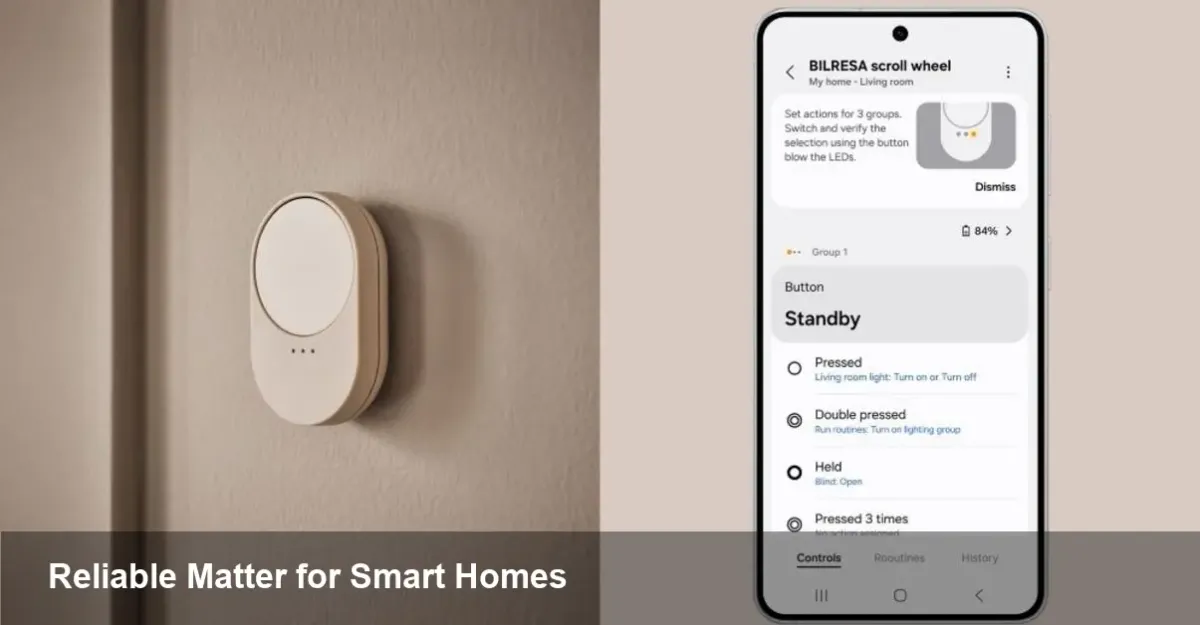
- Streamlined setup inside SmartThings: a dedicated user experience for Ikea devices simplifies pairing, naming and placement. That reduces user error and support calls.
- Focused QA on real-world workflows: testing not only standalone devices but also how Ikea products behave inside SmartThings automations, scenes and voice commands.
Together these changes reduce friction at the point where people actually use their smart homes—adding new lights, creating room scenes, scheduling routines—rather than on a lab bench.
Real-world scenarios where you’ll notice the difference
- New apartment install: Instead of adding each Ikea bulb through a vendor app or zigzagging between apps, you can pair directly in SmartThings, assign rooms, and include bulbs in scenes with your thermostat, locks and other brands. The tightened flow reduces setup time for nontechnical users.
- Automation reliability: If you schedule a “Good night” routine that turns off Ikea lights and locks doors, the improved stability lowers the chance one device won’t respond because of discovery timing or transient disconnects.
- Guest sharing and voice control: Sharing access and integrating with voice assistants becomes less error-prone if devices adhere more consistently to Matter’s discovery and authentication rules.
What developers and integrators should know
For platform and device developers this partnership highlights practical expectations for Matter deployments:
- Test across ecosystems, not just your own stack. Matter aims to be universal; validating only within a single environment will miss interoperability issues that appear in mixed setups.
- Prioritize the user journey. Automated joins, friendly default names, and room assignment logic are small UX items that dramatically reduce support overhead.
- Plan for firmware delivery: stability improvements often require coordinated firmware updates. A clear OTA strategy and rollback plan are crucial when updating large installed bases.
If you’re building a device or a plug‑in for SmartThings, expect more rigorous certification and validation processes. That’s good for end users but adds work for teams shipping at scale.
Business value and operational impacts
For Ikea the payoff is selling more devices that “just work” with popular hubs; that reduces returns and support costs. For Samsung, a smoother Ikea experience increases SmartThings utility and stickiness—fewer frustrated users mean less churn from switching to competing ecosystems.
Retailers benefit too: more consistent setups mean fewer in-store demos and simpler packaging instructions. For service providers and installers, reliable Matter behavior reduces onsite troubleshooting time.
Trade-offs and limitations to watch
- Not all devices will be updated immediately. Many older Ikea devices may require firmware updates or bridging hardware to reach full Matter functionality.
- Matter covers interoperability but not every single feature. Advanced vendor-specific capabilities (energy metering detail, advanced color effects) may still need proprietary integrations.
- Local network complexity remains: Thread and Wi‑Fi both play roles in Matter homes. Homes with mixed radio infrastructures can still face latency or routing issues if topology isn’t considered.
What this suggests about the next few years
1) Interop will become table stakes. As more major brands align, buyer expectation will move from “does it work with X?” to “does it behave predictably in my whole home?” 2) Firmware lifecycle management will be a competitive differentiator. Brands that can safely push coordinated updates and quickly fix bugs will earn user trust—and fewer returns. 3) Services and installers will shift toward integration expertise. The demand will grow for professionals who can design resilient Thread/mesh topologies, segment networks, and tune automations across Matter, Thread and Wi‑Fi.
Practical checklist for consumers and small businesses
- Before buying: check whether a device is Matter‑ready out of the box or needs firmware/bridge updates.
- During setup: use the dedicated SmartThings flows for Ikea devices when available—they’re optimized to reduce naming and room assignment errors.
- For reliability: avoid mixing a large number of radio types without planning. Consider a Thread border router or mesh Wi‑Fi with good coverage for latency‑sensitive automations.
Samsung and Ikea aren’t solving every smart‑home pain point, but by addressing the day‑to‑day reliability and setup experience they are removing some of the most common barriers to adoption. For end users that means fewer late‑night troubleshooting sessions; for developers and retailers it signals higher expectations and a clearer roadmap for interoperability.
If you’re building automations, selling hardware, or advising customers on a smart‑home rollout, start with the expectation that Matter should just work—and prepare for the implementation work required to make that a reality.