GoPro Mission 1: Bigger Sensors and MFT Lenses for Pro Workflows

Why this matters
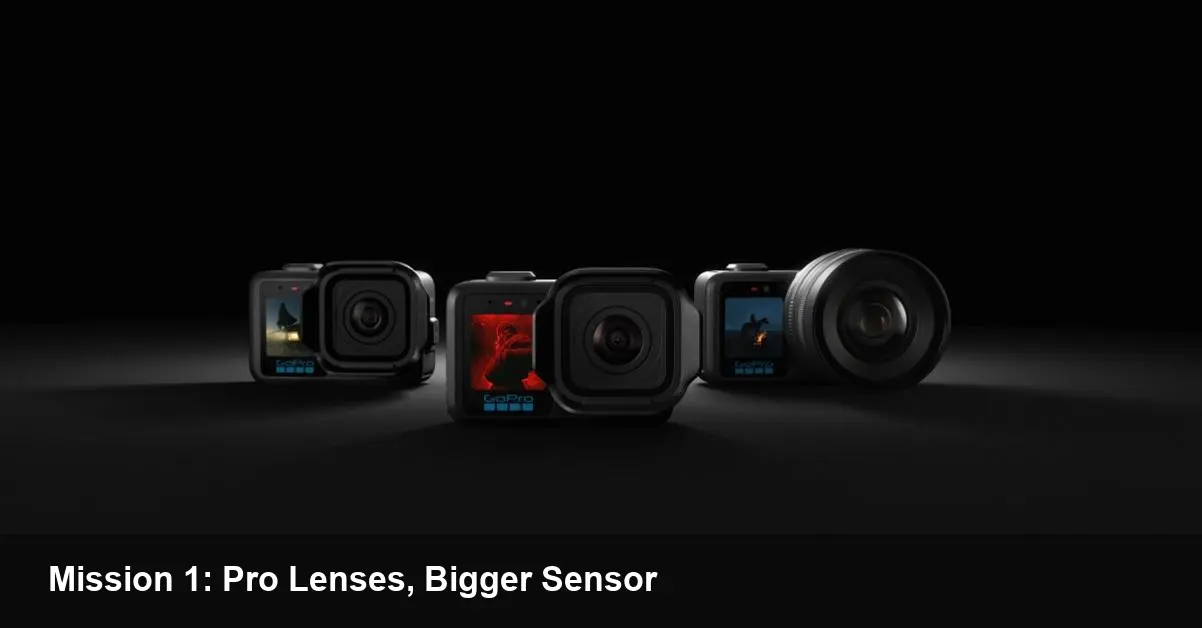
GoPro's latest Mission 1 line marks a clear shift: action cams are no longer just small, fixed-lens devices for point-of-view clips. With larger 1-inch-type sensors and a new GP3 processing engine that enables 8K capture and 4K open-gate modes, GoPro is positioning these cameras for serious production work. The announcement of a later Mission 1 Pro ILS variant that accepts Micro Four Thirds (MFT) lenses pushes that trajectory further — marrying compact, rugged hardware with a huge ecosystem of professional glass.
If you shoot outdoors, run-and-gun projects, drone footage, or need an affordable B-camera that still offers cinematic control, these changes change practical workflows and tool choices.
What’s new — the essentials
- Sensor and processing: Mission 1 moves to a roughly 1-inch-type sensor size (a meaningful bump from typical action-camera sensors) and a new GP3 processor. The result: higher-resolution capture capability including 8K and open-gate 4K modes for extra image area and flexibility in post.
- Lens ecosystem (Pro ILS): A forthcoming Mission 1 Pro ILS model will accept Micro Four Thirds lenses. That opens access to a wide range of compact primes, zooms and specialty optics from third-party manufacturers.
Those two items together affect not just image quality but how teams plan shoots and post workflows.
Real-world scenarios
- Indie short with limited crew: A director of photography can pair a Mission 1 Pro ILS with a compact MFT prime (e.g., 25mm f/1.8) to get shallow depth of field and cleaner low-light performance than traditional action cameras. Capture in 8K or 4K open-gate to allow reframing and stabilization in post without losing resolution.
- Drone cinematography and gimbals: The Mission 1’s compact footprint and higher-quality sensor make it compelling for drone rigs that historically chose heavier cinema cameras for image quality. Teams can mount MFT primes for specific focal lengths, balancing optical quality and weight. Expect careful attention to balance and gimbal tuning when fitting glass.
- Documentary run-and-gun: Reporters and solo shooters can swap between wide-angle MFT zooms for establishing shots and fast primes for interviews, benefiting from consistent color science and the camera’s robust build.
Developer and production workflows
- Post-production: Shooting 8K (or using 4K open-gate) unlocks heavy reframing and stabilization. But it also imposes higher demands: storage, codecs, and GPU processing. A practical workflow is to create high-resolution proxies for editing, then conform to the 8K masters for grading and deliverables.
- Lens metadata and LUTs: When using MFT glass, log the focal length, aperture and lens profile for each clip. If the camera or future firmware provides electronic lens metadata (autofocus, aperture control), include those streams in your ingest. If not, maintain careful shot logs so color and stabilization corrections remain consistent.
- Accessories and mounting: Using MFT lenses changes what you mount to the camera — lens hoods, ND filters, and follow-focus systems become relevant. Also plan for protection: unlike a fixed-lens action camera, an interchangeable lens setup requires front-element protection (filters or lens caps) and often a small matte box for on-set control.
Benefits and trade-offs
Benefits
- Optical flexibility: Access to MFT glass means cine-style primes, affordable high-quality zooms, and specialty lenses (macro, tilt-shift and anamorphic adapters) without moving to a larger camera system.
- Improved image quality: Larger sensors yield better dynamic range and low-light performance compared to older action cameras, and GP3-powered 8K/4K open-gate capture gives more headroom in post.
- Compact and rugged form factor: You get many of the creative benefits of mirrorless or cinema cameras while maintaining a smaller footprint for difficult rigs.
Trade-offs
- Complexity and cost: Adding lenses, filters, and support gear erodes the simplicity and low-cost advantage of action cams.
- Mount/physical limitations: Interchangeable lenses generally change weatherproofing and shock tolerance. Expect additional sealing and mechanical protection engineering when using glass in harsh environments.
- Workflow demands: 8K and open-gate capture significantly increase storage and edit workstation requirements.
Short checklist before you buy or integrate Mission 1 into a workflow
- Confirm which I/O and media cards are supported and plan for higher-capacity, fast storage for 8K workflows.
- Choose lenses with weight and size appropriate to your stabilizer or drone.
- Plan for protective systems (rain seals, lens caps, filters) if you’ll shoot in exposed conditions.
- Prepare a proxy-based edit workflow if you don’t have a GPU farm for native 8K editing.
Business and industry implications
1) Action cameras moving upstream: As compact cameras gain larger sensors and support for interchangeable optics, they start replacing small mirrorless bodies in many remote, stabilized, or ruggedized shoots. Rental houses, drone operators and small production companies will reevaluate kit lists.
2) Lens ecosystems become a differentiator: By supporting MFT glass, GoPro taps into an existing aftermarket of optics. Competitors may respond by offering adapters or their own modular lens systems, and lens manufacturers might prioritize compact glass tailored for rugged and airborne applications.
3) Standardization pressure on accessories and mounts: Widespread adoption of interchangeable-lens action cams will accelerate demand for robust sealing solutions, quick-change mounts for gimbals and drones, and industry-standard metadata protocols so lenses and processors communicate seamlessly.
Practical recommendation
If you need a lightweight, rugged camera that can deliver cinematic shallow depth-of-field and higher-resolution masters, the Mission 1 line — especially the Pro ILS variant with Micro Four Thirds support — is worth evaluating. For single-operator productions or drone workflows, it offers a balanced mix of image quality and portability. Larger crews and post-heavy projects should budget for the storage, compute and accessory investment that 8K workflows demand.
How would you use a compact, MFT-capable action camera in your next project? Think about whether you need native 8K capture or whether 4K open-gate for reframing and stabilization would be enough for your deliverables.