GoPro Mission 1: 8K 60p Action Camera with Interchangeable Lenses

Why the Mission 1 matters
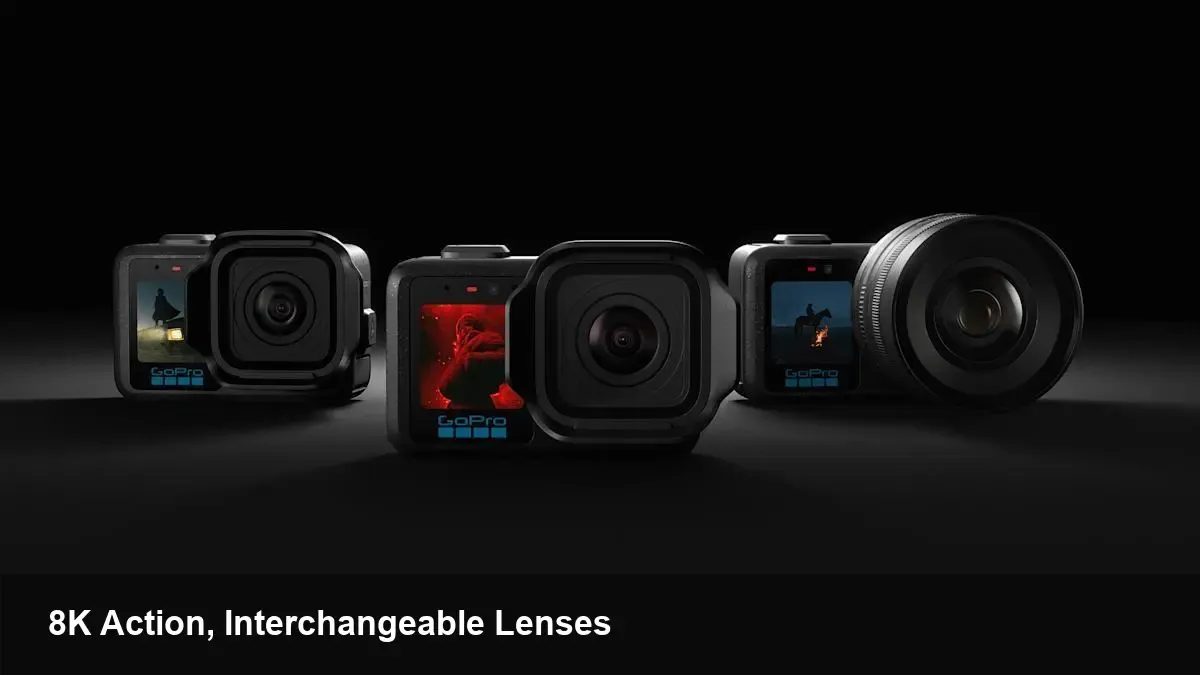
GoPro's Mission 1 marks a deliberate step into the prosumer and professional video space for action cameras: native 8K at 60 frames per second combined with an interchangeable-lens system. That pairing removes some long-standing trade-offs of the action-cam format — fixed wide angles and modest resolution — and makes the platform viable for a wider set of use cases beyond raw POV clips.
If you shoot adventure sports, run a production house that needs compact B-cams, or build tools for live sports analysis, the Mission 1 changes the conversation about what an action camera can do.
What’s new (quick technical snapshot)
- Native 8K video capture at up to 60p, enabling high-resolution timelines and heavy-frame-rate slow motion when scaled.
- Interchangeable-lens mount designed for small, purpose-built optics (wide, mid-tele, and specialty lenses) rather than full DSLR-sized glass.
- Modern codecs and color pipelines aimed at post workflows: high-bitrate HEVC options, likely RAW-like profiles for color grading.
- Focus on modular accessories and a growing ecosystem of mounts and lens modules.
These specs mean larger files, more heat, and a heavier duty on storage and editing hardware — but they also unlock new creative and commercial pathways.
Practical workflows and real-world scenarios
1) Adventure filmmakers who also sell stock footage:
- Shoot in 8K 60p to generate ultra-detailed masters. From one 8K frame you can extract 4K reframes, create smooth pan-and-zoom moves in-post, or stabilize aggressively without visible quality loss. Interchangeable lenses let you pick a field of view tailored to each shot — tight follow shots with a mid-tele or cinematic wide establishing shots.
2) Sports and replay operators:
- 60p 8K is useful when combined with a multi-camera rig. Capture a broad field of play at 8K and create multiple 4K outputs via cropping without needing separate camera feeds. For coaching and analytic use, that enables slow-motion clips and detailed playback for form analysis.
3) Run-and-gun production and documentaries:
- Small crews can swap lenses to balance depth and context. A compact tele lens on a Mission 1 can function like a small ENG B-camera when paired with good stabilization and audio accessories.
4) Live streaming and makers:
- With the right capture hardware and firmware support, Mission 1 could feed high-resolution live workflows or be used as a compact studio camera for broadcasters wanting cinematic shallow depth of field in constrained spaces.
Developer and accessory ecosystem implications
An interchangeable-lens action camera is a platform play, not just a hardware update.
- Accessory makers will develop lens types (superwide, rectilinear cinema, macro) optimized for the mount. Expect a faster-moving accessory market than with fixed-lens rivals.
- SDKs and camera-control APIs become more valuable. Production tools that remotely control exposure, lens selection, and start/stop across multiple Mission 1 units could be a differentiator for rental houses and broadcasters.
- Third-party firmware and post-production tools (proxies, LUT packs, color profiles) will need early support for new codecs, profiles, and lens metadata for accurate distortion correction.
If GoPro leans into an open-ish ecosystem — documented mounts, lens specs, and robust SDKs — it extends the product's utility beyond solo creators to integrators and enterprise buyers.
Trade-offs and limitations to plan for
- Heat and thermal throttling: 8K60p is power-hungry. Expect limited continuous-record durations or the need for external housings and cooling in hot environments.
- Storage and workflow costs: High-bitrate 8K files (especially with HEVC or RAW-like codecs) will inflate storage budgets and necessitate faster media and processing rigs.
- Battery life: Higher resolutions and codec complexity will shorten on-camera runtime compared to previous generation action cams.
- Lens size vs. form factor: Interchangeable optics add complexity — changing lenses in wet or dusty environments requires care; designers must balance smallness and optical quality.
These constraints mean Mission 1 is less plug-and-play than typical consumer action cams; projects will need pre-production planning for media, power, and heat management.
Business value and market dynamics
GoPro's move widens its addressable market. This product can attract:
- Professional creators and rental houses wanting compact, high-resolution cameras.
- Enterprises in sports, security, and inspection that need small cameras capable of detailed capture.
- Accessory and lens makers, who see a new revenue stream.
Competitors like DJI and others will feel pressure to match modularity or push better stabilization and thermal solutions. The emergence of interchangeable mounts in action cams could lead to platform lock-in for a while — lens ecosystems are sticky.
Three practical recommendations for teams thinking about Mission 1
1) Reassess your media pipeline now: upgrade storage and proxy strategies before you shoot. Draft a retention policy for 8K masters vs distribution proxies. 2) Plan for cooling and power: test record times under real conditions and budget external power packs or ventilated housings for long shoots. 3) Invest in metadata and lens correction: early AWS/HDR/colour calibration workflows that include lens profiles will save hours in post.
What this means going forward
The Mission 1 signals that action cameras are becoming modular creative tools rather than single-purpose POV gadgets. That shift makes the space more interesting to professionals — but also more demanding in terms of logistics and post-production. Expect to see a wave of lens and mount innovations, tighter integration between hardware and editing tools, and new rental-market offerings built around compact, high-resolution capture.
For creators, the immediate question is whether you need true 8K60p capture or whether 4K workflows still suffice. For businesses, the opportunity is in servicing the new ecosystem: accessories, mounts, and cloud-based editing and storage solutions tuned to high-resolution mobile capture.
If you shoot action or sports content regularly, the Mission 1 is worth evaluating — not as a drop-in replacement for a Hero-style camera, but as a flexible tool that can replace a small kit of compact cameras when planning, heat and storage are handled up front.