Five Reasons the iPhone 18 Pro Could Change Your Mobile Workflows

Where Apple goes next — quick background
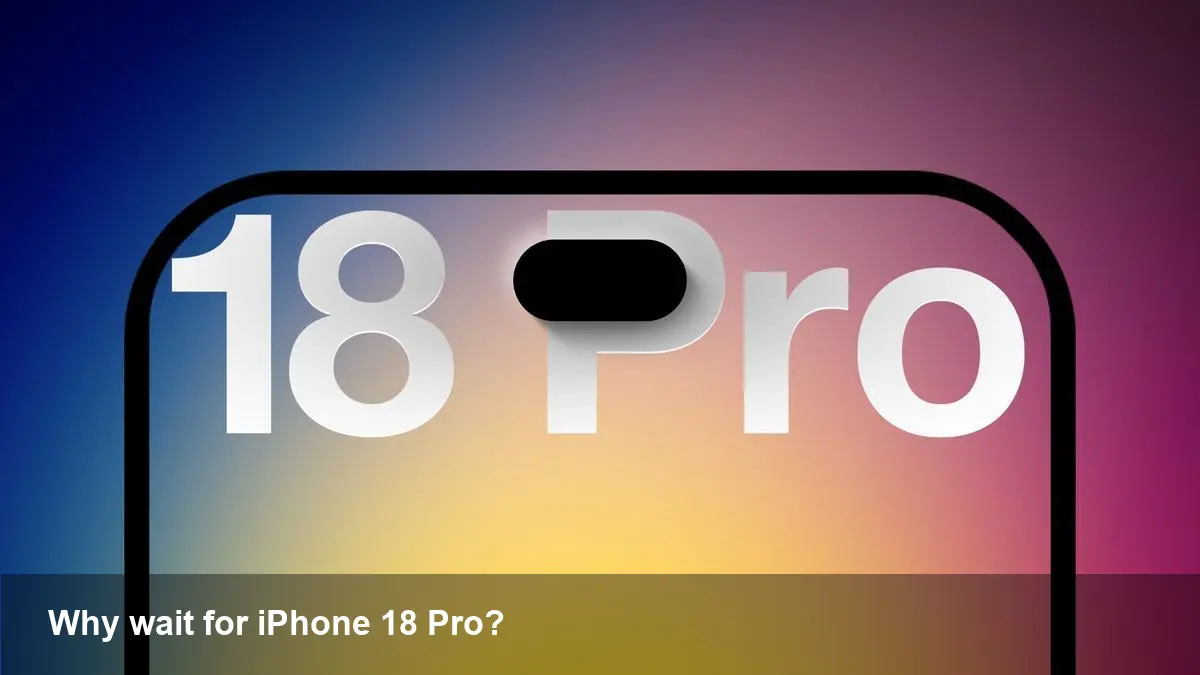
Apple has steadily positioned the iPhone as more than a communication device: it’s a pocket studio, a business tool, and a platform for modern apps. Every major iPhone generation tightens the integration between custom silicon, sensors, and software. The iPhone 18 Pro—expected as Apple’s next flagship cycle in fall 2026—looks poised to push that strategy further. If you make decisions about buying, building apps, or provisioning devices for teams, understanding what’s likely coming matters.
1) Camera hardware: a real step-up for creators
What to expect: industry chatter and supply-chain signals point to a new telephoto architecture — commonly referred to as a periscope lens — combined with larger sensors and improved low-light performance.
Why it matters: higher zoom capability with optical fidelity transforms practical workflows. Imagine a journalist shooting a protest from the perimeter who can capture tight, stable, editorial-quality frames without lugging a mirrorless camera. Or a real estate agent producing cinematic walkthroughs with reduced reliance on gimbal equipment.
Concrete example: A freelance videographer could replace a second camera for distant shots by using iPhone 18 Pro’s optical zoom, saving on rental costs and simplifying multi-camera edits because footage remains in the same color pipeline and codec family.
Developer angle: improved sensors and multi-camera capture open up new API possibilities. Apps that stitch multi-resolution captures, do on-device super-resolution, or assign per-lens encoding profiles will be easier and more compelling.
2) Next-gen Apple silicon and practical performance gains
What to expect: a new A-series chip with a boosted Neural Engine, higher CPU/GPU throughput, and better power efficiency.
Why it matters: raw speed is useful, but battery-aware, sustained performance is what matters in real workflows. Faster scene analysis, real-time video effects, and heavier on-device machine learning models become feasible without frying battery life.
Concrete example: Editors using an iPhone 18 Pro for on-location color grading could apply real-time LUTs, run noise reduction, and transcode footage while keeping several hours of autonomy—turning the phone into a one-device studio for short-form production.
Business implication: enterprise apps that rely on cryptographic or ML-heavy tasks (e.g., biometric auth, offline document classification, secure on-device inference) will benefit from hardware-accelerated primitives. IT teams can plan for more compute-heavy mobile workloads without needing cloud passes for every job.
3) On-device AI and new user experiences
What to expect: Apple has been integrating more AI functionality locally. The iPhone 18 Pro’s upgraded Neural Engine and storage bandwidth will likely enable richer on-device generative and assistance features.
Why it matters: privacy-sensitive features that previously required server round-trips can be executed locally. Think instant meeting summaries, context-aware replies in messaging, or camera-based object annotation that never leaves the device.
Concrete example: A field service technician can photograph a failed component, get an on-device diagnosis augmented with repair steps, and upload only the final report—reducing data egress and turnaround.
Developer angle: look for new frameworks and APIs around on-device generative models, optimized pipelines that split workloads between the Neural Engine and GPU, and capabilities to run custom models with lower latency and predictable battery use.
4) Connectivity, ports and battery life that change logistics
What to expect: faster wired transfer speeds over USB-C and more efficient wireless radios have been a steady advance in recent generations. Expect improved throughput and potentially faster wired charging.
Why it matters: production teams and businesses increasingly treat phones as capture devices. Faster transfers mean less time tethered to a workstation and fewer bottlenecks in post-production. Longer battery life reduces the need for inflated accessory kits.
Concrete example: On a shoot day, a photographer can offload multiple 4K clips to an SSD faster, freeing the phone to continue shooting. For field teams, fewer spare batteries or power packs are needed—simplifying logistics.
5) Platform and ecosystem benefits for professionals and enterprises
What to expect: the iPhone 18 Pro will arrive within Apple’s broader platform updates—new iOS APIs, security improvements, and continuing cross-device integration with Macs, iPads, and Vision Pro.
Why it matters: new devices often unlock richer enterprise features: better device management, stronger encryption primitives, and smoother file workflows across devices. For startups building mobile-first apps, the hardware step-up can justify building heavier native features earlier.
Concrete example: A health-tech startup building an offline-first diagnostic app could leverage on-device ML for image analysis, use enhanced security enclaves for PHI, and sync results across a clinician’s iPad without cloud exposure.
Practical buying guidance
- If you’re a casual user with an iPhone from the last two years, the incremental gains may not be compelling.
- Pros, creators, and teams who treat iPhones as primary production tools should weigh the benefits: better optical zoom, upgraded silicon for on-device AI, and faster I/O change daily workflows.
- For enterprises, plan pilot projects around the device’s ML and security capabilities; they’ll demonstrate ROI faster than general productivity apps.
What this suggests about Apple’s direction
1) Mobile-first content creation: Apple continues building hardware to displace or complement traditional cameras for many professional scenarios. 2) On-device intelligence becomes a platform differentiator: expect more features that avoid cloud dependency for latency and privacy reasons. 3) Developer opportunity: richer hardware unlocks novel app experiences—startups that experiment early with optimized ML models and multi-camera capture will have a head start.
Adopting a wait-and-evaluate approach makes sense for many. If your work depends on squeezing as much quality and speed out of a single device as possible, the iPhone 18 Pro—if it delivers on rumored upgrades—could be a genuine upgrade to mobile workflows. If not, the next iteration will likely refine these capabilities further, continuing the trend of phones replacing more specialized gear in everyday professional setups.