Clicks Communicator: a clearer launch window for the keyboard phone

Why the Clicks Communicator matters
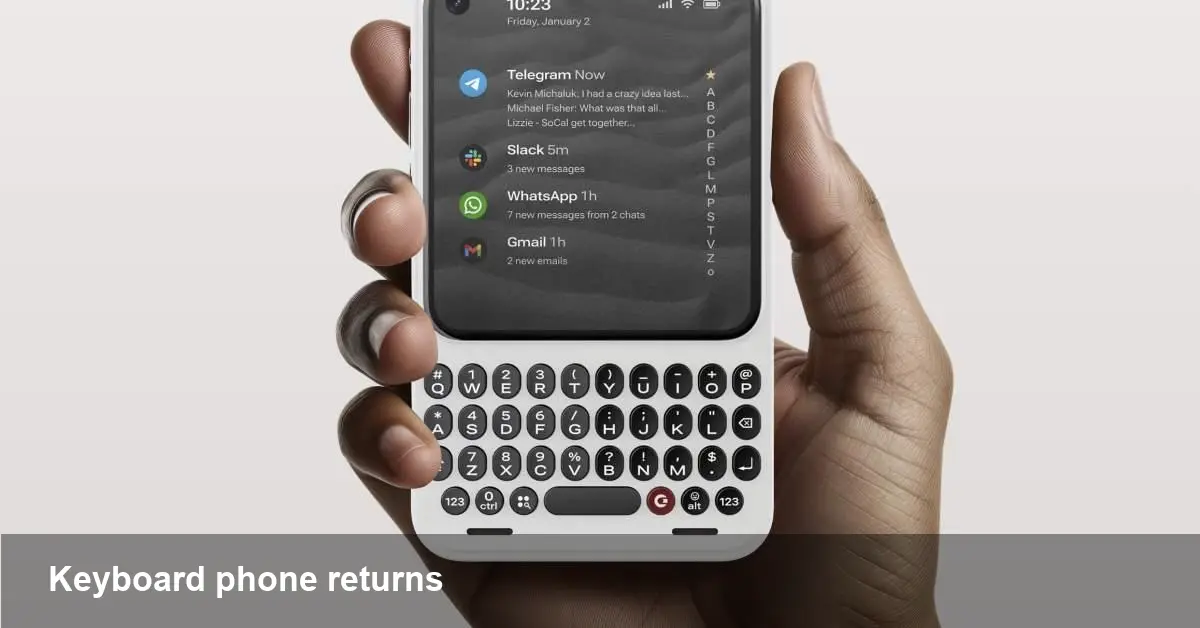
Small hardware projects that revive classic form factors usually generate a lot of nostalgia, but only a few survive the hard part: shipping a usable product. The Clicks Communicator — a smartphone built around a physical QWERTY keyboard and spearheaded by a team of long-time BlackBerry fans — has been one of the more prominent attempts to bring tactile typing back to a modern smartphone experience.
After showing early prototypes and dummy units at CES in January, the company behind Clicks has moved from concepts to concrete timelines. Where the project was once a promise to "ship soon," the team has now shared a firmer launch window and a clearer plan for pre-orders and deliveries. That shift matters for users, developers, and businesses considering the device for productivity workflows.
What's new: a launch window takes shape
The biggest practical update is timing. Instead of an open-ended "coming soon," Clicks has published a more specific schedule indicating it will transition from demo units to actual pre-orders over the next few months, with shipments expected later in the year. That signals the project is past industrial design validation and into supply chain and certification work — the most time-consuming parts for niche phone makers.
Beyond timing, the company has highlighted two operational priorities:
- Finalizing manufacturing partners and certification testing for target markets.
- Delivering a software experience that integrates the physical keyboard into commonly used apps (email, messaging, editing).
Those are the right things to prioritize. A dependable typing feel is only one part of the product; keyboard reachability, key travel, backlighting, and OS-level shortcuts are what make a physical keyboard genuinely productive.
Who should care and why
- Productivity-first professionals: If your day still involves long email threads, text-heavy messaging apps, or editing documents on the go, a physical keyboard can be faster and less error-prone than on-screen typing.
- Power users and privacy-minded customers: Many BlackBerry alumni liked the company's focus on security and messaging ergonomics. Clicks is targeting those who prefer a tactile interface and a business-focused device persona.
- Developers and accessory makers: A physical keyboard opens product and app design opportunities — from keyboard-driven shortcuts to accessories like keyboard cases and screen protectors optimized for different key angles.
Practical scenarios
1) The traveling lawyer: Drafts quick responses to filings and annotated emails on the train without fishing for the on-screen keyboard. Hardware shortcut keys map to reply, archive, or insert a signature block.
2) The field sales rep: Logs customer notes and fills forms quickly during site visits. Shortcuts for recent contacts and templates reduce repetitive typing.
3) The developer wanting to build for keyboards: Imagine an email client or note app that exposes a one-handed keyboard command mode, toggled by a dedicated key. That app can deliver productivity gains and create a unique selling point on Clicks devices.
Developer and ecosystem implications
For the Clicks Communicator to be more than a niche curiosity, software needs to do more than run on it; it needs to embrace the keyboard as a first-class input method. Developers should consider:
- Keyboard-focused UX: Offer keyboard-only navigation modes, expose modifier key events, and provide shortcut customization.
- Landscape-aware layouts: Physical keyboards often change the device's ergonomics; apps should adapt both UI and focus behavior accordingly.
- API access: If Clicks exposes keyboard firmware hooks or custom key mappings, native and cross-platform frameworks can support deeper integrations.
For small teams building apps, this can be low-hanging fruit: adding a handful of keyboard shortcuts and improved focus management pay off disproportionately for power users.
Business challenges the Clicks team faces
Manufacturing at scale, certification (carrier approvals, regional regulatory testing), and supply chain logistics remain the biggest hurdles for niche phone makers. These are expensive and time-consuming, which is why many crowdfunded phones promise shipping dates and miss them.
To succeed, Clicks needs to:
- Lock in trustworthy component suppliers and contract manufacturers.
- Use a realistic production ramp to avoid delays.
- Build a support plan for updates and repairs — customers buying a niche device expect long-term software and parts support.
Partnerships with established manufacturing or distribution channels could accelerate delivery and give enterprise buyers confidence in procurement.
Pros, cons, and realistic expectations
Pros:
- Physical keyboard for faster, error-resistant typing.
- Distinctive device personality that caters to a focused subset of users.
- Opportunity for apps and services to differentiate on keyboard-driven workflows.
Cons:
- Limited mass-market appeal — mainstream consumers prefer large touchscreens.
- Higher per-unit manufacturing cost for low-volume runs.
- Ecosystem risk — developers need incentives to optimize for the keyboard.
Expect the first wave of devices to appeal mostly to enthusiasts and professionals who prioritize typing ergonomics over camera specs and bezel-less screens.
What to watch next
- Pre-order announcements and payment terms: A transparent pre-order process with clear timelines reduces friction and builds trust.
- Carrier support and regional availability: Will Clicks support GSM and CDMA bands and offer carrier-sold versions, or remain unlocked-only?
- Software updates and customization options: Look for keyboard customization, firmware updates, and whether Clicks exposes developer APIs.
Three implications for the broader mobile market
1) Niche hardware can re-emerge if it pairs distinctive hardware with solid software. The keyboard itself is a feature only valuable with software that leverages it.
2) There's a small but persistent market for productivity-first devices. If Clicks ships well and supports developers, it could nudge other makers to explore keyboard or ergonomic variants.
3) Crowdsourced or community-backed hardware needs frictionless manufacturing partnerships; timelines and transparency determine whether initial excitement becomes lasting adoption.
If you're considering the Clicks Communicator — as an end user, app developer, or potential partner — treat any early timeline as conditional, but also as a meaningful signal that the team is transitioning from concept to execution. For now, keyboard devotees should watch the pre-order window and product spec updates closely; developers can begin sketching keyboard-centric features that could set their apps apart when the device finally reaches hands-on testing.