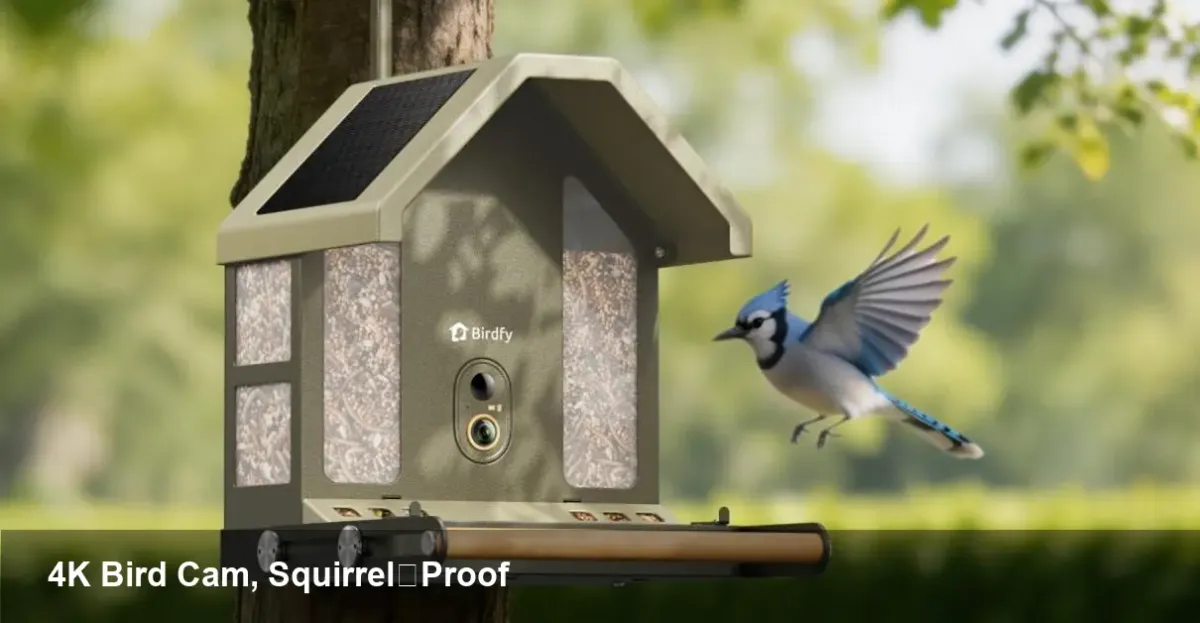
Birdfy Feeder Metal 2: 4K bird cam that keeps squirrels out

Why a smarter bird feeder matters
If you enjoy backyard birdwatching, a smart feeder that recognizes visitors changes the game. The Birdfy Feeder Metal 2 combines a high-resolution 4K camera with a robust metal housing designed to fend off squirrel raids — and it aims to do more than just stream footage. By automatically identifying species and surfacing educational details, it turns a passive seed station into a small-scale wildlife observation station.
The company and the product line in context
Birdfy has positioned itself where hobbyist wildlife observation, consumer hardware and machine learning intersect. Their feeders pair cameras and AI to give users instant information about the birds that visit. The Metal 2 is the next iteration in this product family, focusing on higher image fidelity and a tougher physical build to address two common complaints: poor video for identification and frequent squirrel predation of seed.
What the Metal 2 brings to your yard
- 4K imaging: The camera captures more detail than typical 720p/1080p feeders, making field marks and subtle plumage features easier to see in recordings and helping the recognition engine disambiguate similar species.
- Metal, chew‑resistant body: The housing is built to resist gnawing and prying animals, so the seed reservoir stays usable longer and maintenance chores drop.
- Automated bird identification: The onboard system (and companion app) surfaces species names and short profiles, so casual observers and beginners can learn as they watch.
- Educational UI: The software highlights what it recognized, time-stamps visits, and keeps a visit history — useful for tracking seasonal patterns or building a personal life list.
Those features combine into a device that’s both a durable feeder and a classroom: better footage plus contextual species data accelerates learning and creates shareable moments for social apps and personal archives.
Real-world use cases
- Backyard enthusiasts: No more blurry clips or guessing whether that streaked warbler was a sparrow — the 4K stream and identification save time and frustration.
- Schools and nature centers: The Metal 2 can be a low-maintenance teaching aid. Instructive species cards and visit logs make it simple to run short citizen-science exercises with students.
- Amateur ecologists and community projects: A network of feeders can reveal local phenology — the timing of migrations or breeding — if teams aggregate visit records over weeks and seasons.
- Content creators: Higher-quality footage reduces post-production cleanup. Creators who publish bird videos or short documentary clips will appreciate 4K sources.
How it affects developer and product teams
While the Metal 2 is a consumer product, its existence signals broader product and market strategies developers and founders can learn from:
- Vertical integration of hardware and ML matters. Combining a tailored camera, edge processing and a curated app experience increases perceived value compared with a generic camera + third‑party software.
- Edge inference reduces latency and can lower cloud costs. If species identification happens locally, privacy and network load improve — useful considerations for any connected wildlife device.
- Data partnerships are possible. Aggregated, anonymized sighting data can be a resource for conservation NGOs, research labs and local governments seeking biodiversity indicators.
If you’re building a related product, consider bundling a clear path for third‑party integrations (APIs, data export) that conservational and educational customers will want.
Practical pros and cons for buyers
Pros:
- Reliable identification: Higher-resolution imagery and trained models mean fewer misidentifications for common species.
- Lower seed loss: Metal construction limits destructive visits by rodents and larger animals.
- Educational value: The app and logs help beginners learn faster than passive observation.
Cons and caveats:
- False positives and edge cases still happen. Rare species or obstructed views will confuse any model; verification is sometimes necessary.
- Weather and maintenance: Even metal housings need cleaning and weatherproofing. Cameras can fog, and seed feeders require refilling.
- Ethical considerations: Feeding can change bird behavior and increase disease transmission risk if feeders are not cleaned regularly. Use responsible feeding practices.
Business and conservation implications
Products like this create new commercial and civic opportunities. Companies can monetize through hardware sales, subscription premium features (longer archives, higher resolution clips, advanced analytics), or data services for researchers. For conservation organizations, even small-scale deployments generate useful presence/absence data at very low cost per observation compared with traditional methods.
However, there are governance questions: who owns aggregated sighting data, how will location data be protected to avoid misuse (for example, by collectors of endangered species), and what standards should guide data sharing? Early attention to privacy and data governance can make these devices more acceptable to institutions and communities.
What the near future looks like
Insight 1 — Edge AI will keep scaling down: Expect more models optimized for on-device inference that broaden the range of recognizable species and reduce dependence on connectivity.
Insight 2 — Standards for ecological data will emerge: As more devices produce timestamped sightings, common export formats and privacy-preserving sharing protocols will become important for researchers and civic platforms.
Insight 3 — Multi-sensor systems will add context: Combining audio recognition (birdsong) with high-res imagery can dramatically improve accuracy in dense habitats or at night.
Who should consider buying one?
If you want a durable, higher-fidelity feeder that helps you learn bird species and spend less time guessing, the Birdfy Feeder Metal 2 is worth evaluating. It’s particularly appealing for educators, content creators and civic groups that can use visit logs as data. If your priority is pure aesthetics or minimal maintenance without learning features, a simpler feeder may still fit better.
Smart feeders represent a maturing niche: hardware and AI tools that make casual nature observation more accurate and more useful. For anyone serious about backyard birding, a 4K, squirrel-resistant device is a practical step toward turning fleeting visits into persistent records and ongoing learning.