Inside Samsung's First Smart Glasses Leak

Why this leak matters
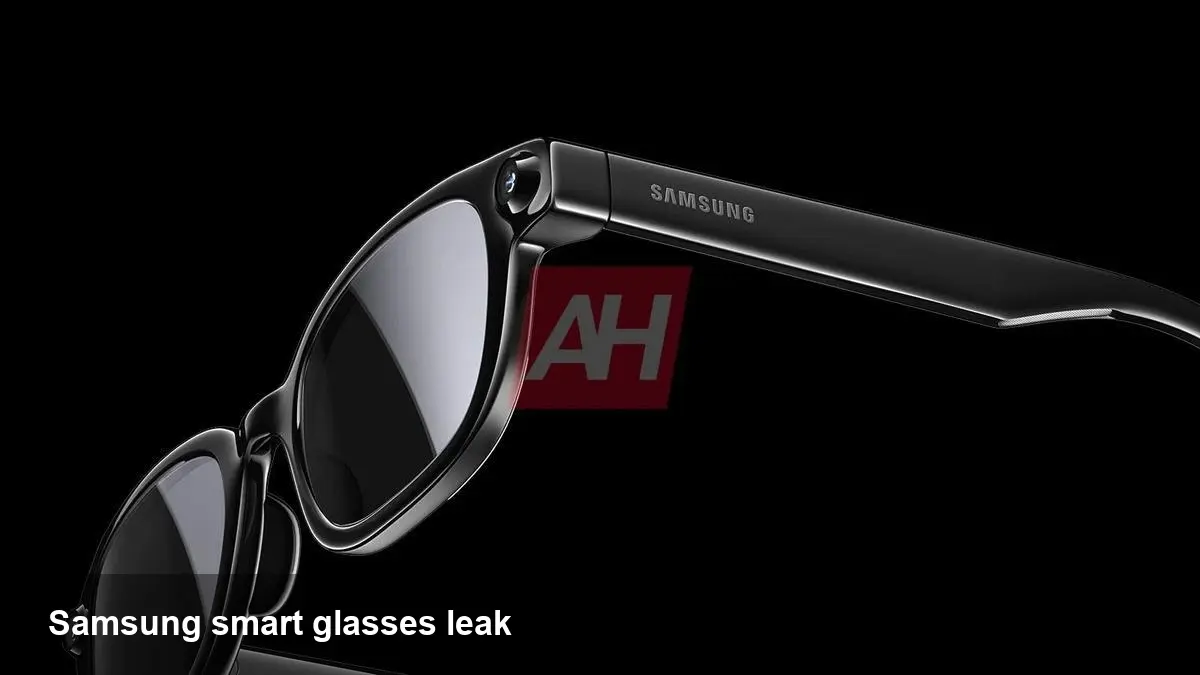
Samsung entering the smart glasses market changes the competitive landscape. The recent leak — images and accompanying specifications reportedly obtained by a tech outlet — paints a picture of a product that looks and feels closer to fashionable sunglasses than an AR headset. For consumers and developers this matters because it signals Samsung's priorities: wearable convenience, integration with phones and audio-first experiences rather than a full heads-up AR display.
A quick primer: where Samsung sits in wearables
Samsung has spent years building a wearable ecosystem: phones, watches, earbuds and a broad set of health and connectivity services. Smart glasses are a logical next step that bridge audio wearables and visual interfaces. Rather than starting from scratch on an operating system or optics, a sensible approach is to lean on the Galaxy platform for compute, pairing and software integration — and that’s consistent with what the leaked materials suggest.
What the leak appears to show (high level)
The images reportedly depict a sunglasses-style frame with thicker temple arms to house electronics. The accompanying spec notes (as reported) highlight camera and audio hardware, touch or button controls along the frame, and a reliance on a paired smartphone for heavier processing and connectivity. The form factor is intentionally familiar: a consumer-friendly silhouette that’s less radical than a full mixed-reality headset.
Two implications follow immediately:
- This is likely positioned as a wearable for everyday use — walking, commuting, quick capture of photos or short videos, and hands-free audio.
- It’s probably not a spatial-computing device with transparent displays and immersive AR overlays at launch; instead Samsung may be prioritizing features that can ship reliably today.
Practical scenarios where these glasses could be useful
- Commuters: get turn-by-turn audio navigation, phone calls, and voice replies without pulling out your phone.
- Creators and social users: instant POV photo and short video capture with a natural framing, useful for quick social content when your hands are occupied.
- Field workers and technicians: live-stream or record a technician’s viewpoint to a remote expert while keeping hands free.
- Fitness and outdoor use: audio coaching and lightweight media control on runs or bike rides without earphones that occlude ambient sound.
These scenarios are less about immersive visuals and more about integrating everyday workflows with a wearable that feels like normal eyewear.
For developers: opportunities and constraints
If the device is indeed a phone-tethered, camera-and-audio-first wearable, the developer story will differ from a self-contained AR headset.
Opportunities
- Companion apps: a lot of value comes from building companion apps for smartphones that offload compute, storage, and scene processing.
- Quick capture APIs: apps that can trigger photo/video capture, tag media with sensor metadata (GPS, orientation), and upload streams could be compelling.
- Audio-first experiences: spatial audio, voice assistants, and low-latency audio APIs will be primary interaction channels.
Constraints
- No full AR canvas: without an integrated transparent display or high-bandwidth passthrough, developers can’t rely on persistent visual overlays in the user’s field of view.
- Privacy and permissions will be sensitive: camera-on-glasses introduces more immediate privacy concerns than a phone camera because it’s harder for bystanders to know when recording is happening.
- Power and thermal limits: compact frames restrict battery size and cooling, which will limit continuous video streaming and heavy on-device processing.
A practical development workflow will likely involve building a mobile app that receives commands and streams from the glasses, plus cloud services for media processing and analytics.
Business and ecosystem strategy
For Samsung, a glasses product fits into several strategic goals:
- Ecosystem lock-in: another device in the Galaxy family encourages users to stay within Samsung services and hardware.
- Competing with Meta and others: Ray-Ban Meta and similar wearables have shown consumer demand for discreet, social-friendly smart eyewear — Samsung can use brand trust and distribution to compete.
- Gradual platform buildup: starting with audio and camera features allows Samsung to test form factors, battery life, and privacy controls before committing to advanced optics and full AR experiences.
Retail channels and carrier partnerships will be critical for distribution. Samsung’s global retail footprint and partnerships could make these glasses broadly available faster than some niche AR startups.
Risks, ethics and regulation
Smart glasses resurrect conversations about public recording, facial recognition, and surveillance. Even if the initial product lacks advanced AR, a camera-loaded pair of glasses can still be used for covert recording. Regulators and public venues will pay attention; Samsung will need clear visual indicators for recording and strict permission models in software to ease concerns.
Manufacturing and supply chain constraints could also shape launch timing and the available features. The balance between fashionable design and technical robustness is a product design risk: glasses must be light, comfortable and reliable in varied environments.
What this leak means for competitors and startups
Startups building smart eyewear or AR optics should read this as both opportunity and competitive pressure. A mainstream player shipping a comfortable, stylish, camera-and-audio-first wearable lowers the bar for consumer expectations but raises it for ecosystem integration, durability, and price. Smaller companies focusing on advanced optics or developer platforms still have room, but must differentiate on display tech, developer tools, or targeted enterprise features.
Three forward-looking implications
- Phone-tethered wearables will be a central stepping stone. Expect major vendors to iterate from audio/camera glasses toward richer AR — incremental launches reduce risk and let ecosystems mature.
- Privacy-first UX will become a competitive differentiator. Manufacturers that provide visible recording indicators and transparent permission models will win public trust.
- Developers who design experiences spanning phone + wearable + cloud will have the first-mover advantage. Building for a companion-device model (offload heavy compute to phones/servers) enables faster and more reliable apps.
Whether Samsung’s leaked design becomes the final consumer product, or only a prototype step, the leak is a clear signal that mainstream smart glasses are approaching a new phase: pragmatic, stylish, and built to work with phones rather than replace them. For users and developers, that’s a practical, lower-friction route into wearable computing — and a chance to start thinking about how hands-free, camera-equipped eyewear can be woven into everyday workflows.