How Google Docs’ Match Doc Format with Gemini Saves Time

Why this small feature matters
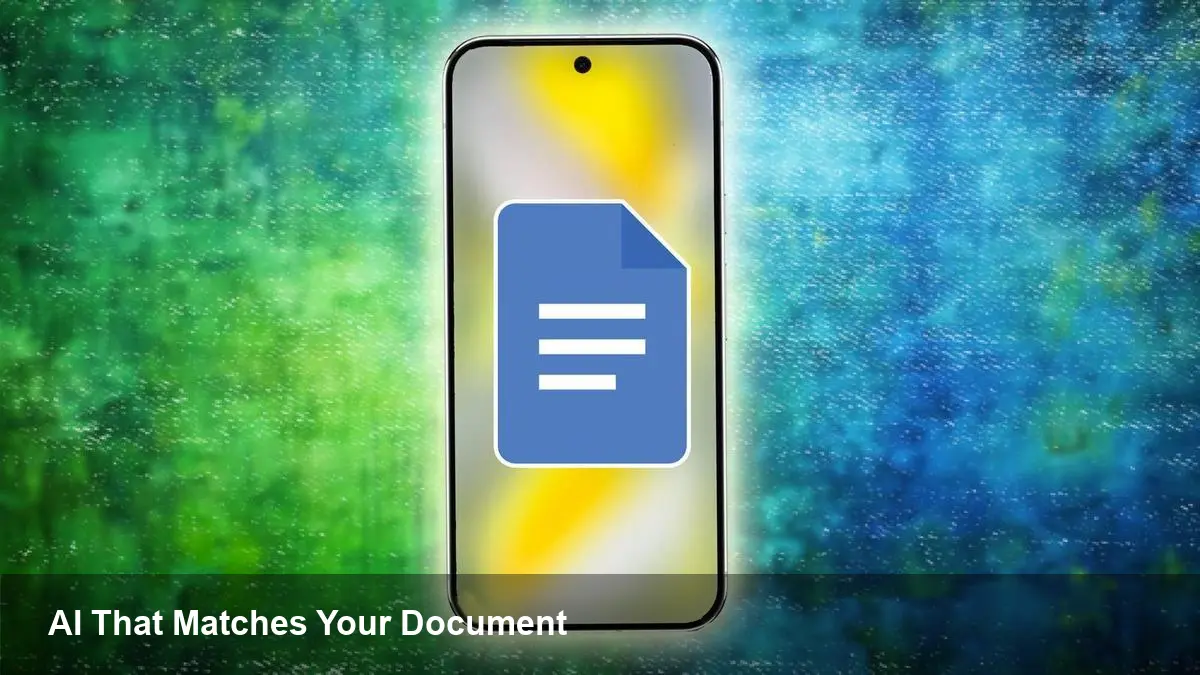
Google is rolling AI into everyday productivity tools, and the subtle additions are the ones that change habits. One such addition in Google Docs lets the assistant generate or rewrite text that inherits the document’s existing styles automatically. In practice, that eliminates the repetitive task of reformatting paragraphs, lists, headers, and spacing after you accept AI-generated content.
This isn’t a flashy new model announcement — it’s a productivity feature that moves AI from a draft-generator into a drop-in replacement for routine editing work. For teams and solo creators who juggle templates, brand styles, and tight deadlines, this saves minutes per document that add up fast.
Quick background: Gemini in Google Docs
Gemini is Google’s family of large AI models and the backbone of many of its assistant features across Workspace. Over the past year Google has been iterating on how those models interact with formats, templates and the user interfaces of Docs, Slides and Gmail. The “match document format” capability is a continuation of that theme: keep the AI’s output aligned with the document’s visual and structural conventions rather than producing plain text you must manually style.
What the feature actually does (practical terms)
When you ask the Docs assistant to expand a section, rewrite a paragraph, or create new content, you can now request that the assistant preserve the existing formatting. That means:
- Headings remain in the document’s heading style rather than becoming bold plain text.
- Numbered and bulleted lists use the same bullet type, indent levels and spacing.
- Font face, size, line height and color follow the active styles.
- Inline elements such as bold, italic, links and inline code retain or respect surrounding formatting.
The result is a block of AI-generated text you can accept and keep, with minimal cleanup.
Concrete scenarios where this helps
1) Marketing collateral and proposals A product marketer drafts a case study using a company-branded template. When the assistant expands a short outline into full paragraphs, the text arrives using the template’s headings, section spacing and callout styles — avoiding that last-mile work of copying styles across.
2) Legal teams and compliance-sensitive documents Lawyers often paste clauses from external sources and then adapt language. If you use the assistant to standardize phrasing across a contract, matching the document format prevents accidental changes to clause numbering or font encodings that can break approvals.
3) Educational materials and student notes Teachers building lesson plans or students compiling notes across subjects appreciate consistent heading levels and list structures. The assistant can produce quizzes or summaries that slot directly into an existing syllabus without breaking section organization.
4) Faster content localization and versioning Translate or rewrite a paragraph for different regions while keeping the local layout. That makes it easier to maintain identical structure across language versions.
Developer and business implications
- Reduced post-processing: Apps that integrate with Docs or automate document workflows can rely less on cleaning up AI output before storing or publishing documents. That simplifies pipelines for document assembly and reduces edge-case bugs tied to style conversion.
- Better template enforcement: Companies can lock styles in team templates and still let creators use AI freely; administrators get the benefit of consistent brand presentation without blocking AI assistance.
- New integration opportunities: Third-party tools (e.g., contract automation, LMS, CMS connectors) can lean on Docs + Gemini for content generation without implementing their own formatting-preservation layers.
- Auditability and governance: For regulated industries, a consistent presentation reduces the risk of inadvertently misformatted content slipping into client-facing material — an operational win for compliance teams.
Limitations and where to keep human judgment
This feature improves the formatting experience but doesn’t replace editorial oversight.
- Content accuracy and hallucinations: The assistant can match style but not guarantee factual correctness or legal validity. Human review remains essential for critical content.
- Inconsistent source documents: If your document styles are messy or mixed, matching will preserve that mess. It’s best paired with well-maintained templates.
- Accessibility and semantics: Visual matching is useful, but semantic structure (e.g., proper heading hierarchy, ARIA-friendly attributes) still requires careful authoring if accessibility is a priority.
Practical tips for teams adopting it
- Standards first: Establish company templates and a minimal style guide so AI-generated text inherits high-quality formatting.
- Accept and review incrementally: Use the feature for draft generation and localize your review to substance, not formatting, speeding editing cycles.
- Use version control: Keep revision history and comments enabled when letting AI touch important documents; it’s easier to rollback or audit changes.
- Combine with human prompts: Instruct the assistant to keep tone, word count, and factual constraints while matching format. Formatting + content guardrails reduce rework.
What this suggests about the future of document AI
1) Formatting-aware language models will become standard. The next generation of office AI won’t only predict words — they’ll understand and respect document structures, templates and brand systems.
2) Richer APIs for styling control are coming. Expect developers to get programmatic switches to tell models how strictly to follow a style guide, or to map output to JSON-based content models for downstream systems.
3) Desktop-to-cloud parity will improve. As models learn to preserve more nuanced layout cues, the line between cloud-editing convenience and desktop DTP control will blur for many everyday tasks.
When to use it — and when not to
If your bottleneck is time spent fixing formatting after AI-assisted drafting, this feature is immediately valuable. If your work demands legal certainty, scientific rigor, or deep accessibility assurance, pair the feature with stricter human workflows and verification.
This update is a reminder that AI’s early wins in productivity often come from reducing the small, boring tasks — the ones that interrupt flow and cost hours across teams. Match-the-format features are exactly that: small on the surface, big for day-to-day efficiency.