Why Apple Raised the Mac mini Price to $799

Quick overview
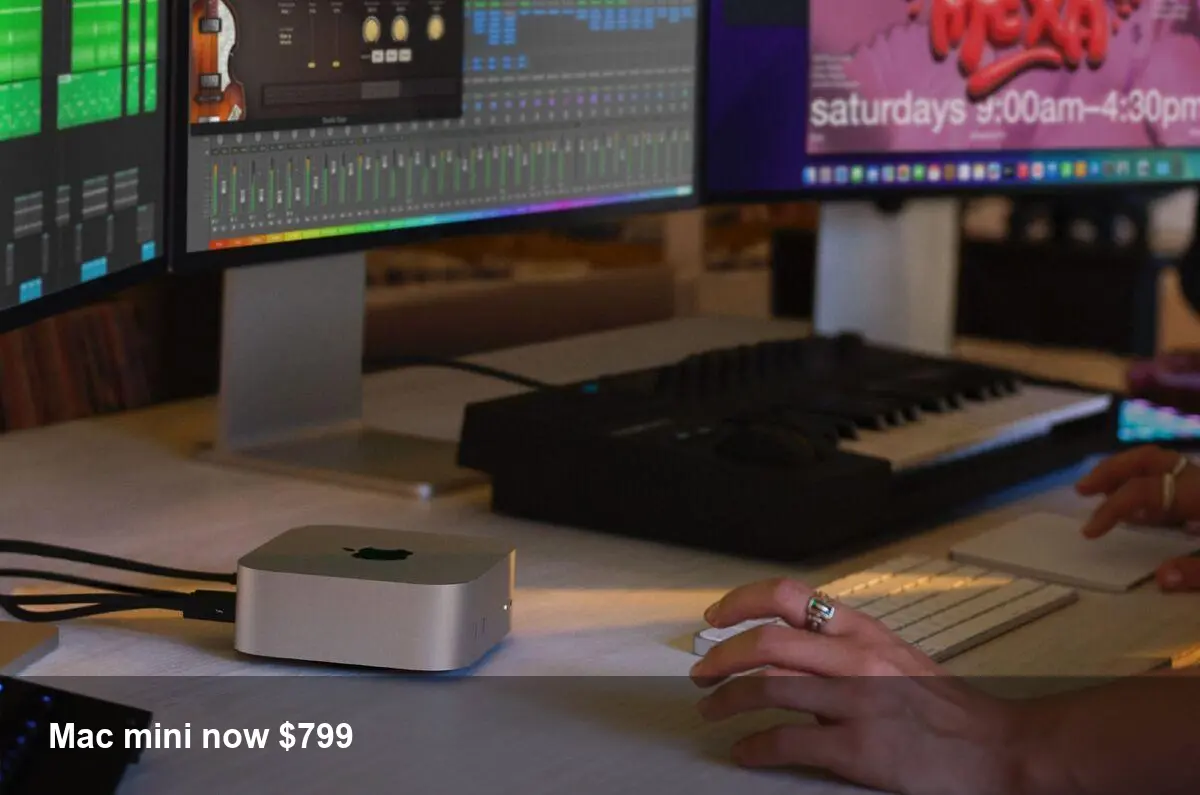
Apple has moved the baseline price of its compact desktop to $799 from the previous $599. The change is driven by a mix of strong demand from customers using machines for AI workloads and ongoing constraints in supply for Apple’s M-series chips. That combination has created a shortage in lower-cost Mac minis, pushing Apple to adjust pricing and the product mix.
This article breaks down what that means for developers, startups, and IT buyers, and suggests practical alternatives and workarounds.
What changed and why it matters
At a glance: the entry-level Mac mini — Apple’s smallest desktop offering — now starts at $799. For many buyers that $200 jump is meaningful: it changes the economics of provisioning desktops for teams, buying prototyping hardware, or choosing a compact machine for local AI experimentation.
Why now? Two forces are converging:
- AI demand: More developers and small labs are using powerful desktop machines for training and running local large-language-model workloads, inference tests, and other compute-heavy tasks. That has increased demand for higher-performance Macs and the configurations that use more advanced M-series chips.
- Chip supply tightness: Apple’s custom M-series processors remain a constrained resource. When supply is limited, companies often prioritize higher-margin SKUs or conserve inventory for models that produce better revenue per unit — a dynamic that can raise starting prices.
The upshot is a market shift: fewer $599 machines on shelves, more prioritization of premium SKUs, and a nudge for buyers to reassess cost vs. capability.
Who feels the impact most
- Indie developers and hobbyists: For people buying a single Mac mini for development, the $200 increase is an unwelcome cost bump but still manageable.
- Small teams and startups: When you need several units for a team — for onboarding, testing, or local inference — the added cost compounds quickly. Startups on tight burn rates may rethink electing Mac mini farms vs. cloud alternatives.
- Studios and technical staff: Companies that rely on compact Macs for labs, CI runners, or device farms will need to revisit budgets and procurement timing.
Not all use cases are equally affected. If your workload is light (web dev, mobile builds without heavy ML), you can often make do with older hardware or lower-tier Macs. If you’re doing local model fine-tuning, that’s when machine capability matters and alternatives become important.
Practical buying strategies
If you were planning to buy one or more Mac minis, consider these options:
- Delay and watch inventory: Apple’s supply picture can change quarter to quarter. If your need isn’t immediate, monitoring for restocks or promotions may yield a better price.
- Refurbished and certified resellers: Apple’s refurbished store and reputable resellers often offer close-to-new machines at a discount and sometimes with a warranty.
- Choose a different SKU: A differently configured Mac mini or a Mac Studio may offer better long-term value depending on your workload. If your work is GPU-heavy, evaluate the tradeoffs carefully.
- Use cloud compute temporarily: For short-term spikes in AI experimentation, cloud GPU instances (or inference endpoints) can be cheaper than buying new hardware — especially when you pay only for the time you need.
- Consider non-Apple small form-factor PCs: Windows or Linux mini PCs with discrete NVIDIA/AMD GPUs can be more cost-effective for certain ML tasks, though you lose macOS-native tooling and ecosystem benefits.
How this changes developer workflows
Local development patterns are shifting. Previously, many developers liked local machines for iteration speed — fast builds, quick test cycles, and offline model experiments. Rising upfront hardware costs push teams to mix local and cloud strategies:
- Keep one powerful local workstation for interactive tasks, offload heavy training to cloud GPUs.
- Use remote desktops or VMs for CI and test runs to consolidate compute and improve utilization rates.
- Optimize experiments to reduce GPU hours: more efficient data pipelines, smaller batch sizes, or model distillation can reduce dependence on expensive local hardware.
These workflow changes can increase operational complexity but often improve cost efficiency across the team.
Business and competitive implications for Apple
Raising the entry price can be a deliberate inventory and margin management decision. It allows Apple to:
- Preserve supply for higher-margin models and configurations.
- Smooth demand spikes and reduce stockouts for customers willing to pay more.
- Signal product positioning: a higher entry price nudges the Mac mini away from being a bargain desktop and more toward a prosumer or developer tool.
For competitors, this is an opportunity. OEMs building Windows/Linux mini PCs or small workstations with discrete GPUs can attract buyers priced out of new Mac minis. Cloud providers will also highlight cost-per-hour advantages for heavy AI workloads.
Longer-term implications (two to three things worth watching)
- Hardware vs. cloud economics will get sharper: As AI workloads grow, teams will continuously evaluate whether to buy devices, lease hardware, or run jobs in the cloud. Expect hybrid strategies to dominate.
- Apple product mix could shift: If demand for AI-capable devices stays high, Apple may prioritize higher-performance M-series chips for a narrower set of SKUs, further raising average selling prices.
- Opportunity for alternative ecosystems: An enforced price floor on the Mac mini could accelerate adoption of Linux/Windows-based small form factors in developer shops where macOS isn’t strictly required.
Quick checklist for teams planning purchases
- Define whether macOS-specific features are required (Xcode, Apple Silicon testing).
- Estimate number of machines and total budget, not just per-unit price.
- Model cloud vs. local costs for projected AI workloads (hours × cost vs. purchase/maintenance).
- Look at refurbished inventory and timing windows for procurement.
If you’re a solo developer who needs a Mac for app store submission and occasional development, the price rise is a nuisance but survivable. If you run a startup provisioning hardware for multiple engineers or plan to do sustained local AI work, now is the time to reevaluate procurement strategies and mix in cloud instances or refurbished gear.
Which path you choose depends on the mix of tooling, team size, and how long you expect to run compute-heavy workflows. For many teams, a hybrid approach — one or two local machines for interactive needs plus cloud GPUs for heavy training — will be the most cost-effective balance.