How NASA’s CLPS Expansion Changes Lunar Logistics

Why the CLPS boost matters now
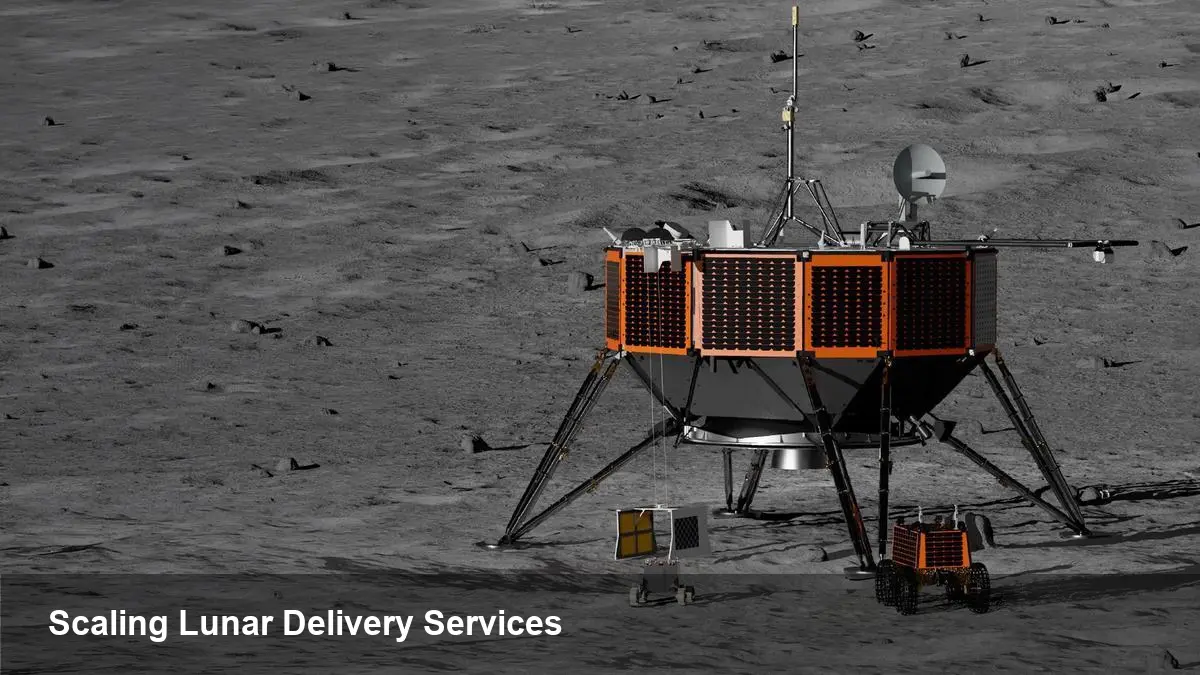
NASA’s decision to expand the value of its Commercial Lunar Payload Services (CLPS) contract is a pragmatic pivot from one-off science flights toward a higher cadence of commercial lunar deliveries. CLPS began as an IDIQ vehicle to let private companies tender for payload delivery to the Moon. The program has already given multiple smaller lander firms and science teams a route to fly instruments without NASA building every spacecraft itself. Increasing the contract’s scope signals a move from experimentation to operational support for a growing lunar surface presence.
What CLPS is, in practical terms
CLPS is a capability procurement: NASA buys delivery services rather than full spacecraft development in-house. That means NASA sets technical and safety requirements and pays commercial providers to design, build, integrate and operate landers that carry NASA instruments and other customers’ payloads. The model lowers the barrier for science teams to get to the Moon and concentrates NASA’s internal resources on higher-level architecture (e.g., the Artemis program and potential surface habitats).
Operational implications: more flights, different problems
A higher CLPS ceiling changes the calculus across several domains.
- Launch cadence and scheduling: More funded task orders create demand for rockets and pad resources. That’s good for launch providers, but it also raises the complexity of manifest management — payload integration windows will shorten and providers will need smoother processes.
- Lander engineering maturity: Startups must shift from boutique one-off builds to repeatable manufacturing, quality assurance, and parts sourcing. Engineering documentation, part traceability and supply-chain resiliency become survival issues rather than academic concerns.
- Mission ops and comms: Increasing sorties means more ground-station time, more opportunities for cross-support between missions, and incentives to standardize telemetry, telemetry rates and navigation services.
- Scientific return and competition: While increased flight opportunity benefits the science community, it also creates competition for payload slots. Teams will need sharper proposals and tighter integration plans to ride the higher volume wave.
Three concrete scenarios where the CLPS scale-up matters
1) Rapid site scouting for a lunar base: Frequent robotic landings can map resources, test regolith-handling hardware, and characterize dust environments at candidate base locations before committing human missions.
2) Logistics run for a small surface outpost: Commercial landers could deliver power systems, spare parts, or cached equipment for surface operations — enabling a “just-in-time” logistics model on the Moon that mirrors terrestrial supply chains.
3) Distributed science networks: Rather than a single flagship lander, many small landers can place a network of seismometers, magnetometers or dosimeters across a region, improving spatial resolution and redundancy.
What this means for payload developers and mission engineers
If you’re designing instruments or software to ride on CLPS flights, expect to adapt operational workflows:
- Start earlier on interface control documents (ICDs). Lander payload interfaces, electrical and mechanical, will be structured tightly to support many different providers.
- Invest in testing infrastructure that reproduces the lander environment: vibration, shock, thermal cycles, and worst-case communications delays.
- Design for modularity and tolerance: standardized mechanical mounts, conservative power budgets, and flexible communication stacks make integration smoother across multiple lander platforms.
- Automate mission simulation and acceptance tests. Repeatable test suites that can be run by both your team and the lander provider will accelerate sign-offs.
Business and supply-chain realities
Expanding CLPS funding offers a revenue stream for lander companies, but it also locks them into scaling choices. They’ll need to:
- Harden supplier relationships for avionics, propulsion valves, and composite structures to avoid last-minute showstoppers.
- Plan for insurance and contingency funding. More flights mean more exposure — both to mission failures and to delays that cascade across schedules.
- Consider partnering with launch firms to offer bundled lander+launch services, improving predictability for customers.
Broader ecosystem effects and policy signals
A larger CLPS program nudges the market toward a commercial lunar logistics economy. Policy implications include the need for:
- Standardized safety and interface standards across providers to reduce integration friction.
- Clear export-control and intellectual-property frameworks for multinational payload collaborations.
- New regulatory thinking for on-orbit and lunar resource logistics, including fuel depots and in-situ resource utilization (ISRU).
Three strategic insights for the next 3–5 years
1) The Moon becomes a logistics problem as much as a scientific one. Frequent robotic deliveries shift priorities from single, deep-mission investments to repeatable, resilient supply chains.
2) Modularity wins. Lander designs and payloads that embrace modular interfaces and common standards will capture more of the growing market and reduce per-mission friction.
3) Partnerships will shape winners and losers. Firms that vertically integrate (lander + launch + mission ops) will have predictability advantages, while niche specialists will thrive by offering best-in-class subsystems or rapid integration services.
What to watch next
Monitor upcoming CLPS task-order awards, announced launch manifests, and whether NASA publishes new interface standards or safety requirements tied to the contract expansion. Those details will reveal whether this change is primarily about increasing tempo, or about intentionally seeding a private lunar logistics industry.
If you’re a payload PI, startup founder or mission engineer, now is the time to harden your integration pipelines, shore up suppliers, and think about how modularity and repeatability can turn one-time missions into a sustainable business model.