Google Messages adds partial-text copy in beta

Why this small change matters
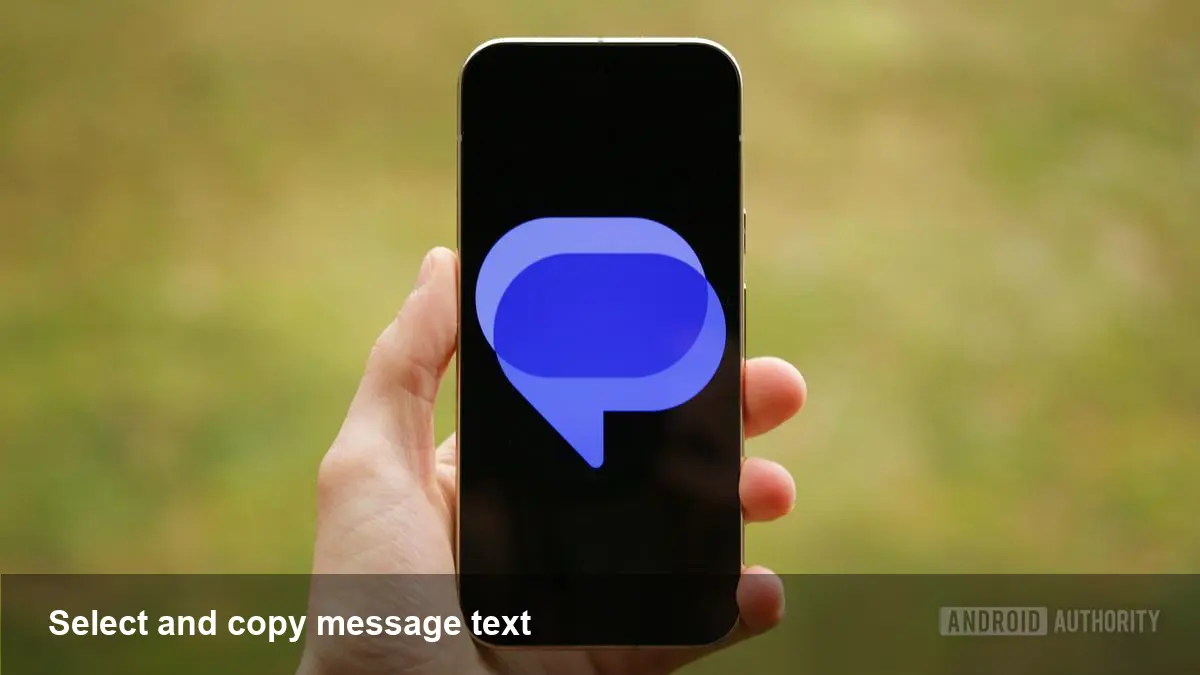
For years Android users have faced a tiny but persistent friction in everyday messaging: when you wanted just one sentence, code snippet, or link from a long text, the only reliable option was to copy the whole message and then paste-edit it. Google’s Messages app is rolling out a change in its latest beta that lets you select and copy only a portion of a received message. It’s a subtle UX improvement with outsized practical value.
A brief background on Google Messages
Google Messages is Google’s default SMS/RCS client on many Android phones and the reference implementation for Rich Communication Services (RCS). It serves both casual users exchanging texts and businesses deploying rich messaging features like verified business profiles, suggested actions, and media-rich conversations. Because Messages spans personal and professional use, tiny productivity improvements can have a large cumulative effect.
Real-world scenarios that improve instantly
- Copying an OTP or tracking number: Instead of copying an entire transactional SMS that contains marketing copy, you can highlight just the numeric code and paste it directly into a form.
- Sharing a single line from a long thread: When a friend sends a long paragraph, you can extract and forward the sentence that matters without additional editing.
- Extracting URLs from messages with commentary: Many people paste links inside longer commentary. Partial-copy lets you select only the link or domain to share with others or open in a browser.
- Pulling code or commands from developer chats: In group chats where someone drops a multi-line command, you can select the exact line you need and copy it into a terminal app.
These small wins reduce friction for daily tasks and make Messages feel more polished.
How it changes workflows for power users and businesses
For power users — technical folks, support agents, and people who handle lots of short data points — this update cuts time. Consider a customer support agent using Messages for quick troubleshooting: being able to select a single error code or IP address from a longer message means fewer copy-paste errors and faster triage.
Brands and businesses that use RCS for transactional messaging should also take note. Transactional templates often include codes, links, addresses, or single-line instructions embedded in promotional text. Users selecting a portion of a message reduces user error and support friction, which may translate to measurable lifts in conversion or task completion rates.
Developer implications and what to watch for
- Accessibility considerations: Selection handles must work with TalkBack and other assistive tech. Google will need to ensure selection mechanics don’t break accessibility flows.
- Consistency across OEM skins: Not all Android skins use Google Messages as default. Third-party OEM messaging apps may follow suit, but fragmentation means some users won’t see the benefit immediately.
- API and automation: Developers building apps that read notifications or integrate with messaging content should account for finer-grained copy behavior. If your app extracts text from messages (for autofill or CRM logging), partial copy reduces the need for heuristic trimming on the client.
If you build custom integrations with Messages (for example, plug-ins or accessibility services), test with the beta to ensure selection-based workflows behave as expected.
Pros and limitations
Pros:
- Faster, less error-prone copy-and-paste for small data.
- Cleaner sharing and forwarding without manual trimming.
- Slightly better UX parity with modern chat apps that already support text selection in-thread.
Limitations:
- Beta rollout: not every user will see this immediately; expect staged deployment.
- Selection across rich content: selecting mixed media (text with inline images or interactive buttons) may remain awkward.
- Legacy SMS formatting: many carriers still send plain SMS with odd line breaks or concatenation that can hamper selection precision.
Privacy and security considerations
Selecting and copying snippets increases the chance of quickly transferring sensitive data to other apps. This isn’t new behavior — copy-paste has always carried risk — but it highlights the need for secure clipboard management. Android already shows a clipboard notification and many password managers clear clipboards after a timeout; users should remain cautious with OTPs and passwords.
For enterprises, it may be worth combining messaging policies with managed device controls to limit clipboard sharing in regulated environments.
What this tells us about the product direction
Three implications stand out: 1) Attention to polish matters. Big platforms increasingly iterate on small UX irritants because marginal gains can improve engagement and reduce support load. 2) Messaging parity with other chat apps is strategic. Users now expect fine-grained text handling as standard; Google is closing gaps between Messages and competitors that already allowed selection or more powerful message actions. 3) RCS and transactional messaging will benefit. As Google refines the client experience, businesses using RCS templates will see fewer user errors and a smoother path to task completion.
What could come next
- Smart selection: Google could combine selection with suggested actions (copy code, open link, add phone number to contacts) based on content type.
- Clipboard hygiene features: automatic expiring of sensitive clipboard data or an option to copy to a secure clipboard for OTPs and passwords.
- Multi-message selection and extraction: allowing users to select portions across messages to compile notes or summaries.
How to try it and what to test
If you use Messages and want the new behavior now, install the beta from the Play Store or join the beta program in-app (availability varies by region and device). When testing, try the following:
- Select numeric-only sequences, URLs, and mixed text to see how selection handles formatting.
- Use TalkBack or other accessibility tools to verify selection handles are reachable.
- Check third-party clipboard managers and password managers to ensure they treat selected text correctly.
A minor update to user interaction may not make headlines, but for anyone who copies snippets of text multiple times per day, this is a welcome fix. It’s also an example of how small UX decisions compound to create a smoother, less error-prone mobile experience.