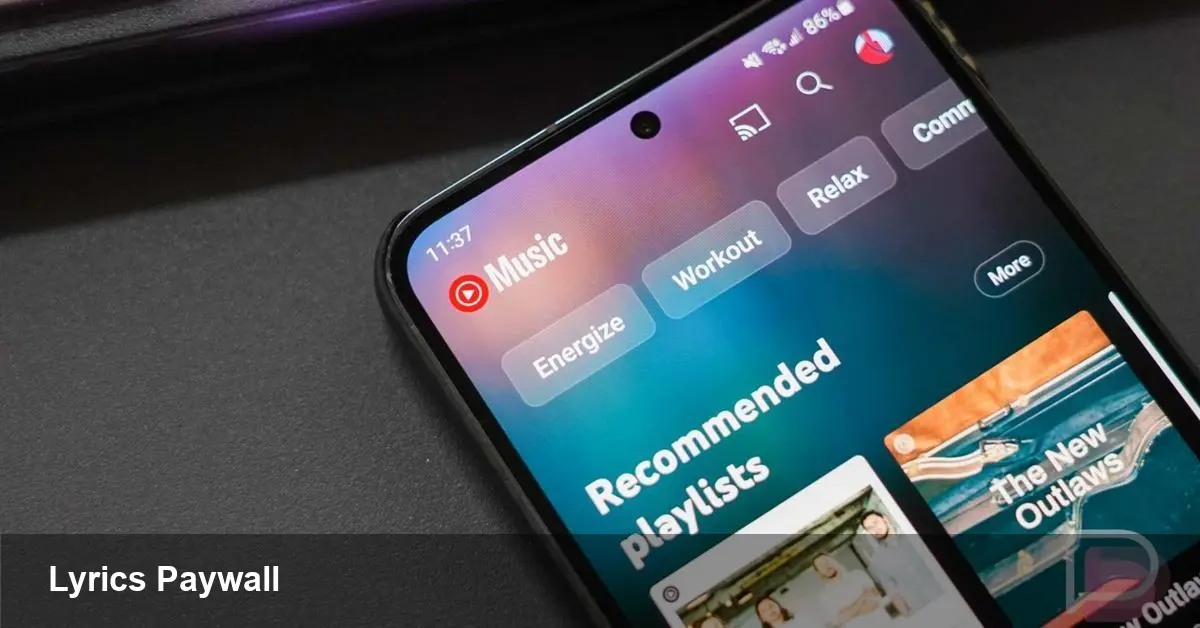
YouTube Music locks auto‑scrolling lyrics behind paywall

- Key Takeaways:
- YouTube Music has moved the lyrics tab behind a paywall for non‑Premium users.
- The automatic, auto‑scrolling lyrics display — useful for karaoke and singalongs — is now restricted to Premium subscribers.
- Non‑Premium listeners will need to subscribe or use third‑party lyric sources to see synced lyrics.
- This change impacts Android users and other platforms where YouTube Music is used.
What changed
Google’s YouTube Music has placed the lyrics tab behind a paywall for listeners who do not subscribe to YouTube Premium. The lyrics tab, which automatically scrolls in time with the song, will no longer be available to non‑Premium accounts.
Why it matters
The auto‑scrolling lyrics feature is more than a convenience: it’s a practical tool for karaoke, learning lyrics, and following along while listening. Locking it behind a subscription raises the cost of that functionality for casual listeners who previously relied on the free app.
Who is affected
All non‑Premium YouTube Music users are affected by this change. The short description for this report highlights Android users explicitly, but the paywall applies to any device using YouTube Music without an active Premium subscription.
Immediate options for listeners
If you want synced lyrics after the change, you have a few choices:
- Subscribe to YouTube Premium to restore access to the integrated, auto‑scrolling lyrics tab.
- Use third‑party lyrics websites or apps that provide synced lyrics, though integration with playback may be limited.
- Switch to another streaming service that still offers free lyric displays, if that’s a priority.
What to watch next
Google may adjust how it bundles features with Premium over time. Watch for official communication from YouTube Music or updates in the app changelog explaining the rollout, regional differences, or any grandfathering for existing users.
User impact and broader context
Streaming services increasingly reserve convenience and quality‑of‑life features for paid tiers. For listeners who frequently use lyrics, the change nudges them toward subscription revenue or alternative tools. For everyone else, it reduces the free feature set that once made music apps more competitive.