iOS 26.3 Preview: Android Transfer and EU Watch Support

- Key Takeaways:
- iOS 26.3 will enable easier data transfer between iPhone and Android through an Apple–Google collaboration.
- EU users gain third‑party smartwatch notifications (e.g., Garmin Fenix 8), new NFC components and faster peer‑to‑peer Wi‑Fi due to the DMA.
- Apple plans a late January–early February 2026 rollout if beta testing goes smoothly; consider avoiding the initial beta during holiday staffing.
- iOS 26.4 is expected to bring larger changes (new Siri and Apple Intelligence upgrades), while 26.3 is a transitional update.
What iOS 26.3 brings
Apple’s iOS 26.3 is focused on interoperability and incremental improvements rather than visual overhauls. A notable collaboration with Google will let iPhone users transfer more types of data — apps, email, photos — more seamlessly when switching to or from Android devices.
In regions covered by the European Union, Apple is adding the ability to deliver select notifications to third‑party smartwatches. That will let devices such as the Garmin Fenix 8 receive some alerts from an iPhone, although Apple says you cannot pair an iPhone to an Apple Watch and a third‑party watch simultaneously.
EU‑specific changes driven by regulation
Several features in 26.3 are direct results of the EU’s Digital Markets Act (DMA). European iPhones will include updated NFC components to manage third‑party device connections and a faster Wi‑Fi radio optimized for peer‑to‑peer sharing.
These changes are limited to the EU variant of iOS because they address interoperability requirements in the DMA and follow Apple’s broader shift to USB‑C charging across iPhone models.
Design, wallpapers, and smaller updates
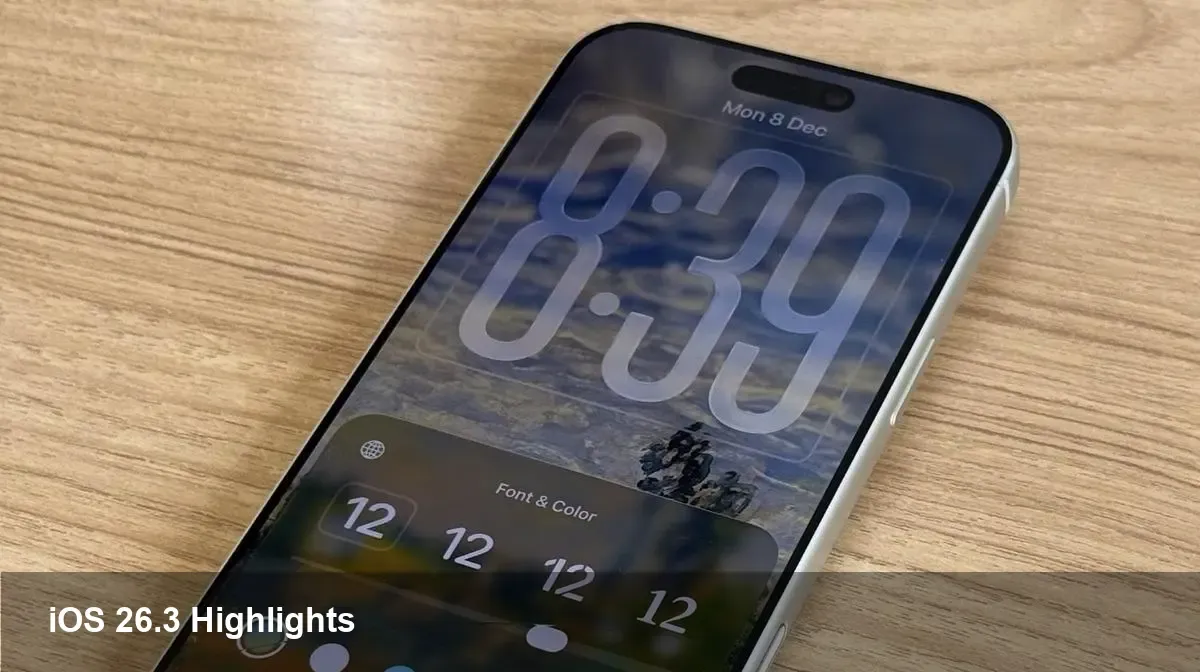
Apple is also expected to release a new Black Unity wallpaper around Black History Month, continuing its recent pattern of minor cosmetic releases tied to x.3 updates. The company is otherwise reserving larger interface and intelligence changes for iOS 26.4.
Release timing and beta testing
Historically, Apple’s x.3 updates ship in late January or early February. Examples include iOS 17.3 and 18.3, which delivered security and ecosystem updates without major UI shifts. If beta testing for 26.3 proceeds without major regressions, a similar late‑January/early‑February window is likely.
Early beta testers should be cautious: development teams thin out during the holidays, which can slow bug fixes. Apple now allows anyone with an Apple ID to access public betas via developer guidance, but enabling developer mode and other preparatory steps are required.
Should you install 26.3 beta?
For most users, waiting for the production release is the safest route. Install the beta only if you understand the risks — potential instability and delayed fixes — and you’re comfortable troubleshooting or rolling back if needed.
Overall, iOS 26.3 is a practical, regulation‑driven release that smooths cross‑platform data transfers and opens select interoperability for EU users ahead of the larger feature set arriving in iOS 26.4.