How 20 Ikea Kallsup Speakers Stack Up Against Sonos & Bose

Why this experiment matters
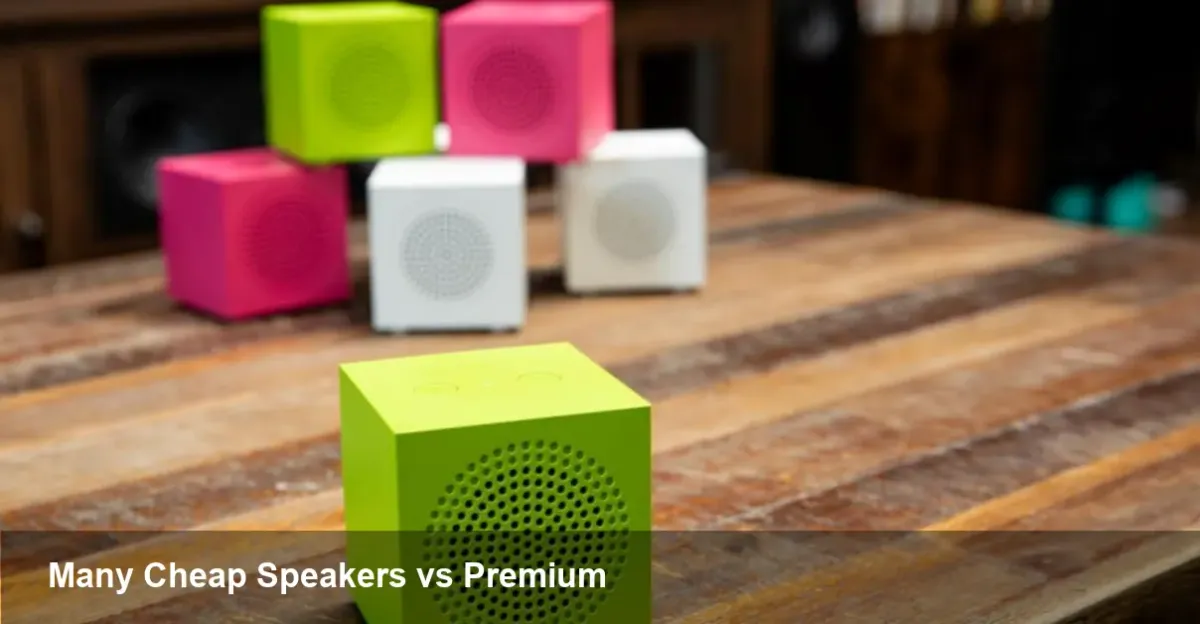
Affordable wireless speakers are increasingly tempting: low unit price, easy to hide around the house, and the promise of seamless multiroom audio. But can a swarm of cheap units deliver what a well-engineered Sonos, Bose, or Amazon system provides? I set up 20 Ikea Kallsup speakers in a living room and compared them directly to more expensive options from Sonos, Bose, and Amazon to answer practical questions about sound quality, synchronization, and day-to-day usability.
A quick background on the contenders
- Ikea Kallsup: Ikea’s budget-friendly wireless speaker aimed at buyers who want scale — multiple units, humble drivers, and simple setup.
- Sonos: Known for refined audio, tight multiroom synchronization, and an ecosystem that emphasizes ease of use and integration.
- Bose: Focuses on balanced sound, strong bass on compact products, and reliable single-device performance.
- Amazon (Echo/Alexa speakers): Often sold at competitive prices with voice assistant features and straightforward streaming capabilities.
The test compares a 20-speaker Kallsup install (spread across a medium-sized living room) against single or paired premium units from the other vendors.
Test setup and methodology
To keep the comparison practical for real users, I focused on scenarios that reflect typical home use:
- Placement: Kallsup units were distributed across shelves, corners, and a couple of wall mounts to simulate a homeowner scattering cheap speakers through a room. Sonos/Bose/Amazon setups were configured according to their recommended placement (paired or singular main speakers).
- Source material: A selection of tracks — acoustic, electronic, orchestral, and a few movies to evaluate dialogue clarity and spatial behavior.
- Measurements and observations: Sync accuracy (lip-sync and multi-speaker sync), perceived loudness and headroom, tonal balance, stereo imaging, bass performance, and the mobile app/setup experience.
- Listening tests were done at low, medium, and high volume to see where weaknesses become obvious.
What the results looked like
- Synchronization: The Kallsup cluster performed surprisingly well for background music. When all 20 units were grouped, latency between them was acceptable for ambient playback, but noticeable during critical listening or when watching video. Sonos and Bose kept near-perfect sync and are far better for AV scenarios.
- Loudness and headroom: Twenty small Kallsup drivers combined to create a room-filling level, but with diminishing returns: distortion and compression appeared long before a similarly loud Sonos or Bose setup. The premium units retained clarity at higher SPLs.
- T imbral balance and bass: Individually, Kallsup speakers lack low-end authority. Even multiplied, they can’t mask the absence of a dedicated subwoofer. Sonos and Bose models reproduced deeper bass and tighter transients, which matter for electronic music and movie soundtracks.
- Stereo imaging: A spread of small speakers gives a sense of diffuse sound but lacks the focused stereo image of a proper pair of bookshelf or floorstanding speakers. For music where instrument placement is important, Sonos and Bose were clearly superior.
- App and ecosystem: Ikea’s app is minimal and works for basic grouping. Sonos’ software remains the smoothest experience for multiroom management, streaming services, and integrations. Amazon’s ecosystem is strong if you rely on Alexa but can feel less audio-focused.
Real-world use cases where cheap speakers win
- Background music for parties or open-plan spaces: A constellation of inexpensive units can deliver even coverage and be easier on the budget than investing in several premium speakers.
- Multi-zone ambient audio: If the goal is indistinct music in several areas (kitchen, hallway, bathroom), low-cost speakers offer good cost-to-coverage ratio.
- Aesthetics and placement flexibility: Tiny speakers are easier to hide or mount in unconventional spots.
When premium systems still make sense
- Home theater and video: For watching movies, synchronization and low-frequency performance matter. Sonos and Bose are better choices for clean dialogue, thunderous effects, and minimal lipsync.
- Critical listening: If you care about stereo imaging, instrument separation, and tonal accuracy, premium speakers win every time.
- Long-term convenience and integrations: Sonos’ app, firmware updates, and third-party service support offer lower friction for users who value a polished experience.
Practical tips if you choose the Kallsup route
- Add a subwoofer: Even a modest sub paired with many small units transforms the experience for movies and bass-heavy music.
- Use fewer, better-placed units for critical listening zones: A handful of strategically positioned speakers will outperform a scattergun approach for stereo imaging.
- Watch for firmware updates: Budget products often improve with software, and Ikea may iterate on features.
- Expect trade-offs in latency-sensitive uses: Don’t rely on a large cluster for watching synchronized video without testing first.
Business and developer implications
- Ecosystem matters more than hardware price: Companies selling cheap wireless speakers can compete on unit cost, but long-term user retention depends on software, updates, and integrations. Developers building multiroom or mesh audio platforms should prioritize synchronization protocols and easy pairing.
- Scale opens new use cases: Low-cost hardware enables installations in cafés, retail spaces, and temporary event venues where premium gear would be cost-prohibitive.
- Opportunity for modular upgrades: Retailers could sell entry-level speakers with upgrade paths (add a sub, buy a controller speaker) to bridge the gap between budget and premium buyers.
A look ahead: three implications for audio’s near future
- Convergence of ecosystems: Expect more pressure to adopt standards (Matter, improved Bluetooth LE Audio profiles) that let cheaper speakers play nicer with high-end systems.
- Software-defined improvements: DSP and cloud-based tuning will continue to be a lever premium brands use — but also a way budget systems can dramatically improve post-sale.
- Niche specializations: The market will segment into ultra-cheap coverage speakers, integrated smart speakers with assistants, and premium audiophile-grade devices rather than a one-size-fits-all solution.
If you want a room full of music on a tight budget, a swarm of Ikea Kallsup speakers can be a surprisingly effective strategy — as long as you’re realistic about bass, critical listening, and video sync. For anyone who values tight imaging, strong low end, and a hassle-free multiroom app, Sonos or Bose still deserve the premium. Choose based on whether your priority is coverage and cost or fidelity and integration.