Why Black Ops Royale Matters for Warzone Players

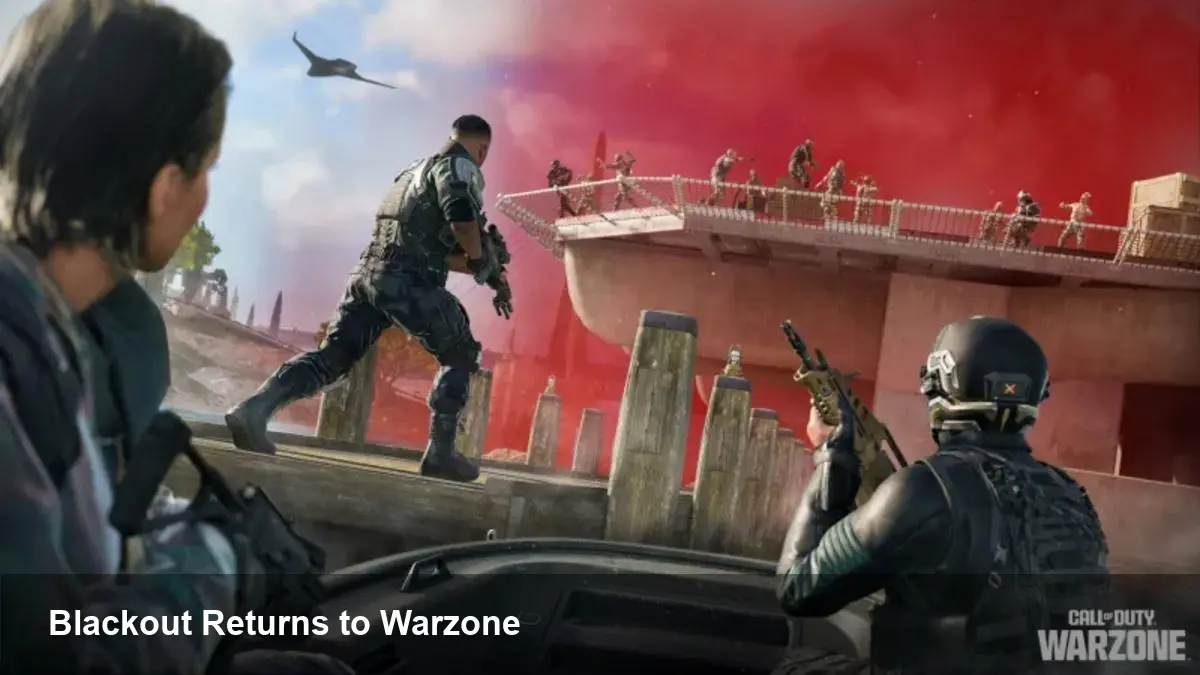
A familiar throwback with modern bones
Activision’s Call of Duty team has introduced Black Ops Royale — a Warzone game mode explicitly inspired by Blackout. For players who remember Blackout’s sprawling maps, slower pacing and tactical approach to positioning, this is a clear attempt to recapture a different kind of battle-royale experience inside the Warzone ecosystem.
This piece looks beyond the announcement to practical implications: how play styles may change, what this means for Warzone’s live-ops model, and what developers and studios should watch for when designing and operating large-scale BR modes.
Why bring back the Blackout feel?
Blackout, introduced as the battle-royale mode for Black Ops 4, emphasized large, dense maps, vehicle traversal and more methodical engagements than some fast-paced BR designs. Warzone pushed Call of Duty’s BR audience toward quicker loops and vertical combat with a modern arsenal and rapid respawn mechanics.
Black Ops Royale signals two intentions:
- Give veteran players a nostalgic alternative to Warzone’s default modes.
- Expand the product’s repertoire so that different player cohorts have modes that match their preferred tempo and tactics.
That variety can help retention: players who would otherwise churn may return for a mode that rewards exploration, map knowledge and patient rotations rather than twitch aim and quick revives.
How gameplay might shift — and how to prepare
Expect behavioral changes among squads and solo players when the mode emphasizes a Blackout-inspired structure.
- Drop strategy recalibrates. Instead of landing on the hottest POIs, teams will favor strategic spawns near resource clusters or transportation hubs to secure long-term mobility.
- Loadout choices alter. Players will lean into utility (smokes, longer-range optics, silencers) and vehicles or traversal gadgets that let them reposition across wide terrain rather than pure run-and-gun loadouts.
- Engagements trend longer. Encounters may be more about positioning and attrition than instant firefights. That benefits players comfortable with scouting, flanking and late-game rotations.
If you’re a competitive or casual player preparing for Black Ops Royale, start testing loadouts around mobility and vision: longer-range weapons, secondary weapons for vehicle defense, and tactical equipment that enables escapes or zone denial.
Live-ops and monetization consequences
Black Ops Royale’s inclusion in Warzone isn’t just a gameplay decision — it reshapes the live-ops product strategy.
- Season design expands. Seasons that support Warzone now have to consider mode-specific progression, meta-balancing and themed map updates. That can mean different Battle Pass rewards, time-limited cosmetics tailored to the Royale’s aesthetic, and mode-exclusive challenges.
- Community segmentation risks and rewards. Splitting the player base across more modes can increase total engagement but may reduce queue times for specific modes depending on adoption. Smart matchmaking and cross-mode incentives (e.g., cross-mode Battle Pass rewards) will be crucial.
- Monetization must be tasteful. Players embrace variety but resist pay-to-win perceptions. Cosmetic drops, themed bundles and season-long campaigns tied to the Royale mode are safer monetization levers.
For studios, the operational takeaway is to bake cross-promotional hooks into season planning so that new modes amplify, not cannibalize, overall engagement.
Technical and production implications for developers
Running a Blackout-style mode inside Warzone affects backend engineering, QA and anti-cheat efforts.
- Server load and netcode. Larger maps and more vehicle physics mean different server tick and bandwidth profiles. Expect engineering teams to profile netcode for high-latency interactions and edge-case vehicle collisions.
- Map design cadence. Large-scale maps require more iteration and playtesting to ensure balanced loot distribution and traversal fairness. Telemetry must track heatmaps, vehicle lanes and choke points so designers can tune spawn logic and zone circles.
- Anti-cheat and anti-exploit focus. New traversal options and a sprawling play area create fresh vectors for exploits. Ops teams should prioritize detection rules that cover transport-based exploits and extended engagement distances.
Developers should instrument early tests with rich telemetry (per-zone survival rates, travel patterns, vehicle durability incidents) and set up rapid patch pipelines. Mode-specific QA rigs that simulate prolonged matches and varied player counts will accelerate iteration.
What this means for esports and content creators
Black Ops Royale could produce different content rhythms for streamers and competitive play.
- Content creators may favor long-form drops and exploratory runs, producing narrative-driven videos (e.g., multi-zone survival tales) instead of highlight reels.
- Competitive formats could be adapted to highlight squad coordination and strategic rotations rather than pure aim duels. That could refresh tournament formats and sponsorship opportunities.
The mode also invites creative storytelling around map knowledge, vehicle mastery and late-game strategies — fertile ground for creators rebuilding franchises’ lore around classic map landmarks.
Business and market implications
A company re-introducing legacy-inspired modes sends signals to the broader gaming market.
- It acknowledges player fragmentation — contemporary studios recognize that one-size-fits-all BR experiences are suboptimal.
- It leverages nostalgia as a retention tool without re-releasing a full legacy title, which is more cost-effective than maintaining multiple standalone products.
- It creates cross-promotional license opportunities: themed bundles, legacy operator skins and limited-time events that bridge the new mode with other franchise titles.
These are low-friction ways to boost engagement and revenue, provided the community perceives the mode as a quality addition rather than a re-skin.
Three implications to watch next
- Player distribution metrics: whether Black Ops Royale attracts a sustainable share of Warzone’s population or simply pulls engagement from other modes.
- Live balancing cadence: how quickly designers adjust loot tables, vehicle durability and zone timing in response to telemetry.
- Monetization response: whether cosmetic and Battle Pass offerings tied to the mode outperform baseline expectations.
If the introduction is handled with careful telemetry, explicit cross-mode incentives and rapid iteration, Black Ops Royale can expand Warzone’s appeal and extend the franchise’s live-ops lifecycle.
Whether you’re a player chasing a slower, more tactical BR loop, a developer balancing server loads and loot spawns, or a studio planning seasonal revenue, Black Ops Royale marks a deliberate pivot: layered options for different player tastes inside a single live-service universe.