Valve's 2026 Steam hardware: delay risk and impact

Why Valve's 2026 hardware update matters
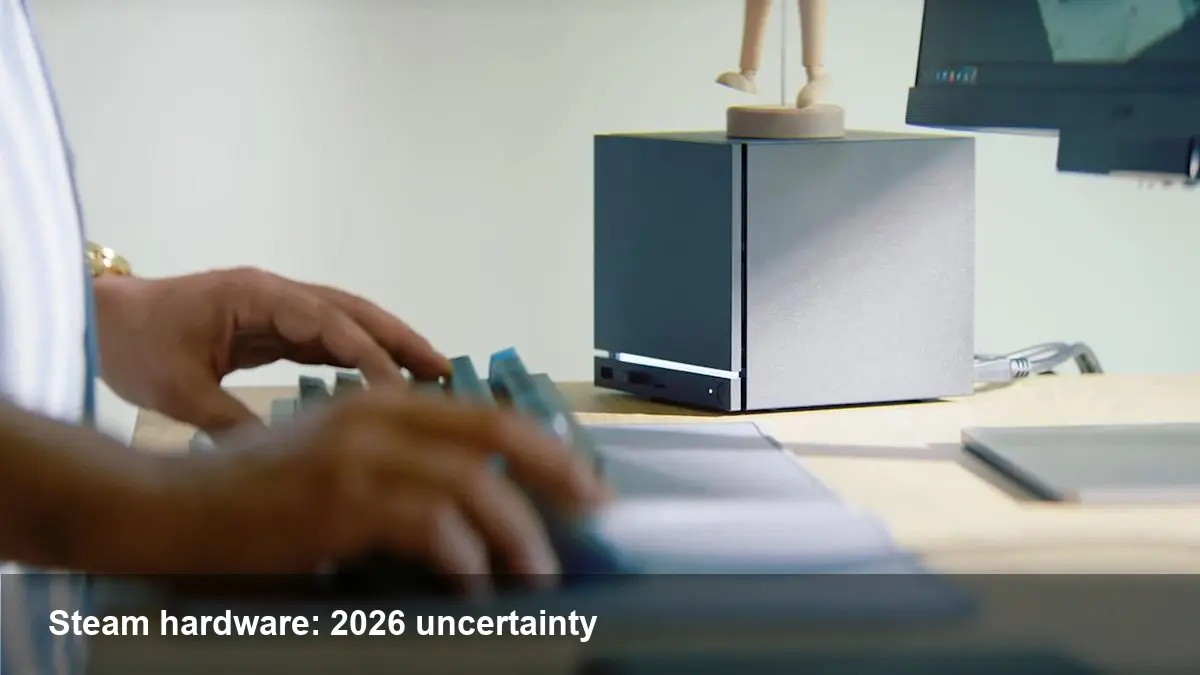
Valve helped reshape PC gaming over the last decade: Steam built the marketplace, Proton pushed Windows titles onto Linux, and the Steam Deck proved a portable PC could succeed. Now Valve is signaling a fresh push into dedicated SteamOS hardware with a target of shipping in 2026 — but with a clear caveat that timelines may slip.
That uncertainty matters beyond headlines. New Valve hardware affects game studios, middleware vendors, retail channels, and the small ecosystem of handheld and living-room PC makers trying to compete with or partner with Valve. If you build games, ship hardware, or plan to buy a high-end handheld, this update deserves a practical read-through.
A short history: why Valve’s moves matter to developers and OEMs
Valve’s first attempt at a curated PC console ecosystem (the Steam Machines) struggled a decade ago; the Steam Deck, released after a 2021 reveal, found product-market fit by combining a curated UI, Linux-based SteamOS, and Proton compatibility for Windows games. That success reset expectations: a Valve-designed hardware reference can set performance targets, standardize inputs and APIs, and accelerate Linux-native ports.
When Valve says it’s aiming for a 2026 ship window for new SteamOS hardware, that’s more than a launch date — it’s a signal to developers and partners to prep for another wave of optimization and certification work.
What the timeline uncertainty means practically
Valve’s message — aiming for 2026 but leaving open the possibility of delay — is pragmatic. Hardware programs are complex: industrial design iterations, thermal validation, chip sourcing, and OS polish all add risk. Here’s how different stakeholders should interpret that caution:
- Indie and mid-size studios: Don’t commit to a single “wait for Valve” plan. Start low-effort compatibility testing now against SteamOS and Proton, and maintain a short internal checklist to validate performance on handheld-like hardware.
- AAA studios and middleware vendors: Take Valve’s target seriously for planning builds and QA cycles, but avoid late-stage dependency on a 2026 shipping date for marketing or big platform-exclusive features.
- Retailers and resellers: Expect potential inventory shifts. Prepare flexible procurement and promotional calendars rather than large, fixed bets on a Valve hardware launch window.
- Component suppliers and partners: Valve’s open timing means you should push for modular commitments (e.g., NRE with cancellation clauses) rather than large upfront investments tied only to a 2026 launch.
Developer workflow: practical steps to prepare
Whether you target native Linux builds or rely on Proton, a structured approach reduces risk and workload when Valve’s hardware arrives:
- Baseline test now: Maintain automated testbeds that run on Steam Deck hardware and SteamOS images (where available). Catch issues with Vulkan/driver behavior and controller mappings early.
- Profile for thermals and clock throttling: Handheld hardware often trades sustained power for thermals. Build performance budgets per scene or level and prioritize CPU/GPU hotspots.
- Use input abstraction: Rely on high-level input APIs that can map reliably to Valve’s controller layout; avoid custom logic that assumes keyboard/mouse.
- Monitor Proton and Steam Play updates: Improvements in compatibility can change your porting strategy. Test both native Linux and Proton paths to decide which one gives the better user experience.
Scenarios for gamers and buyers: buy now or wait?
- If you need a handheld today: Steam Deck and current PC handhelds are mature choices. Don’t wait if your use-case is urgent.
- If you’re price-sensitive but flexible: Waiting could pay off if Valve’s new unit improves battery life, performance-per-watt, or UI polish. But delays are possible, so weigh the risk tolerance.
- If you’re an enthusiast or developer: Having a Steam Deck or equivalent test device now accelerates readiness for whatever Valve ships next. Early access to real-world hardware is valuable even if it’s not identical to Valve’s next generation.
Business implications for the PC ecosystem
Valve’s cautious messaging signals a few strategic realities:
- Prioritizing software quality: Valve seems to prefer delaying rather than shipping a half-baked OS/hardware combo. That benefits long-term user experience and reduces fragmentation.
- Supply-chain pragmatism: By not promising a hard date, Valve keeps negotiating leverage with suppliers and avoids repeating well-known launch hiccups other companies face.
- Market shaping vs. competing: A new Valve hardware reference could re-center the handheld market. Manufacturers of competing devices will either accelerate feature parity or differentiate on price, form-factor, or open hardware.
Risks and limitations to watch
- Fragmentation: Multiple Valve devices over a short period could confuse developers about target specs unless Valve publishes clear reference SKUs and performance tiers.
- Developer friction: If Valve changes APIs, control schemes, or performance targets late in development, studios could face costly rework cycles.
- Channel fatigue: Repeated announcement-delay cycles can erode consumer enthusiasm and give competitors openings in the market.
What to do next — practical checklist
- Developers: Set up a SteamOS test lane and profile against current handheld hardware for thermal and input constraints.
- Partners: Negotiate scalable supply agreements and avoid all-in inventory bets on a single calendar year.
- Gamers: Decide based on personal urgency; buying now vs. waiting is a risk/reward choice tied to how patient you are for incremental improvements.
Three forward-looking implications
- Valve’s conservative timeline suggests they’ll push for stronger Proton and SteamOS integration, which could accelerate Linux parity across the store.
- A well-executed launch would pressure AMD/Intel to deliver more handheld-optimized silicon and could influence how PC titles are optimized for battery-constrained devices.
- If Valve ships late but polished, it reinforces the idea that platform owners must prioritize holistic UX over tight release promises — something other hardware players may emulate.
A delayed launch isn’t ideal for hype cycles, but it may yield a better product. For developers and partners, the prudent move is to treat Valve’s 2026 window as a planning milestone, not a deadline: prepare now, stay flexible, and make your testing pipeline resilient to the kind of hardware variability Valve is signalling.