Pokémon Pokopia on Switch 2: Limited-Time Event and Early-Bird Perks

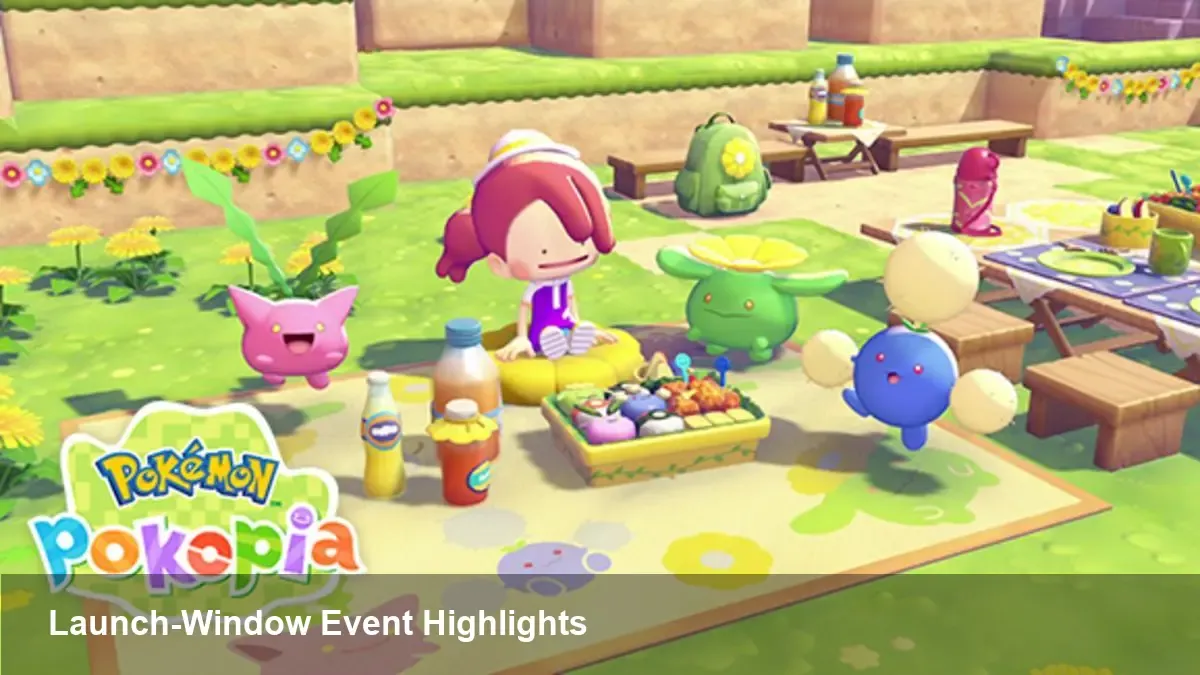
Why Pokémon Pokopia’s launch matters on Nintendo Switch 2
Pokémon Pokopia landing on Nintendo Switch 2 is notable for two reasons: it’s one of the early major titles for Nintendo’s new hardware generation, and it uses live-event mechanics to drive initial engagement. Nintendo and the Pokémon partners have leaned into limited-time events and early-purchase bonuses to create urgency around a cozy, exploration-focused release.
For players this means there’s likely a short window to access exclusive content tied to the game’s debut. For developers and studio leads, it’s an example of blending traditional retail-style launch incentives with live operations techniques common to mobile and live-service games.
Quick background: the companies and product approach
Pokémon Pokopia is part of the franchise’s expansion beyond mainline competitive RPGs into more relaxed, narrative-driven experiences. The franchise owners have repeatedly experimented with spin-offs that emphasize exploration, community, and collect-a-thon mechanics rather than core competitive systems.
Launching on Nintendo Switch 2 gives the title a hardware advantage: faster loading, improved streaming of assets, and potentially better CPU/GPU performance to support larger, denser world events. Those capabilities make short-term, server-coordinated events feel smoother and let developers add visual flourishes during the limited-time activities.
What a limited-time event and early-purchase bonus mean in practice
If you’re wondering how this affects you as a player, here are realistic scenarios:
- Early-purchase bonus: typically an incentive for buying the game during a launch window. Expect items like special cosmetic gear, an exclusive in-game companion, or a small bundle of unlocking resources. These bonuses reward players who buy early and help drive day-one sales.
- Limited-time event: a temporary event that may introduce unique quests, decorations, NPCs, area variants, or collectible creatures only available during the event window. These are often designed to be accessible to casual players while offering extra challenges for completionists.
Practical tip: check the game’s official channels and patch notes within the first week. Events can be short (days) or run for several weeks, and developer messaging will clarify whether content will reappear in future seasonal rotations.
How to get the most value as a player
- Prioritize the event’s objectives during your sessions. Limited events often gate the best rewards behind a handful of tasks or time-limited spawns.
- Back up your save data to Nintendo’s cloud (if you subscribe) before trying risky sequences or big changes. Developers sometimes tie event progress to save state in ways that can be tricky if you need to transfer systems.
- If you want to collect everything, create a checklist. Community-run trackers and social channels will often publish what’s rare and how to target it efficiently.
What this pattern tells developers and studios
Timed content and early-purchase bonuses are a low-friction way to boost initial traction without shifting a title to full live-service monetization. For studios, there are a few operational implications:
- Live operations planning: short events require coordination across design, QA, backend, and community teams. Even single-player-adjacent features need careful rollout plans on a new platform like Switch 2.
- Analytics and iteration: measuring engagement during the event window gives fast feedback on player behavior. Studios can test reward economy tweaks and content pacing for future seasonal content.
- Technical debt vs. agility: building systems for toggling content on/off during an event can add short-term complexity but pays off if your studio intends to run regular events.
Pros and cons of launch-window events
Pros:
- Strong early sales and visibility as players feel compelled to buy now.
- Burst of activity that increases social chatter and community content.
- Opportunity to A/B test mechanics and monetization levers in a controlled way.
Cons:
- Event fatigue: players may feel burned out if every new title uses the same tactic.
- Unequal access: players who buy later or have limited time zones/availability may miss permanent-feel content.
- Live ops overhead: smaller teams can struggle with the infrastructure and customer support during spikes.
Limitations to keep in mind
Limited-time events are ephemeral by design. While they can create memorable launch moments, they also risk fragmenting player experience: newcomers might see missing decorations, or communities might form around exclusive items that later players can’t obtain. From a preservation perspective, developers should consider whether to rerun events, archive them as part of alternate game modes, or offer a permanent pathway to the same rewards later.
Technical constraints matter too. Even with Switch 2’s improved capabilities, server coordination and online time windows still require robust testing across regions. Cross-save, cloud backups, and platform-specific policies (digital storefronts, account linking) influence what’s feasible.
Two strategic implications for the industry
1) Physical and digital launch incentives will continue to converge. Console launches are borrowing optimized tactics from mobile live-ops — timed events and limited bonuses — but in a way that preserves the single-purchase model rather than flipping to heavy microtransactions.
2) Hardware shifts (like Switch 2) accelerate experimentation. Faster storage and better streaming let designers create ephemeral world variants and richer event visuals without massive patch sizes, enabling more ambitious live events on consoles.
Practical takeaways for founders and product leads
- Consider short, well-communicated events to jump-start player engagement, but plan for reruns or secondary paths to avoid alienating later adopters.
- Invest in tooling for toggling content and for quick hotfixes; then use early events as controlled experiments for long-term live-ops strategy.
- Measure beyond sales: track retention, social activity, and sentiment during the event to see if the spike turns into sustained engagement.
If you’re picking up Pokémon Pokopia on a Switch 2 at launch, treat the early-purchase bonus and limited-time event like a seasonal festival: it’s designed to be a shared moment. For studios, it’s a reminder that classic retail economics can coexist with live-ops: executed well, both can amplify each other without turning a cozy adventure into a live-managed grind.
What bonus would make you click buy day one — a cosmetic only you can display, or a small competitive edge? It’s the balancing act every publisher is figuring out as console games borrow lessons from live services.