Apple Scales Back Vision Pro Production Amid Sluggish Sales

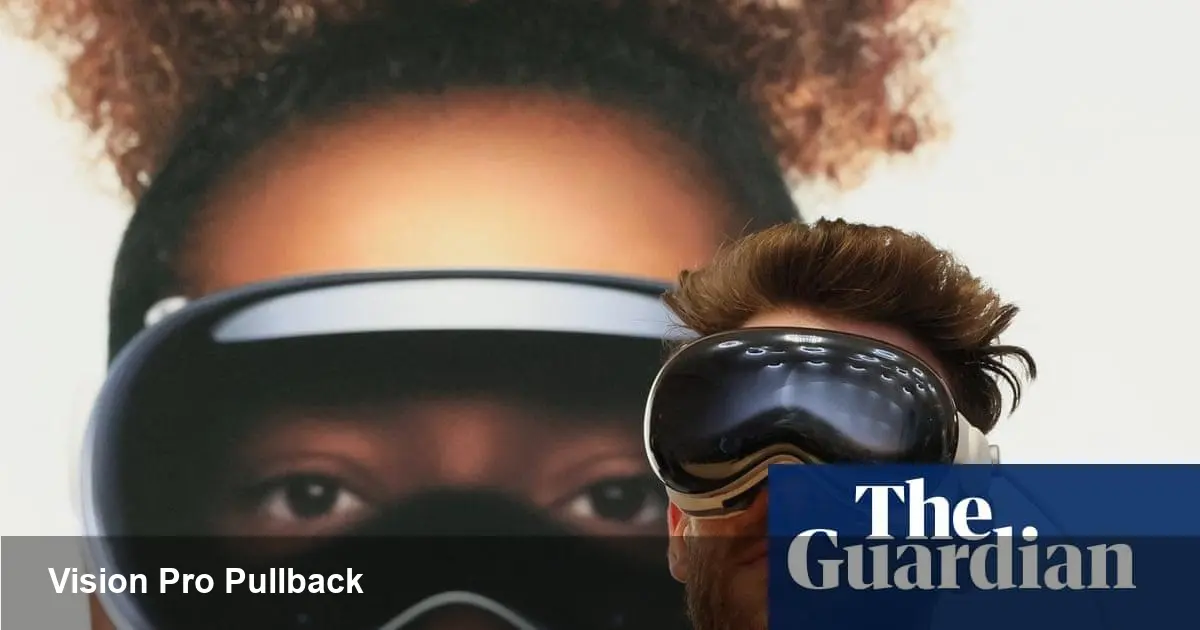
- Apple has reportedly cut production of the Vision Pro headset after weak consumer demand.
- Market intelligence shows Vision Pro marketing fell more than 95% last year, and IDC estimates roughly 45,000 units sold in the last quarter.
- High price, limited apps and comfort issues are cited as key barriers; Apple is reportedly shifting focus toward AI-enabled wearables.
Why Apple reduced Vision Pro output
Apple’s Vision Pro, billed as the company’s entry into “spatial computing,” has failed to meet sales expectations, according to multiple market firms. The headset, priced at roughly £3,199 ($3,499), was intended to open a new product category but has seen sluggish consumer uptake.
Sales and production signals
IDC estimates Apple sold about 45,000 Vision Pro units in the most recent quarter, a figure far below typical Apple product launches. Sensor Tower data—first reported by the Financial Times—says Apple trimmed Vision Pro marketing by more than 95% last year.
Reports also say Luxshare, Apple’s Chinese assembler, halted Vision Pro production at the start of 2025. Apple has kept direct retail sales limited to around 13 countries, constraining availability compared with iPhone and iPad rollouts.
Counterpoint Research forecasts a broader market contraction, predicting about a 14% drop in annual VR headset shipments as demand softens.
Product challenges: price, apps and ergonomics
Analysts and reviewers point to three persistent problems: cost, comfort and content. Morgan Stanley tech analyst Erik Woodring summarized the situation: “We can say the cost, form factor and the lack of VisionOS native apps are the reasons why the Vision Pro never sold broadly.”
Apple lists roughly 3,000 apps for Vision Pro, a small ecosystem compared with the early iPhone years. Reviewers have also criticized the headset’s weight and fit, and safety concerns surfaced after videos showed people wearing headsets while driving.
The high price and a relatively niche user experience have limited mainstream adoption, leaving the device attractive primarily to enthusiasts and developers.
Where Apple and the industry go next
Industry reports indicate Apple is pausing some virtual-reality hardware plans in favor of lower-cost and AI-enabled wearables. A cheaper Vision Pro variant is rumored for a later release, but Apple appears to be shifting investment toward devices that integrate generative AI features.
Meta, which dominates the lower-cost headset market with Quest devices (priced around £419), has also signaled a pivot from a pure “metaverse” play toward AI glasses and other wearables.
Apple did not comment on production cuts when approached. If confirmed, the changes would mark one of Apple’s rare high-profile product setbacks after a 2023 launch that promised to redefine interaction with digital content.
Bottom line
High price, limited content and comfort issues have capped Vision Pro’s market reach. The company’s next moves—cheaper hardware and a stronger AI focus—will determine whether Vision Pro becomes a niche product or the foundation of a revived spatial-computing push.