AirPods Max 2: Day‑One Deal and What It Means

Quick context
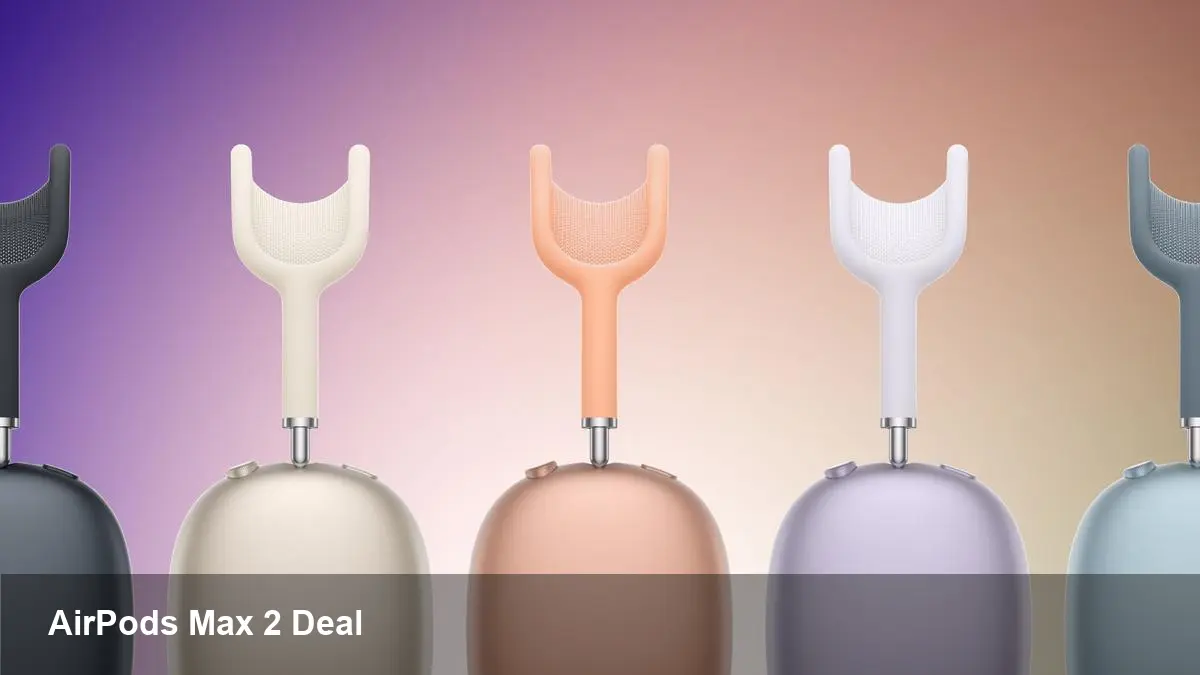
Apple’s second-generation over-ear headphones — the AirPods Max 2 — are available on launch day, and one of the few retailers offering a discount is Amazon. The Midnight color is listed at $529 (down from $549), making this one of the few immediate price drops you’ll see on day one.
This piece unpacks what that discount means, who should consider buying the Max 2 now, and how the headphones fit into workflows for creators, engineers, and small teams.
What to expect from the Max 2 (practical summary)
Apple’s over-ear headphones have always emphasized ecosystem integration over studio accuracy. The second generation continues that tradition: expect spatial audio, automatic device switching across Apple IDs, and adaptive sound features that tune to your environment. Those are the headline user-facing items that matter for most people.
Why this matters for professionals: spatial audio can improve the sense of space for video playback and some mixes; adaptive EQ helps maintain a consistent consumer listening profile in noisy places; and deep OS integration reduces friction for teams that standardize on Apple hardware.
Real-world scenarios — when Max 2 makes sense
- Remote-first podcast host: If you record and edit on a Mac or iPad, the Max 2 gives a fast connect experience and reliable monitoring for rough mix checks. For final mastering you’ll still want proper studio monitors or reference headphones, but the Max 2 is excellent for editing, voice cleanup, and listening back to client drafts.
- Video editor on the go: Spatial audio and strong ANC (active noise cancellation) reduce environmental distractions when cutting footage in cafés, planes, or open offices. Automatic device switching means you can hop from an iPad timeline to your Mac without fiddling with Bluetooth settings.
- Executive or founder who travels: Long battery life combined with comfortable fit makes the Max 2 a productivity tool — fewer interruptions on flights and clearer calls in noisy terminals.
- App developers and UX designers: If you’re building audio experiences for iOS or macOS, owning a product that ships with Apple’s spatial audio defaults lets you audition how your app will sound for many end users.
Day‑one discount: how meaningful is $20 off?
A $20 reduction on launch day is nominal, but it’s still notable because Apple hardware rarely sees immediate retailer discounts. For shoppers on the fence, a small discount from a trusted marketplace like Amazon lowers the friction to buy now rather than wait for a larger markdown later.
Considerations:
- If you value holding the latest model immediately (and you use Apple devices heavily), $529 is a reasonable buy now. You get the full warranty and easiest return experience through major retailers.
- If you don’t urgently need new headphones, waiting can pay off — larger discounts typically arrive after holidays or when inventory cycles turn.
For developers and businesses: integration and deployment
- App testing: Developers building spatial audio or immersive sound experiences should test on the Max 2 because it represents a large swath of end-user sound delivery for Apple customers.
- MDM and fleet considerations: For companies issuing headphones to staff, Apple’s ecosystem reduces setup time. There’s no complex MDM profile for headphones, but consistent Apple IDs and device pairing policies make rollouts simpler for teams already using macOS and iOS.
- Accessibility and conferencing: The microphones and voice processing improvements Apple implements on successive AirPods generations tend to benefit conferencing apps (Teams, Zoom). Businesses that rely on remote meetings will see a usability boost.
Alternatives to weigh
If your primary need is studio mixing or the most neutral sound signature, consider reference headphones from Sennheiser, Beyerdynamic, or specialist studio monitors. For ANC with better multi-platform compatibility (Android + Windows + iOS), Sony and Bose remain strong contenders.
If price sensitivity is high, older AirPods Max models or high-end Sony/Bose units typically drop further during seasonal sales, offering similar ANC and comfort at lower real-world cost.
Business value and procurement angle
For startups and small companies, buying the Max 2 for a handful of roles (creative lead, head of product, traveling execs) makes sense when you want uniformity across devices and fewer support tickets related to audio hardware. Standardizing on a single vendor simplifies spare parts, case policies, and support documentation.
If you’re doing larger procurement, negotiate with authorized resellers — Amazon’s day-one discount signals retailers are willing to compete on price, especially on color-limited stock like Midnight.
Looking ahead — three implications worth watching
- First-day discounts from major retailers could become a regular tactic: Amazon’s small day-one markdown suggests aggressive retail strategies to capture early adopters. Watch pricing trends over the next few product cycles.
- Apple’s continued focus on spatial audio pushes developers to think beyond stereo: if more users adopt hardware that defaults to spatialized listening, app audio UX will need to account for positioning and head tracking.
- Accessory and repair markets will follow demand: newer models drive third-party cases, pads, and service parts. For teams that keep hardware long-term, accessory availability and repairability will affect total cost of ownership.
Making the decision
If you’re deep in the Apple ecosystem and want the convenience and features of the newest over-ear headphones, the $529 Amazon listing for the Midnight Max 2 is a small but practical incentive to buy on launch day. For audio purists or tight budgets, evaluate studio-grade alternatives or wait for a larger discount cycle.
If you’re a developer or product leader building audio experiences, adding a pair to your test kit makes sense now — the cost of a single headset is modest compared with the value of testing on real, widely used playback devices.
Whether you buy today or wait, the Max 2’s arrival nudges the market toward spatial audio-first thinking — which is worth keeping in mind as you design sound for apps and media.