How Nvidia’s AI Laptop Chips Change Windows PCs

Why this move matters
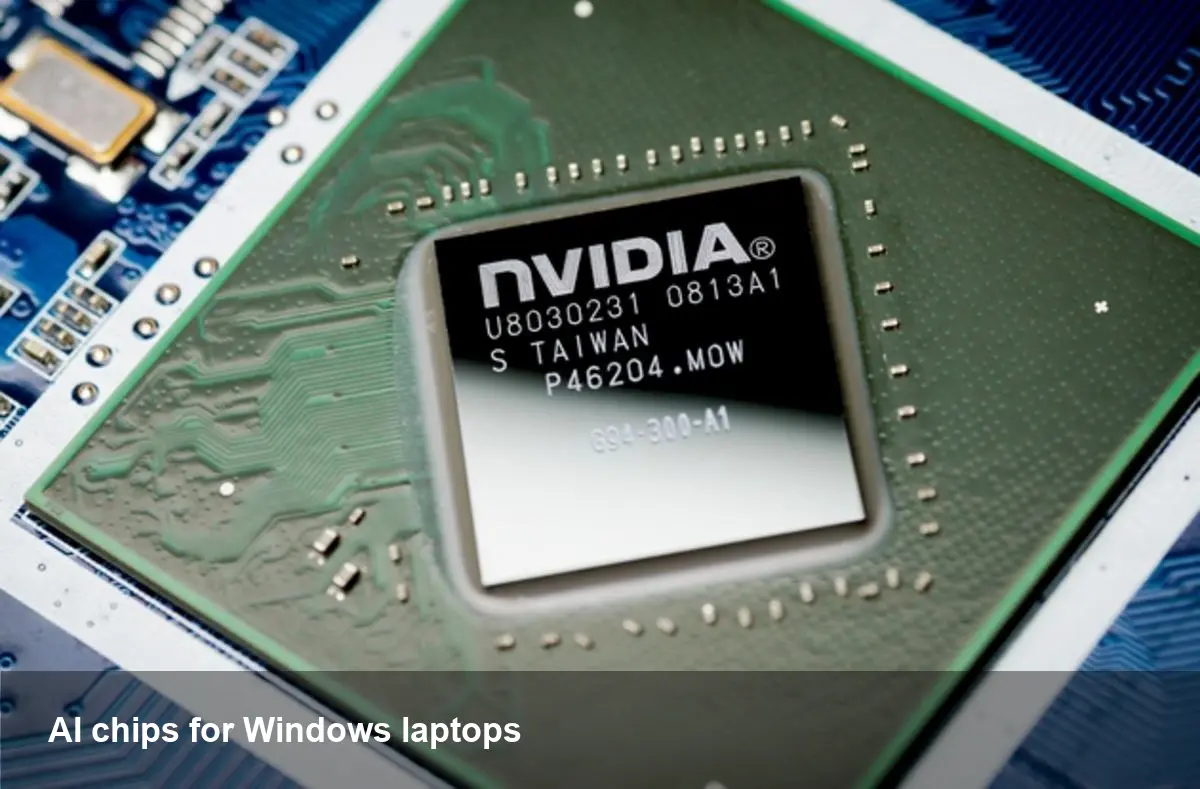
Nvidia is shifting from being primarily a GPU vendor to a more integrated player in PC silicon by supplying AI-focused chips for Windows laptops through partnerships with OEMs like Dell and Lenovo and silicon partners including MediaTek and Intel. For users and businesses this is more than new hardware — it’s a signal that everyday laptops will start to treat AI as a first-class feature rather than an add-on service.
Quick background
Nvidia built its reputation on discrete GPUs that power gaming, datacenter training, and accelerated computing. The recent strategic pivot is to embed on-device AI accelerators and tighter System-on-Chip (SoC) integration into laptops. To get to market quickly and at scale, Nvidia is collaborating with traditional PC OEMs (Dell, Lenovo) and chip-makers (MediaTek, Intel) rather than trying to own every layer from silicon to laptop chassis.
What these AI laptop chips bring to the table
The new chips combine traditional graphics performance with dedicated AI hardware — think neural processing units (NPUs) or tensor engines optimized for inference. That enables several things:
- Low-latency, on-device inference for features like real-time transcription, background removal in video calls, local summarization of documents, and instant image editing.
- Power-efficient AI workloads so laptops can handle persistent assistant-style features without draining the battery as quickly as running large models in the cloud.
- Better offline functionality and privacy by keeping sensitive computation on-device instead of routing everything to a server.
In practice the experience will look like snappier AI features baked into system utilities and third-party apps, comparable to how GPUs enabled advanced graphics over a decade ago.
Real-world scenarios that change day-to-day work
- Content creators: On-device generative adjustments (style transfers, color grading, and fast background replacement) that formerly required cloud render farms can be done during editing sessions, shortening iteration time.
- Knowledge workers: Local summary and search across large document stores, meeting transcripts and email threads — all accessible without sending data to cloud services.
- Developers and data scientists: Fast iteration of small models for prototyping and edge deployment; federated learning or private fine-tuning workflows become more practical.
- Hybrid meetings: Real-time translation, noise suppression, and intelligent speaker framing at the laptop level without a round trip to a server.
These scenarios deliver productivity gains by reducing waiting times and lowering reliance on network connectivity.
What developers need to plan for
A shift in hardware capabilities requires corresponding changes in tooling and workflows:
- Toolchains and SDKs: Expect expanded SDKs that expose the NPU/tensor engines alongside existing CUDA or DirectX paths. Developers will need to learn how to compile and optimize models for these accelerators.
- Model formats: ONNX and other portable formats will remain crucial for cross-vendor compatibility. However, device-specific quantization, pruning, and compilation will matter for performance and power.
- Testing and CI: Your test matrix should include performance and power tests on devices with the AI silicon. Models optimized for datacenter GPUs may behave differently on laptop accelerators.
- Compatibility: Cross-platform behavior will be important. Look for integrations with Windows ML, native SDKs from Nvidia, and third‑party libraries that wrap hardware specifics.
For teams shipping AI features, the focus will shift from purely cloud-based validation to hybrid validation that includes on-device accuracy, latency and thermal performance.
Business and OEM implications
Nvidia’s entry creates new differentiation vectors for PC makers. Dell and Lenovo can market laptops with enhanced AI capabilities, while MediaTek and Intel play roles in manufacturing, system integration or companion chips. This model avoids a winner-takes-all silicon battle and instead encourages hybrid supply chains where each partner contributes strengths (Nvidia’s AI IP, MediaTek’s mobile silicon experience, Intel’s ecosystem reach).
For enterprise buyers, the decision matrix now includes not only CPU and GPU benchmarks but also AI feature sets, driver support longevity, and software ecosystems. Procurement teams must ask suppliers about update cadences for AI runtimes, security patches for on-device models, and SLA-levels for enterprise software that exploits the AI silicon.
Pros, cons, and practical limitations
Pros:
- Faster AI experiences with lower latency and better privacy.
- New app capabilities without cloud costs for every operation.
- Differentiation for OEMs and software vendors.
Cons and limitations:
- App fragmentation: Developers will face more hardware variants and different performance characteristics.
- Thermal and power constraints: Laptops still have limited thermal budgets; sustained heavy AI workloads will be throttled.
- Software maturity: A robust ecosystem of optimized libraries, drivers and developer tools will take time to coalesce.
How to evaluate these laptops today
- Use real-world benchmarks: Test the specific AI features you care about (transcription quality, image-edit speed, model latency) rather than relying on synthetic scores.
- Consider software support: Check whether the vendor commits to driver and runtime updates and whether common frameworks are supported.
- Battery vs performance: If you expect long sessions of AI-assisted work, verify sustained throughput and thermal throttling behavior.
Three implications for the near future
- Endpoint-first AI: More AI computation will migrate to the personal device, improving privacy and reducing latency-sensitive dependence on cloud services. That changes app architectures and data governance models.
- Ecosystem fast-follow: Expect rapid SDK and tooling development from both Nvidia and partners. Third-party libraries that abstract hardware details will become valuable to avoid vendor lock-in.
- Competitive pressure: This move will accelerate feature parity across Intel, AMD, Apple and other mobile silicon players. Consumers will benefit from more capable AI features across price points.
Nvidia’s push into AI laptop chips signals a new era where Windows laptops are purpose-built as AI endpoints. For developers, IT leaders and product teams the immediate work is adapting toolchains and evaluation criteria — for users, the practical payoff should be more capable, private and responsive AI features right on the device.