Siri Extensions: What Apple opening Siri in iOS 27 means

What happened and why it matters
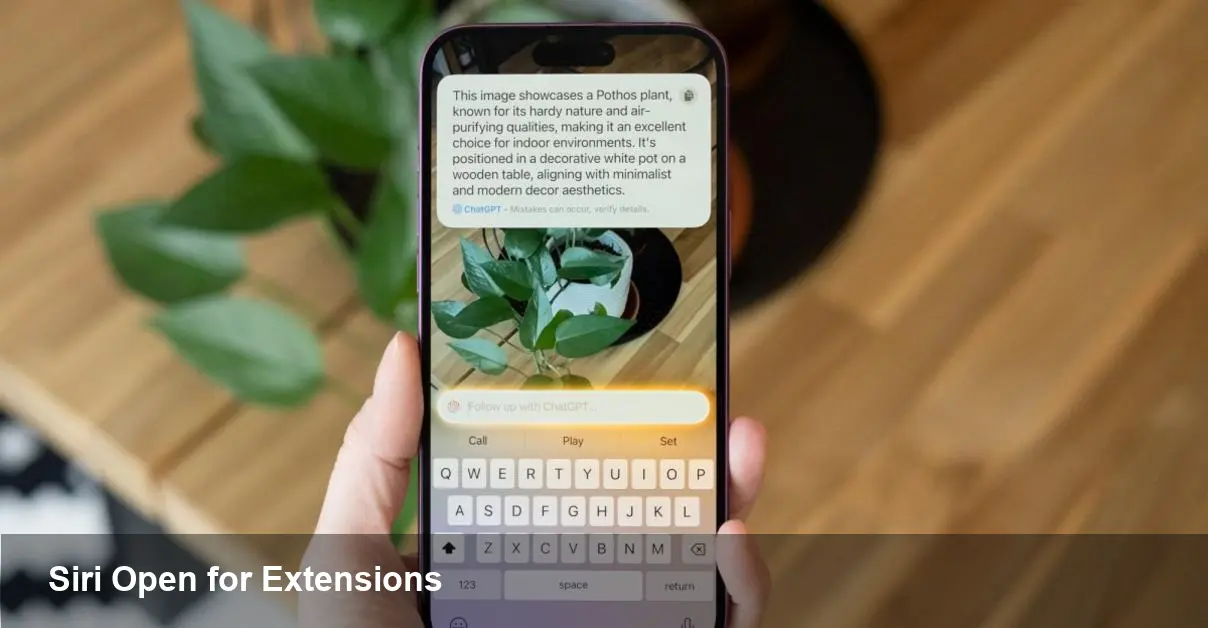
Bloomberg reports that Apple plans to let external AI chatbots hook into Siri through an "Extensions" mechanism in iOS 27. If rolled out, this would be one of the biggest shifts in how Siri operates: moving Siri from a mostly closed assistant into a conduit for third‑party conversational AI.
For users, that could mean specialized bots handling requests Siri today struggles with. For developers and AI startups, it could be a new distribution channel to reach iPhone users without rebuilding a voice assistant from scratch. For Apple, it’s a balancing act — opening up capabilities while maintaining the company’s tight focus on privacy and platform control.
A quick history: Siri’s constraints and prior integrations
Siri has long been built as Apple’s native assistant, with limited hooks for outside apps. Previous mechanisms — like Siri Shortcuts and SiriKit — exposed certain domains (payments, messaging, VoIP) but required developers to map actions into Apple’s frameworks. That constrained innovation: you could automate predefined tasks, but you couldn’t replace Siri’s conversational backend with a third‑party model.
The proposed Extensions approach appears to go beyond those earlier integrations by allowing third‑party conversational agents to accept, process, and respond to user queries through Siri’s surface. That’s a meaningful change in capability and architecture.
Practical examples you’ll actually notice
Here are concrete scenarios where Extensions could change everyday interactions:
- Travel concierge: Ask Siri about flight cancellations or rebooking and have a travel‑service bot access airline APIs, rebook, and confirm in a natural conversation.
- Domain expertise: A medical research chatbot could provide citations and long‑form answers for clinicians when asked complex questions, while general Siri remains a fallback for casual queries.
- Enterprise assist: Companies could offer internal bots that surface CRM data, schedule meetings, or run custom workflows via employee iPhones without building a separate voice app.
- Creative workflows: Writers and designers could invoke specialized generative models optimized for brainstorming, then hand results back to native iOS apps for editing.
Each example highlights how specialized models can out‑perform a general assistant on tasks requiring domain knowledge, data access, or specific business logic.
How developers should prepare (practical workflow)
Assuming Apple follows the likely design pattern, here’s how a developer workflow might look:
- Register as an Extensions provider in Apple’s developer portal and describe the bot’s capabilities and data needs.
- Implement a secured API endpoint that accepts structured requests from Siri (intent data, user context, optional audio payloads) and returns responses in a predefined format.
- Provide metadata and confidence signals so Siri can choose between multiple providers or fall back to Apple’s services.
- Handle authentication and consent flows — users should grant explicit permission for a bot to access data or perform transactions.
- Optimize for latency and partial responses: voice interactions demand fast replies and smart fallbacks when the third‑party service is slow.
This workflow highlights critical engineering tasks: API reliability, strict privacy handling, and UX design for multi‑assistant decisions.
Business value — and what startups should think about
For AI firms, being available inside Siri is a distribution multiplier. It reduces friction to reach iPhone users and can accelerate usage and revenue if monetization is allowed (in‑app purchases, subscriptions, or external billing). For enterprises, it’s an opportunity to embed internal tools directly into employee devices.
But there are caveats. Apple could gate access, require review and certification, or limit the kinds of data third parties can access. Revenue sharing or App Store rules might apply to conversational services used via Siri, creating new commercial considerations.
Risks, moderation and the trust question
Opening Siri to external chatbots raises several risks:
- Privacy exposure: Routing queries to third‑party infrastructures creates new data flows. Apple’s challenge will be ensuring minimal telemetry leaves the device without explicit consent.
- Quality variance: Users will encounter a broader range of model behavior — including hallucinations, inconsistent tone, or unsafe outputs — amplifying the need for auditing and content filters.
- Fragmentation: Multiple extensions for the same domain could fragment experiences, leaving users uncertain which bot to trust for a reliable answer.
- Security: A malicious or poorly secured extension could attempt unauthorized actions or misuse conversational permissions.
Expect Apple to mitigate some of these through review processes, technical safeguards (sandboxing, permission scopes), and possibly a certification program for high‑risk domains like healthcare or finance.
What this means for Apple’s strategy
Allowing third‑party chatbots suggests Apple is acknowledging that no single assistant can excel at every domain and that an ecosystem approach can accelerate innovation. It helps Apple compete with companies that already permit external models or have more open assistant ecosystems.
However, the company will want to preserve a consistent, private user experience. Extensions will likely be carefully choreographed: Apple may control discovery, the consent UX, and how results are presented to avoid brand confusion and privacy pitfalls.
Future implications and strategic signals
- Platformization of assistants: Assistants will become platforms that host multiple specialist agents rather than monolithic products. That opens new business models — think certified skill stores and subscription bundles.
- Standards and certification pressure: Expect calls for standard APIs, certification for safety and compliance (especially in regulated sectors), and possibly industry efforts to create interoperability guidelines for assistant extensions.
- Regulatory attention: As assistants mediate more services and handle sensitive data, regulators are likely to examine data transfers, liability for misinformation, and consumer protection around automated decisions.
Actionable next steps for teams
- For AI startups: Design minimal, privacy‑first APIs and performance SLAs so your service is ready for low‑latency voice use.
- For product teams: Prototype conversational flows assuming partial control — short replies, clarification prompts, and transparent provenance of answers.
- For security and compliance: Map data flows, minimize PII transmission, and prepare documentation for any certification Apple might require.
Opening Siri to third‑party chatbots would reshape how people experience voice assistants and how companies deliver conversational services. For developers and product leaders, the immediate priority is to design for privacy, speed, and predictable outcomes — so their bot stands out when users ask Siri for help.